
Maggie’s Return to an Unlived Life
Never Kiss a Man in a Christmas JumperMaggie’s path from a guarded routine shaped by early motherhood and loss toward accepting love, risk, and a future that does not depend on having more children.
increasing Bearing strength in each event
 decreasing
Bearing strength in each eventdecreasingA Life Built Around Ellen
A Life Built Around Ellen
Early responsibilities
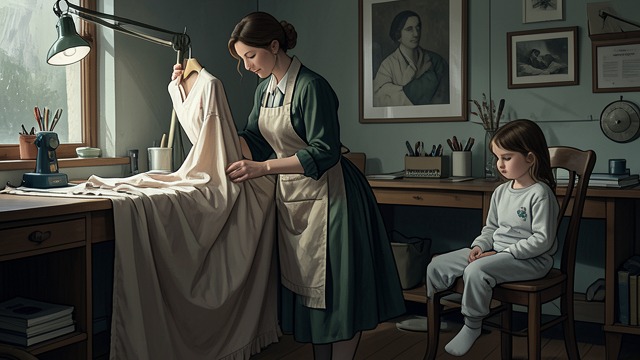
Maggie becomes a mother at sixteen, before she has had time to imagine an adult life for herself. After the difficult birth of Ellen, an emergency hysterectomy means that the child she is raising will also be her only child.
Her father, Paddy, is struggling with grief and alcohol, so Maggie grows up quickly in order to care for Ellen and help hold the family together. The demands are immediate and practical; there is little room to grieve the future she has lost.
A workable half-life
Maggie abandons her hopes of university and builds a livelihood as a dressmaker. Her work gives her independence and purpose, while raising Ellen becomes the emotional centre of her life.
She is proud of what she has managed, but years of responsibility leave little space for intimacy or a life shaped around her own wants. What looks like a stable, sufficient existence is also a carefully maintained retreat from possibilities that might hurt her.
The Empty Nest Approaches
The Empty Nest Approaches
A changing household
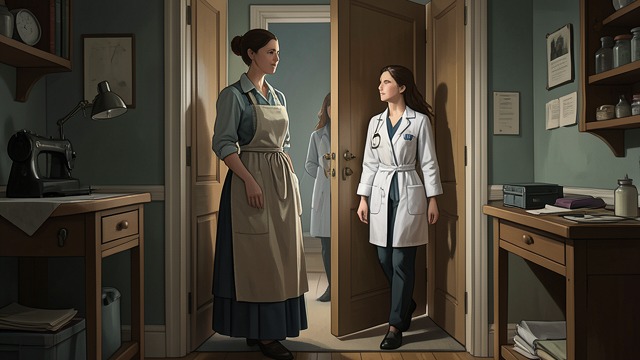
At thirty-four, Maggie still lives with Ellen, now eighteen and studying medicine at Godwin College. Yet Ellen increasingly spends her time with friends and her boyfriend, and Maggie can no longer assume that their shared home defines her daughter’s days.
A run in the park makes the change visible. Maggie remembers Ellen at every age, while the young woman beside her treats her mother’s interest in a handsome stranger as comic embarrassment. Their affection remains strong, but the old parent-child arrangement is loosening.
What remains hers
Maggie’s thoughts about the man in the park are part of a larger recognition: she has begun to wonder what is left when motherhood is no longer her full-time emotional occupation. Her work and home life are orderly, but they do not answer that question.
The approaching independence of Ellen unsettles Maggie because she has built so much of her identity around being needed. She is not yet ready to call that loneliness, but her assumptions about an unchanging family life are starting to fail.
The Christmas She Cannot Control
The Christmas She Cannot Control
A family tradition under strain
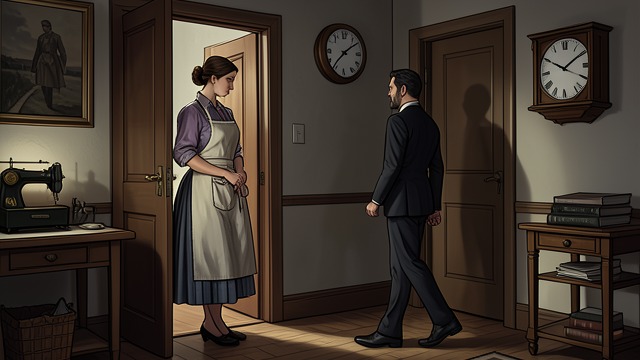
For the first time since Ellen’s birth, Maggie expects Christmas to pass without the familiar household gathering. Ellen plans to spend the holiday in Paris with friends, while Paddy considers a cruise to the Canaries with Jim.
Maggie tells each of them that the other will be home, hoping to spare them guilt and preserve their plans. Her concealment is an attempt to manage everyone else’s feelings, but it leaves her alone with the prospect she cannot admit aloud.
The cost of silence
When Ellen and Paddy discover the deception, they offer to cancel their trips. Maggie refuses, insisting that she is an adult and that they should enjoy themselves. She would rather take on the loneliness herself than become a responsibility they feel obliged to meet.
The conflict reveals how strongly Maggie equates love with not burdening other people. She wants to be cared for, yet the idea of asking for that care feels like a threat to her independence and dignity.
A Confession Beneath the Snow
A Confession Beneath the Snow
The fear beneath the romance
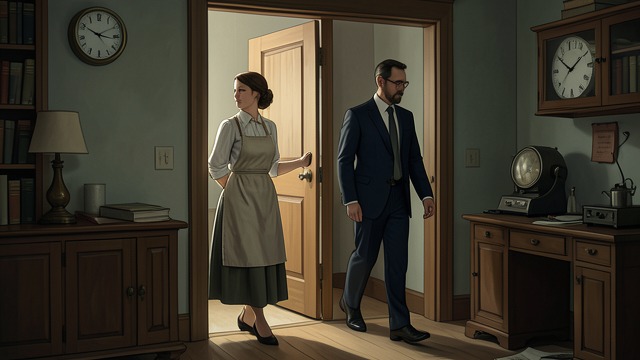
After becoming lovers, Maggie travels with Marco to Scotland and joins his family for Luca’s Christening. The closeness brings happiness, but it also makes her imagine a future she has long treated as unavailable.
Leah notices how Maggie and Marco look at one another and presses her to name what is happening. Maggie admits that she loves him, then explains that she cannot have more children because of the hysterectomy that followed Ellen’s birth.
Choosing for him
Maggie sees Marco playing with children and decides that fatherhood is something he deserves. Rather than let him choose what kind of future matters to him, she concludes that staying with her would deprive him of a family he might want.
Her decision to leave is rooted in love, but also in fear: she would rather end the relationship herself than risk being left later. She turns a painful uncertainty into a fixed verdict, believing that sacrifice is safer than allowing Marco to make his own choice.
A Future Beyond Biology
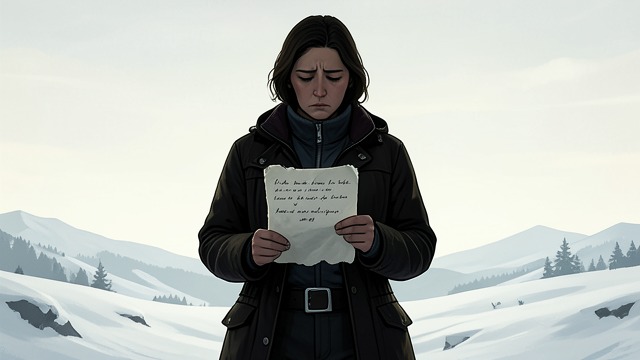
A Future Beyond Biology
The refusal and its cost
After returning to Oxford, Maggie meets Marco again at the hospital. He tells her he loves her, but she refuses to stay, maintaining that her inability to have children makes their future unfair to him.
Her return to the riverside does not restore the safety of her old routine. Alone in the snow, she recognizes that avoiding love has not protected her from pain; it has merely left her with a loneliness she can no longer mistake for contentment.
Accepting a shared choice
Marco leaves the hospital to find her and challenges the future she has decided on his behalf. He says children may or may not be part of their life, but that his choice is Maggie, and suggests adoption or a family life built through the people already close to them.
Maggie accepts the first edition he has found to replace the ruined gift and, more importantly, agrees to give their relationship a chance. A year later she marries Marco, embracing a future that remains complicated but is no longer ruled by the belief that infertility makes her incomplete.
Before the first Christmas encounter
Early December, before Marco’s accident
Mid-December, after Ellen and Paddy make separate holiday plans
Late December, during the wedding trip in Scotland
Christmas Day, beside the river in Oxford
