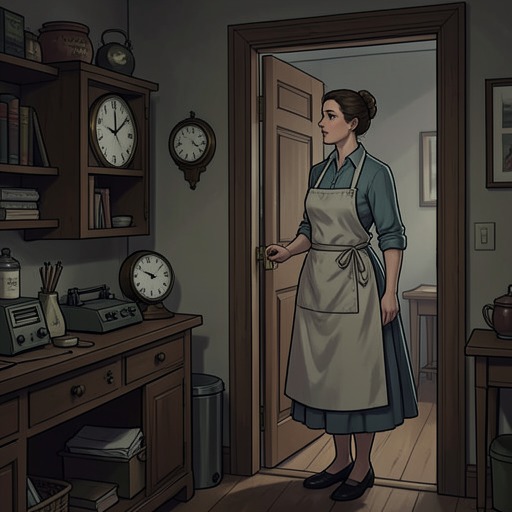
Maggie rejects Marco at the hospital
Never Kiss a Man in a Christmas JumperMaggie O’Donnell’s rejection of Marco Cavelli at the hospital turns a reunion into a second parting: she admits that she loves him, yet insists that love cannot remove the obstacle she believes makes a life together impossible. The scene brings physical injury, guilt, and emotional attachment into the same close encounter. Marco asks her to face what they have become; Maggie acknowledges the truth of his claim, then leaves before he can answer her refusal.
Background and Stakes
Maggie comes to Marco in the aftermath of the accident and sees more than broken limbs, blood, and scars. His expression tells her that her sudden departure wounded him in a way no X-ray could show. She recognizes that she had left without a note, ignored his messages, and failed to wait until morning to explain herself. Her own emotional pain does not ease her remorse: she judges the way she left as selfish, cowardly, and cruel, even though she had told herself she was protecting him.
That recognition shapes her apology. Maggie says she should have stayed, talked, and explained, and connects her silence with the harm that followed. Her words accept responsibility for how she left, rather than presenting the departure as an unavoidable misunderstanding. The immediate stakes are therefore twofold: Marco is recovering from serious physical injuries, while the trust between them has also been damaged by Maggie’s flight.
The Hospital Confrontation
Marco holds Maggie’s fingers tightly, aware that she may try to pull free. He sees guilt, pain, and confusion on her face, but does not treat her apology as the whole explanation. When she cannot answer at first, he identifies fear as the reason she ran. He describes what they have built over the preceding month as larger than anything either of them has felt before, and names it as love. He also insists that Maggie feels the same, making the encounter a direct appeal for her to acknowledge their mutual attachment.
The physical action gives the exchange its pressure. Maggie’s breath catches as she wants to escape the hospital and Marco’s blunt honesty; she understands that he is right about her feelings. Yet that recognition does not lead to reconciliation. She pulls so forcefully that Marco nearly topples with her, frees her numb fingers, stands, and gathers her bag and coat. Her body begins the departure before she has finished explaining it: the intimate contact that briefly holds them together becomes the contact she struggles to break.
The Refusal and Its Reason
Maggie does not deny loving Marco. Instead, she separates the truth of that feeling from the question of whether they can remain together. She says the reason she left still stands and that their problems will not disappear through a romantic gesture. In her view, love cannot heal what has already been hurt. The deeper obstacle is Maggie’s infertility, which she has made peace with but believes would burden Marco if he stayed with her.
Her argument is framed as a decision made for his sake: Marco needs to recover, return home to Chicago, and get away from her because she is not good for him. That protective rationale conflicts with her earlier recognition that leaving without explanation was selfish and mean. The scene thus does not present her choice as simple indifference. Maggie acknowledges their love while continuing to treat separation as the responsible outcome, even as her guilt and grief expose its cost.
Departure and Consequences
Maggie turns and flees before Marco can reply, with tears streaming down her face. Her exit closes the possibility of an immediate conversation about whether the obstacle she names must determine their future. The scene ends not with agreement or resolution, but with her leaving the hospital after making her feelings plain and maintaining her refusal.
The separation also changes how Maggie experiences home. In the following chapter, she cannot face going back because the house no longer feels safe and contains too many reminders of Marco, whom she associates with the Hot Papa from the Park. The hired bed and chair used during his recovery are to be packed up and returned, but their removal will not erase the other traces he has left behind. The hospital rejection therefore continues beyond the room: Maggie has sent Marco away, yet the physical evidence of his time with her makes emotional distance harder to achieve.
Narrative Significance
The scene reverses the expected force of a romantic confession. Marco’s naming of love does not function as a cure for the conflict, and Maggie’s admission does not produce a reunion. Instead, the dialogue clarifies that mutual feeling and the conditions Maggie sees as incompatible with a shared future are separate matters. Her rejection is especially consequential because it follows a moment of recognition: she knows Marco is right about her love, but does not allow that knowledge to overturn her decision.
The contrast between the injuries visible on Marco’s body and the harm Maggie believes she has caused internally shapes the confrontation’s emotional logic. Apology can acknowledge the damage of her departure, and love can be spoken aloud, but neither immediately repairs the breach or changes Maggie’s assessment of their circumstances. Her tearful flight leaves both characters at a point of unresolved separation, while the belongings and memories that follow carry the encounter’s consequences into the next chapter.