The “half-life” image
Never Kiss a Man in a Christmas JumperThe “half-life” image describes Maggie O’Donnell’s way of living with loss by building a capable, caring life around it while withholding the expectation of lasting happiness. It is not simply a description of loneliness: Maggie has raised Ellen, supported Paddy, and made a living from work she once treated as a hobby. Its force lies in the gap between this hard-won competence and her recognition that safety, gratitude, and contentment have not amounted to feeling fully alive.
The life the image measures
Maggie’s history gives the metaphor its weight. Her mother died when Maggie was fourteen; she became pregnant not long afterward and gave up her hope of going to university when she chose to keep the baby. The birth and subsequent surgery were traumatic, and the years that followed were sometimes difficult. The account presents these experiences not as a single misfortune but as a sequence that shaped her responsibilities and narrowed the life she imagined for herself.
She nevertheless takes pride in what she made from that constrained beginning. Maggie raised Ellen, who grew into a capable young woman despite her sharp tongue, and supported her family largely on her own. She learned to be independent and strong, looked after Paddy when he needed her, and made a livelihood from a former hobby. These are real achievements, not evidence that her life was empty. The half-life image emerges precisely because a life containing love, work, and responsibility can still leave unacknowledged needs unmet.
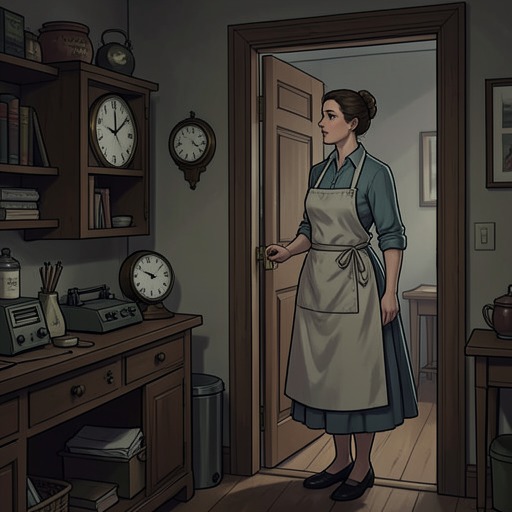
For years, Maggie’s role gave her a clear purpose: caring for her daughter and helping her father. Her nearest and dearest assume that taking Marco Cavelli into her care will keep her occupied, and their concern unsettles her because it makes her see how narrowly they imagine her days. She recognizes that they may be right about her loneliness. The image thus begins as a private judgment about the difference between being busy and having a life that feels her own.
The emptying of familiar roles
The family changes that bring Maggie’s isolation into view are ordinary and, for that reason, difficult to resist. Paddy has moved beyond a period when he viewed life through drink, while Ellen is beginning to make a life of her own. Maggie understands that this is the proper reward for raising a child well: Ellen has become independent enough to leave the nest. Yet Maggie has not prepared herself for what that success will mean to her own identity once the work of daily motherhood recedes.
Christmas makes the change tangible. Ellen asks to spend the holiday in Paris with friends, and Maggie’s first impulse is to refuse. She then recognizes that Ellen will soon be nineteen, is already independent, and deserves the experience; denying it would protect Maggie at her daughter’s expense. The moment holds both maternal pride and a fresh encounter with separation: the very independence Maggie helped Ellen acquire leaves Maggie facing a different kind of holiday.
Paddy’s possible cruise to the Canaries deepens that prospect. Maggie listens as he explains that Jim has a last-minute cabin and that the trip offers sunshine and company. She tries to welcome his plan, but understands it as another departure from the family’s usual Christmas together. When Ellen and Paddy each believe Maggie will spend the holiday with the other, Maggie’s attempt to spare them by concealing her solitude is exposed. Ellen realizes that both have been misled and objects because she and Paddy do not want Maggie left alone. Their anger carries hurt and worry as well as frustration: the people Maggie has cared for are now trying to care for her, even as she has struggled to admit that she needs it.
Intimacy against the half-life
Marco Cavelli makes the limits of Maggie’s settled existence harder to ignore. She feels happier and more at peace with him, but also more excited by life. That change seems precarious because she expects him to leave: first for Scotland, then for Chicago. Rather than treat their closeness as the beginning of a secure future, she anticipates its ending and fears that Christmas together would make goodbye more painful. The half-life is therefore also a defense against attachment: if happiness is temporary, refusing to depend on it can seem safer than risking its loss.
At Isabel and Michael’s hospital wedding, Maggie sees the couple exchange rings and recognizes a joy and liveliness she feels she has never encountered in her own life. The scene gives her an image of what she lacks without making marriage itself a cure or a guarantee. Looking at Marco Cavelli, she decides to take a chance on passion, even if the opportunity lasts only a few days. Her choice to remain with him rather than return home marks a turn from observing other people’s fullness to allowing herself a measure of it.
The risk is complicated by Maggie’s fear that Marco Cavelli may eventually want children. After falling in love, she worries that his paternal instincts could one day outweigh his need for her, and that a future built on joy would be taken away. At the riverside, she can accept that Marco Cavelli understood why she ran and how she felt without accepting that the relationship can work. She sees that life without love would be simpler, but also that returning to a gray existence after glimpsing happiness would mean understanding more clearly what she is missing. Her fear of future loss helps explain why she ends the relationship for her own protection as well as for his sake.
Meaning and unresolved change
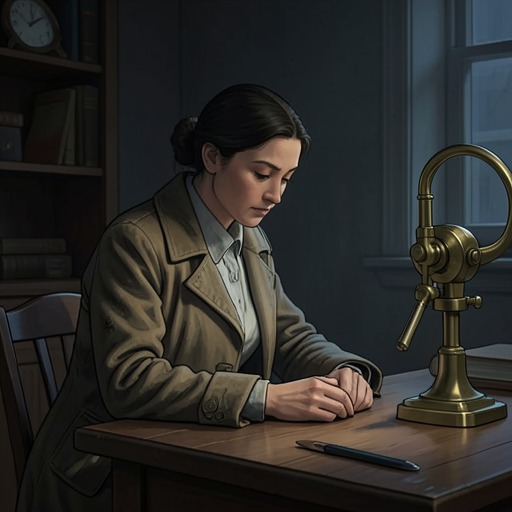
The image shifts as Maggie’s circumstances change. Before meeting Marco Cavelli, she is settled into a pattern of accepting losses, appreciating what remains, and having no idea what life will be like when Ellen moves out. On Christmas Day, alone in the house and looking at old photographs, she wonders whether she will stop feeling broken and whether Marco Cavelli can be forgotten. The family’s departures have turned an anticipated empty nest into a present loneliness, while the relationship has made that loneliness newly legible rather than creating it from nothing.
Maggie’s reflections distinguish contentment from happiness: before falling in love, she could regard a quieter, safer life as enough; afterward, she knows that this kind of contentment is not the same as being happy. The half-life image consequently names both an adaptation that helped her endure and a limitation that her awakening reveals. It does not resolve whether she can sustain a fuller life or overcome her fear of losing it. Its significance rests in that unsettled recognition: Maggie has learned to survive by making peace with less, but she can no longer mistake survival, or gratitude for what she has, for the whole of being alive.