Being “told and not told”
Never Let Me GoBeing “told and not told” is the condition in which Hailsham students acquire fragments of knowledge about their futures without grasping their full implications. Miss Lucy gives the condition its clearest name, but its significance emerges gradually: the students have heard that they are different and that donations await them, yet their childhood surroundings and the guardians’ handling of information keep those facts from becoming fully understood. The phrase describes not simple ignorance, but a managed and uneven awareness whose consequences become clearer only in retrospect.
Knowledge Before Understanding
As a child at Hailsham, Kathy recalls that students had some sense of being different from their guardians and from people outside, and perhaps knew that donations lay ahead. That awareness remained shallow. At nine or ten, the subject was embarrassing and unsettling, in part because guardians who were usually confident became awkward when the conversation approached it. Students learned to retreat from the topic, and they punished Marge K. after she raised it following a rounders match. Their silence was therefore not proof that they knew nothing; it reflected a discomfort they had learned to share.
Kathy later describes the difference between receiving information and being able to absorb what it means. Talks, videos, discussions, and warnings could not make the students’ fate feel immediate while they were eight years old, living together at Hailsham and treated warmly by guardians, gardeners, and delivery men. Yet she believes some of the knowledge was already lodged in them. A child could carry a vague expectation of eventual difference without being able to name or examine it. When a moment made that difference visible, the realization could feel newly strange despite having been anticipated in some obscure way.
Miss Lucy Names the Condition
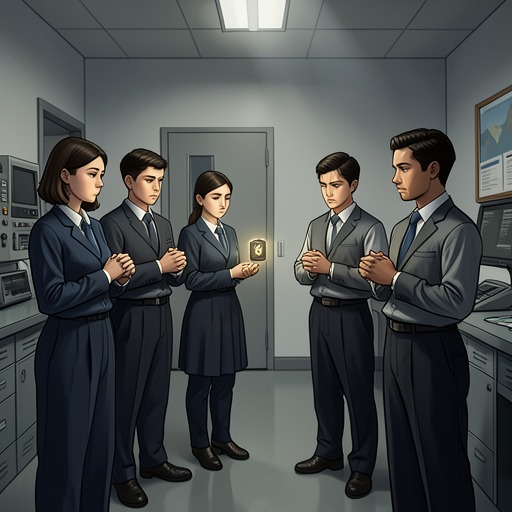
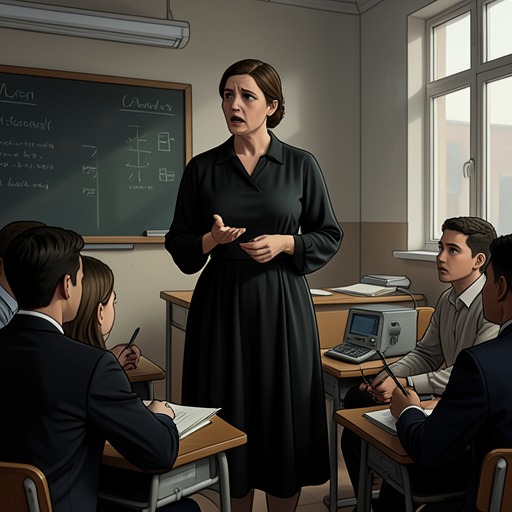
The distinction becomes explicit when Miss Lucy addresses the students at the pavilion. She objects to their talk about futures such as going to America, becoming film stars, or working in supermarkets. Instead, she tells them that their lives have been decided: they will become adults and, before old age or even middle age, begin donating their vital organs. She insists that they were brought into the world for that purpose and need to understand who they are and what lies ahead. Her intervention is unusually direct, replacing the students’ imagined possibilities with the future their education has left indistinct.
Miss Lucy also says they have been “told and not told”: they have received information, but do not really understand it, and some people are content to leave matters that way. The students’ reaction reveals the limit of her attempt. The account of the speech is uncertain in some details: Kathy doubts that Miss Lucy explained the sequence of carer work, donations, and recovery centres, although she thinks Miss Lucy may have intended to say more. The students leave relieved when the speech ends, and later discussion focuses more on Miss Lucy herself than on the substance of what she said. Some think she has lost her composure; others assume she was instructed to speak. If students mention the facts, they tend to dismiss them as things they already knew. The words have been heard, but their significance has not settled.
How Information Enters Everyday Life
Kathy’s retrospective account suggests that the students’ knowledge accumulated in fragments. Around thirteen, lectures about sex often brought donations into the discussion. Because the students were preoccupied with sex, they may have let information about their futures recede into the background even as they absorbed some of it. The lectures explained that students could not have children, and connected the rules governing their sexual behavior to the difference between their lives and those of people outside. In Kathy’s interpretation, that overlap may have helped convey basic facts without making the donations the sole subject of discussion.
The emotional rules around the subject also changed. Earlier, students avoided it and treated careless discussion as grounds for punishment. From about thirteen, they began to make jokes about donations, much as they joked about sex, while still finding the subject awkward and largely avoiding open conversation. Humor made occasional allusions possible without removing the underlying silence. In adulthood, Kathy can recognize this as another way information was present but not fully confronted: the students could joke about what awaited them while remaining reluctant to discuss it plainly.
Years later, Tommy offers Kathy a possible explanation for the pattern. He thinks the guardians may have timed what they told the students so that each new piece of information arrived while they were still too young to understand it properly. The facts would nonetheless accumulate in their minds, unexamined. Kathy considers the theory too close to a conspiracy, and doubts that the guardians were so calculating, but accepts that it may contain some truth. She remembers knowing vaguely about donations from around six or seven and finding that later lectures did not arrive as complete surprises. The theory therefore remains an interpretation, not a proven account of the guardians’ intentions; its force lies in how well it describes the students’ experience of partial knowledge.
Protection, Truth, and Its Cost
When Kathy and Tommy ask about Miss Lucy years later, Miss Emily explains that Miss Lucy wanted the students to become more aware of what lay ahead and believed that withholding a fuller picture cheated them. The guardians considered that approach mistaken. Miss Emily says they believed Hailsham could give the students something lasting by sheltering them, even when shelter involved keeping things from them or lying. In her view, fuller disclosure would have shattered their happiness and made it harder for them to lose themselves in lessons, art, and writing. Miss Lucy, though well-meaning, lacked a practical understanding of what the guardians thought best for students beyond Hailsham, and was made to leave.
Miss Emily’s account gives the condition a deliberate institutional dimension: partial understanding was not only an accidental failure of communication, but also part of a protective policy. That defense does not erase the tension between a protected childhood and the students’ right to comprehend their futures. Miss Lucy’s intervention shows the cost of the policy from the opposing direction: telling the truth more plainly might have made the students’ lives less sheltered, but withholding clarity left them to approach their fate through evasions, assumptions, and belated recognition.
Adult Consequences and Continuing Uncertainty
The condition does not end when the students become adults. Kathy’s account of care and donation shows knowledge developing alongside practical experience. At thirty-one, she has been a carer for more than eleven years and expects to continue until the end of the year, making her service nearly twelve years. She describes donors’ fourth donations as a milestone that attracts special respect from fellow donors and reassuring attention from medical staff, yet the meaning of that milestone remains uncertain. Tommy tells her that people fear the fourth donation because they are not sure they will truly complete, and that no one tells them for certain.
The rumors Kathy recounts extend that uncertainty beyond what the students were taught as children: some speculate that a donor might remain conscious after technically completing, face further donations, and have no recovery centre, carer, or friends. Kathy calls this speculation frightening and does not claim that it is true. She dismisses Tommy’s concern at the time, though she later regrets that they did not discuss it. The episode repeats the pattern in adult life: people encounter hints about what lies ahead but lack reliable answers, and discomfort can close a conversation before understanding is reached.
The phrase thus connects Hailsham’s childhood education to the students’ later lives without making every uncertainty equivalent. Some facts are stated plainly, some are softened or delayed, and some remain rumor. Kathy’s retrospective narration distinguishes what she remembers, what Tommy theorizes, and what the adults later admit. Together, these layers show how students can be informed without being prepared: knowledge is present in lessons, jokes, warnings, and institutional explanations, but its meaning arrives unevenly, often only when the future it describes is already approaching.