Decline of the movement after the Morningdale incident
Never Let Me GoThe decline of the movement after the Morningdale incident marks the end of a fragile campaign to secure better lives and recognition of humanity for students created for the donation programme. As Miss Emily explains to Kathy H. and Tommy, the scandal did not itself create the system’s underlying contradiction: the world wanted students’ organs while resisting the idea that the students were fully human. It changed the public climate in which reform had briefly been possible, and the movement that had helped Hailsham could not survive the loss of its supporters.
Background and the movement’s gains
Miss Emily places the struggle against the background of the early 1950s, when rapid scientific breakthroughs made previously incurable conditions treatable. The public’s demand for cures took precedence over questions about how students were brought into existence or raised. For years, people could avoid confronting the source of donated organs by imagining that they appeared from nowhere or were grown in a vacuum; when concern about the students became harder to ignore, the donation programme was already established and there seemed to be no way to reverse it.
At the height of its influence in the seventies, the movement sought public support through large events around the country. Cabinet ministers, bishops, and other prominent people attended; speeches were made and substantial funds pledged. The students’ art was presented as evidence of their humanity. Miss Emily recalls these efforts as a difficult campaign that nevertheless won improvements for a select few, not a transformation of the system as a whole. Its central vulnerability was built into its purpose: it argued for students’ humanity while the wider society continued to require them to donate.
Morningdale and the changed climate
The Morningdale scandal concerned James Morningdale, a scientist working in a remote part of Scotland who pursued the possibility of creating children with enhanced characteristics, including superior intelligence and athletic ability. His research went far beyond legal boundaries; after it was discovered, his work was stopped. The affair did not become a major public matter in itself, but, in Miss Emily’s account, it revived a fear that had long existed: the prospect of created children taking their place in society, and even being demonstrably superior to other people.
The scandal’s effect on the movement was indirect but severe. The prospect of enhanced children frightened the public, and Miss Emily says she and her colleagues did not at first recognize an obvious connection between Morningdale and the students they were trying to help. In retrospect, she considers the movement culpable for not responding more alertly, though she acknowledges that Marie-Claude believed the collapse would have happened regardless. Morningdale was not the only cause: other developments, including a disturbing television series, also contributed to the turn in public feeling.
Withdrawal of support and closure
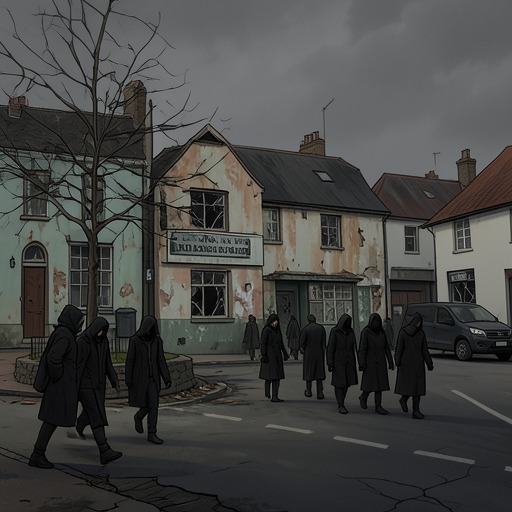
The movement depended on supporters whose backing could change with the political and social climate. When that climate turned, influential people who had once been eager to help no longer wanted to be associated with the cause. Sponsors were lost one after another over a little more than a year. Hailsham continued for two years longer than Glenmorgan House, but it too was eventually obliged to close. The allied work of Hailsham, Glenmorgan House, and the Saunders Trust was swept away, and Miss Emily says that little trace of the campaign remained.
Closure did not mean that the conditions the movement opposed had ended. Students continued to be needed for the donation programme, while the public again avoided thinking about their lives and upbringing. Miss Emily describes the surviving institutions as vast government homes: better than they had once been, but still places where conditions could be appalling. The movement had improved life for some students without abolishing the structures that made them vulnerable; once its support disappeared, those limited protections proved precarious.
Aftermath and significance
The movement’s aftermath is preserved in the private remainder of its work. Miss Emily and Madame have retreated to a house where an upstairs room contains a mountain of students’ art, alongside debt and memories of those they knew. The art that once served as public evidence of the students’ humanity has become a personal record of what the campaign tried to defend. Madame resists the expectation that the students should feel grateful, emphasizing the distance between the effort made on their behalf and what the students themselves understood or received.
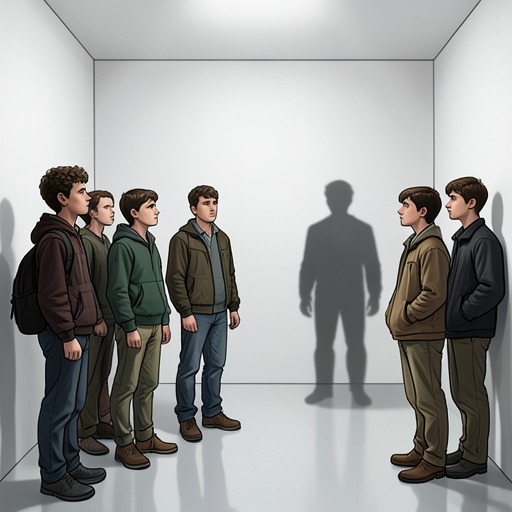
The wider donation system continues to shape Kathy H.’s present. At thirty-one, she has spent more than eleven years as a carer, expects to finish close to twelve years, and takes pride in helping donors remain calm and recover well. Her work and the donors’ eventual completions show the limits of the movement’s gains: care and improved conditions matter to individual lives, but they do not undo the programme. The decline therefore closes a reform effort without resolving the injustice that called it into being; students are again pushed into the shadows even as remnants of the campaign preserve evidence of their lives.