Deferrals
Never Let Me GoDeferrals are the rumor that a Hailsham couple in genuine love could persuade the people who ran Hailsham to postpone their donations, supposedly allowing them several years together before donation began. The promised reprieve was never real. Its significance lies in the distance between the hope it offered and the institution’s eventual confirmation that no such exception had ever existed: a story sustained among students and donors becomes a possibility Kathy H. and Tommy act upon, then a last hope they must surrender.
The Rumor and Its Promise
The theory reached the students at The Cottages in a form that sounded specific enough to believe. Chrissie said she and Rodney had heard in Wales that Hailsham students in special circumstances had obtained a deferral. According to the account, students could ask to have donations put back by three or even four years, provided they could convince the people in charge and qualify. The reported qualification was not simply being a couple: a boy and a girl had to be properly in love and able to show it.
The story acquired a vivid example at the White Mansion. Chrissie described a Hailsham boy with only weeks left before becoming a carer; he and his girlfriend supposedly went to see someone and were granted three years together there, without continuing their training. This detail gave the rumor a place, a duration, and a model couple. Rather than an abstract promise, it became a precedent that Chrissie and Rodney could imagine applying to themselves or to people they knew.
The belief depended on an idea of love as something that could be demonstrated and recognized by those administering the system. It offered no general escape from donations, only a temporary delay for a couple judged to be genuinely in love. The promised time together was therefore both intimate and conditional: even the possibility of private life was imagined as something that required institutional approval.
How the Story Travels
The rumor had circulated before Chrissie raised it. Kathy H. had heard fragments among veterans at The Cottages over several weeks; when younger students appeared, the veterans became awkward and fell silent. That pattern made the subject seem both sensitive and important. Chrissie’s account at the seafront café showed Kathy H. that the idea was not idle gossip for some veterans but a hope they had carefully carried and tested.
The story’s transmission did not stop at The Cottages. Kathy H. observes that rumors can move from one recovery centre to another across the country within days, until donors everywhere are discussing them. The boat stranded in the marshes is another example of such rapid circulation, but the comparison clarifies the social life of the deferral story: information passed between centers could give isolated donors a shared topic, while leaving its source and reliability uncertain.
Miss Emily later confirms that the deferral rumor long predated Kathy H. and Tommy. While Hailsham was still operating, two or three couples a year would try to speak with its staff about the supposed exception; one couple even wrote. Students could also find the estate by breaking the rules. Miss Emily says that she tried to suppress the talk inside Hailsham, but could not control what former students said after leaving. In her account, the rumor repeatedly arose anew rather than descending from one verifiable case. Madame, she says, regarded believers as foolish; Miss Emily eventually stopped worrying about the story, reasoning that most would never test it and that it gave students a fantasy to hold on to.
Hope Becomes a Plan
When Chrissie presents the rumor, Ruth responds with an air of authority that captures the pressure it exerts. Tommy, by contrast, tells Kathy H. that nothing of the kind had been discussed at Hailsham, at least as far as he remembered. He thinks the idea has circulated recently among veterans and that people like Ruth have encouraged it. Yet he does not dismiss it altogether. He has been turning it over and wonders whether, if true, it could explain some of the things that had puzzled them at Hailsham.
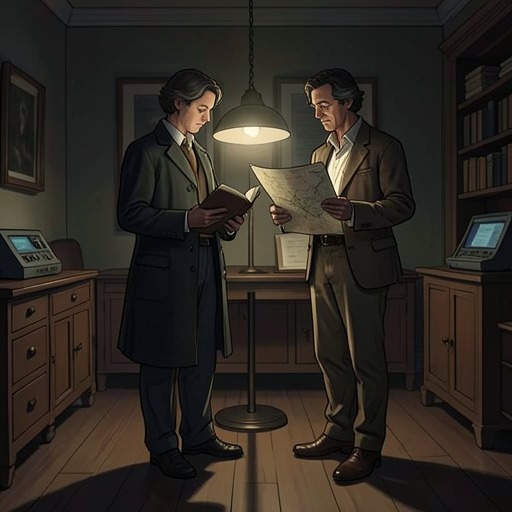
The rumor becomes consequential again through Ruth’s effort to repair the damage she believes she caused by keeping Kathy H. and Tommy apart. She urges them to try for a deferral, saying that the chance belongs to them. Kathy H. protests that it is too late because Tommy has already made two donations. Ruth rejects that reasoning and gives Tommy a crumpled piece of paper: Madame’s address. She says it took time and risk to obtain, and insists that the two of them should go and ask.
Ruth’s gift converts hearsay into an actionable route. The address does not prove that a deferral exists, and Ruth cannot promise that the attempt will succeed; it gives Kathy H. and Tommy a person to approach. After Ruth’s second donation, Kathy H. understands that Ruth wants her to become Tommy’s carer, and promises this to her during a brief lucid moment at Ruth’s bedside. In the later meeting with Madame and Miss Emily, Kathy H. and Tommy also bring the deferral question they have prepared to ask. The rumor has thus shaped both a practical journey and the emotional reconciliation that makes the request possible.
Official Denial
Miss Emily states plainly that deferrals have no truth behind them. She says the rumor was never true, not even before the Morningdale scandal, when Hailsham was regarded as a leading example of a more humane approach. Her account removes the last possible historical loophole: the promised exception did not once exist and then disappear. It was always a wishful story.
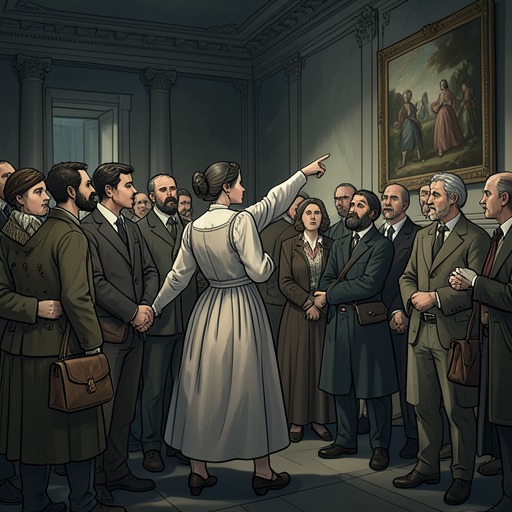
The denial lands with particular force because Kathy H. and Tommy have taken the claim seriously and hoped carefully. Miss Emily expresses regret at disappointing them, while explaining why she had tolerated the rumor’s persistence: most students, she thought, would never put it to the test. The fantasy could offer comfort without confronting the institution directly—until this couple arrived to ask for an answer. Tommy presses the point after Miss Emily’s first denial, and she confirms that their lives must follow the course already set for them.
That exchange also unsettles the meaning Kathy H. and Tommy had attached to their Hailsham education. Tommy asks whether the lessons and everything they experienced had been intended to lead to this disclosure. Miss Emily acknowledges that they might appear to have been pawns, but says they were fortunate to have grown up during a period when people’s opinions and feelings supported a more humane approach. Her explanation does not restore the deferral they sought. Instead, it places their hope within a changing institutional climate that offered some forms of protection but never the reprieve the rumor promised.
The Wider Shadow of Uncertainty
The deferral rumor belongs to a wider pattern in which students and donors try to make an opaque future more imaginable. The account of true lovers being granted extra years gives uncertainty a comforting shape: there might be a rule, a test, and a person with the power to grant a delay. The formal denial exposes the absence of that rule, but not the conditions that made the hope attractive. The institution’s repeated failure to explain the future fully leaves space for stories to supply what official knowledge withholds.
Tommy’s later anxiety about a fourth donation shows another, distinct form of uncertainty. He believes donors worry about reaching a fourth because they are not sure they will truly complete, and Kathy H. recalls frightening talk that a donor might remain conscious after the supposed endpoint, facing further donations without carers, friends, or recovery centers. This is not evidence that deferrals exist; it is another unresolved fear about the donation system. Set beside the lovers’ imagined postponement, it shows how rumor can express both longing for more time together and dread of what the official terms may not disclose.
The deferral story therefore matters even though it is false. It shapes what Chrissie and Rodney ask of the Hailsham students, gives Ruth a means to try to set right her past interference, and brings Kathy H. and Tommy to Madame and Miss Emily. Its promise is measured in years, but its emotional force comes from the prospect of choosing how to spend them together. The final denial closes that possibility while revealing why the rumor endured: for students with little control over the course of their lives, even an unverified promise of time could become worth pursuing.