Donation period
Never Let Me GoThe Donation period is the phase in which the students’ lives are governed by organ donations, recovery, and the care that makes it possible to endure one donation after another. It is not simply a sequence of medical procedures: it shapes relationships, work, and expectations, while leaving the donors uncertain about where the process ends. Kathy H.’s long career as a carer brings that uncertainty into close view, particularly as she cares for Ruth and Tommy.
Position in the students’ lives
The period follows the carer phase. At thirty-one, Kathy H. has worked as a carer for more than eleven years and expects to continue until the end of the year, bringing her tenure to almost exactly twelve. She has been allowed to choose donors for only the final six years of that time. Her account makes the transition between roles feel both institutional and personal: carers eventually stop, while donors proceed through further donations, but the people involved do not experience those changes as an abstract schedule.
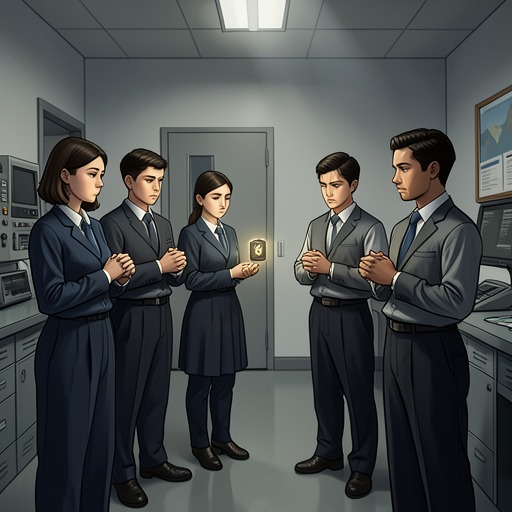
The donations have a defined progression, and the fourth carries particular weight. Donors approaching it may talk about it continually, joke about it, or avoid the subject; even those who have been unpopular can receive a new respect for reaching that stage. Doctors and nurses reinforce the distinction by greeting a donor on a fourth donation with smiles and handshakes. Yet this recognition does not resolve what comes next. Tommy observes that people fear the fourth because they cannot know for certain whether they will complete, and Kathy has no firm answer to offer him.
Care and the experience of donation
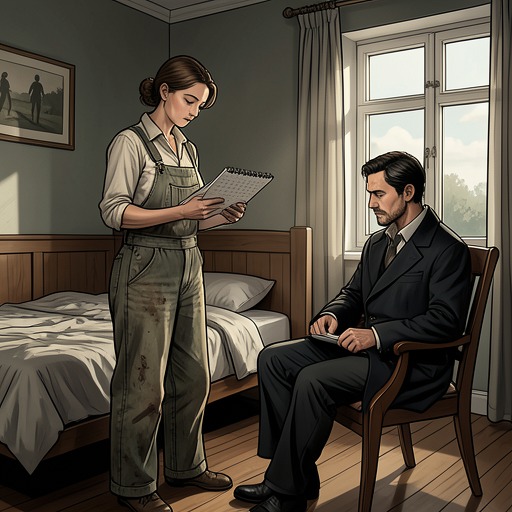
Kathy describes caring as skilled emotional work. She has learned when to stay and comfort a donor, when to leave them alone, when to listen, and when to urge them to recover their composure. She takes pride in donors doing better than expected and recovering quickly, and especially in the fact that few have been classified as agitated, even before a fourth donation. Care, in this account, is attentive to each person’s changing needs, but it cannot remove the physical risk or guarantee a donor’s survival.
That limit is clearest in Kathy’s description of donors who do not survive an earlier-than-expected complication. A reassuring letter from the institution, or nurses saying that the carer did all they could, does little to prevent the resulting demoralization. The work also involves isolation: carers spend long hours driving between centres and hospitals, sleeping away from home, and often lacking anyone with whom to share their worries. Kathy says she has learned to speak up to medical staff on a donor’s behalf, even while trying not to become a nuisance. Her account sets that practical advocacy against the carers who fall silent in hospitals and later blame themselves when things go wrong.
Relationships within the system
Choosing donors gives Kathy a way to renew older connections. After she chooses Ruth, who already has another carer, they meet again at the recovery centre in Dover. Their past disagreements do not disappear, but their shared childhood at Hailsham and their memories of a world few others know matter more between them. Kathy comes to seek out donors from her past when she can, and choosing familiar people helps her sustain the emotional connection on which her work depends.
The care relationship does not erase tension. Kathy recognizes that Ruth does not fully trust her, and their visits reach a point where Kathy considers ending her assignment. A rumor about a stranded boat gives them a subject they can discuss together and becomes the occasion for Ruth to offer Kathy and Tommy a crumpled paper bearing Madame’s address. Ruth wants them to try to obtain a deferral. Later, after Ruth’s second donation, Kathy sits beside her hospital bed for hours, holding her hand and squeezing it when pain makes her twist away. During a brief moment when Ruth recognizes her, Kathy promises to become Tommy’s carer. The promise connects Ruth’s final, failing donation to the care Kathy will give someone else.
Uncertainty and the meaning of completion
Tommy’s fourth donation brings the uncertainty of completion into the open. He tells Kathy that donors fear the fourth because no one tells them for certain whether they will complete. Kathy dismisses his concern as baseless talk, but knows she has no evidence for that reassurance and later regrets that they withdrew from the subject. The rumor he raises imagines that a donor might remain conscious after being considered complete, face more donations without recovery centres, carers, or friends, and eventually be switched off. Kathy presents this as frightening speculation, not as confirmed knowledge; its force lies precisely in the absence of a reliable answer.
The uncertainty sits within a broader history of how the students are valued. Miss Lucy tells Tommy that their art matters as evidence, while admitting that she cannot explain everything about Hailsham or the students’ place in the wider world. Miss Emily later explains that Hailsham and allied institutions used student art to argue publicly that clones raised in humane, cultivated surroundings could be as sensitive and intelligent as ordinary people. The Exchanges had earlier made students’ creative work a basis for tokens and personal possessions; in the Donation period, the medical system gives their bodies a different, far graver place in the world. The contrast does not make the donors’ care unreal, but it shows how tenderness and institutional exploitation coexist throughout this final phase.