Donations
Never Let Me GoDonations are the compulsory organ transfers for which the students are created, the purpose that governs their lives after Hailsham. They are spoken of first as a distant future, then managed through repeated medical procedures and recovery, and finally approach the feared condition called Completion. The students are told what lies ahead, but not in a way that lets them fully understand it; their uncertainty about the process and its endpoint gives the system its human cost.
Definition and institutional purpose
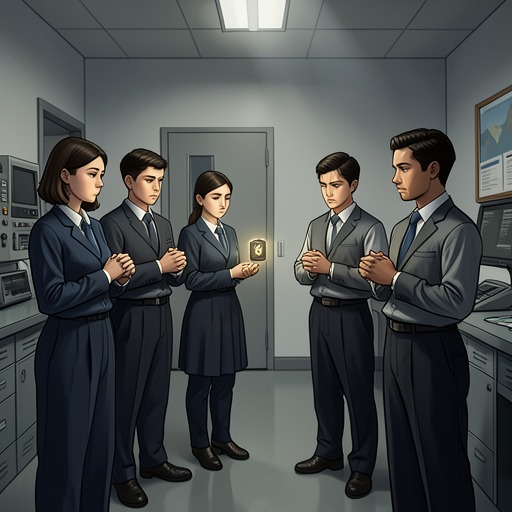
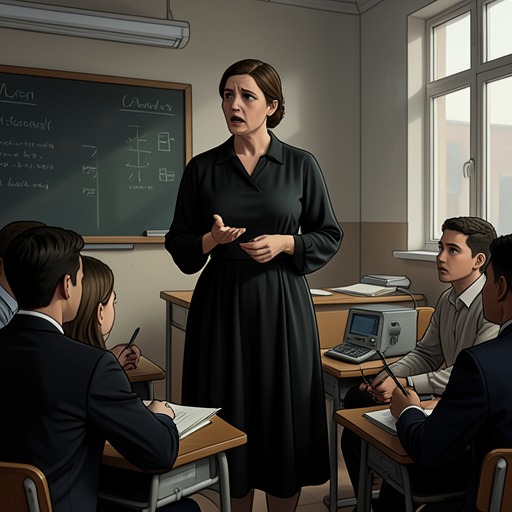
Miss Lucy makes the purpose explicit to the students: they will grow up, begin donating vital organs before middle age, and do so because they were brought into the world for that purpose. Her intervention rejects the ordinary futures some of them imagine, such as going to America, becoming film stars, or working in supermarkets. The programme does not merely interrupt those ambitions; it has already decided what their lives are for.
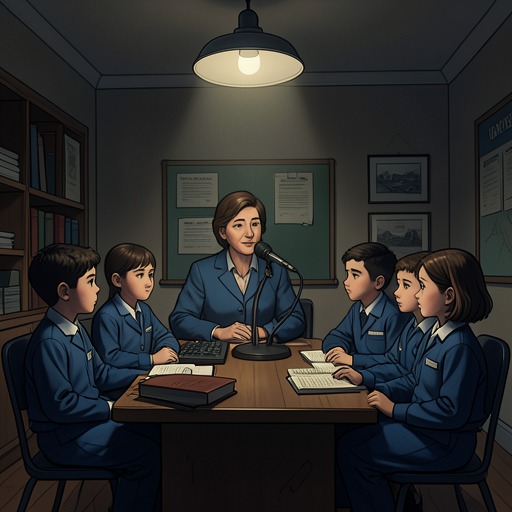
The students’ language reflects this institutional framing. They are called Donors once they enter that stage of life, while those who care for them are Carers. A donation is thus one episode in a larger arrangement of assigned roles, medical intervention, and recovery. Kathy describes donors returning to recovery centres and notes that their recovery times are measured and assessed. Her work includes judging when to comfort someone, when to leave them alone, and when to urge them to carry on. The system’s clinical routines therefore depend on intimate, emotionally demanding labour as well as on the donors’ bodies.
What the students know—and do not know
Before Miss Lucy’s frank explanation, the students have already heard about Donations, but that knowledge remains partial. Kathy and Tommy discuss whether Miss Lucy believes they have not been taught enough about what will happen to them. Kathy initially assumes that the subject has been covered; Tommy’s recollection suggests instead that Miss Lucy objects to how little they understand. Her phrase for their condition is being told and not told: information has been supplied, yet its implications have not become real knowledge.
The students’ earlier way of talking makes that gap visible. At thirteen, they turn the prospect of bodily loss into a running joke about unzipping organs and piling them onto a classmate’s food. The joke is not simply amusement at the procedure. It lets them invoke the future while keeping it at a comic distance, and it can be used to put one another off their meals. After Miss Lucy speaks, such jokes fade. Donations remain a subject they tend to avoid, but the avoidance changes character: it becomes sombre rather than embarrassed. Her words have not made the future less frightening; they have altered what the students can pretend not to know.
Repetition, recovery, and the approach of Completion
The process is experienced as a succession of donations, not as one isolated operation. Kathy’s account of her work refers to donors who have reached a fourth donation and to the difference in their condition and treatment. She takes pride in her donors’ recovery times and in how rarely they are classified as agitated, even before a fourth donation. The attention to recovery is practical, but it also reveals the sustained emotional effort required to accompany people through repeated procedures.
For donors, a fourth donation carries a particular social weight. Tommy receives notice that his fourth is approaching, and Kathy and he discuss how people respond to this stage: some talk constantly, some joke, and some refuse to discuss it. Donors on a fourth may even be treated with congratulatory respect by other donors, doctors, and nurses. Yet the ceremony does not resolve what comes next. Tommy suspects that people fear the fourth because they are not sure they will truly complete, and he raises the possibility that a donor might remain conscious after being technically complete, facing further donations without a recovery centre, Carers, or friends. Kathy dismisses the idea as wild talk, but knows she has no evidence to reassure him. Their conversation ends without an answer, leaving the uncertainty itself as part of the ordeal.
Care, friendship, and the donor’s body
The distinction between Carers and Donors shapes relationships as well as work. Kathy has been a Carer for over eleven years and is expected to continue until the end of the year, bringing her tenure to almost exactly twelve years. She says her donors have generally done better than expected, and that her skill lies partly in recognizing when to stay close and when to give them space. Care is neither mechanical attendance nor unlimited sympathy: Kathy stresses that patience and energy wear down, and that choosing Donors from her own past helped her feel close to them again.
That personal closeness can make the donor’s experience harder to discuss. Kathy and Tommy talk about the fourth donation, but when he voices his fear about what may follow Completion, she shuts down the conversation rather than meet it with an answer she cannot substantiate. She later regrets that they both withdrew from the subject. Their exchange shows the limits of care within a system whose most consequential questions even its medical staff cannot answer with certainty. Attentiveness can ease distress, but it cannot alter the prescribed future or supply knowledge the institution withholds.
Jokes, exchanges, and unequal forms of giving
At Hailsham, the students learn to value possessions through the Exchanges, where creative work earns tokens that can be spent on other students’ work. The objects they make and choose become personal treasures, and the exchange system influences how students regard one another. This gives the novel a pointed contrast between voluntary, reciprocal giving among students and Donations, which are demanded from the students’ bodies without a comparable choice or return.
The contrast is sharpened by the way the students joke about organs as though they could simply be handed over. Their mock image of unzipping makes bodily transfer sound casual, while the actual programme assigns each student to undergo Donations. Later, Hailsham’s defenders explain that they collected the students’ art to persuade the public that the students were sensitive and intelligent human beings, rather than shadowy objects serving medical science. Their campaign challenged the way the Donation Programme was run and sought humane conditions, but Miss Emily acknowledges that they could never secure the students’ hoped-for deferral. Recognition of their humanity did not free them from the programme.
Narrative significance
Donations organize the novel’s future-oriented tension: the students know the broad outline of what will happen, but the practical and existential meaning of that future reaches them unevenly. Miss Lucy’s disclosure changes their manner of speaking; Tommy’s questions expose what remains unknowable; and Kathy’s careful recollections show how medical routines are lived through relationships, jokes, and silences. The word can sound like a discrete act of giving, yet the system it names is not an ordinary exchange. It turns the students’ lives into a predetermined sequence of bodily service, while leaving them to find companionship and dignity inside the time they are given.