Donors
Never Let Me GoDonors are the students destined to give their vital organs, a role that determines their futures before they are old and places them within a sequence of medical procedures, recoveries, and eventual Completion. The term names more than a medical status: it describes the life toward which Hailsham prepares its students, while also exposing the distance between what they are told and what they can truly understand. The story makes that distance palpable through donors’ physical vulnerability, their varied attempts to face each donation, and the carers who accompany them without being able to alter their fate.
Identity and the Donation System
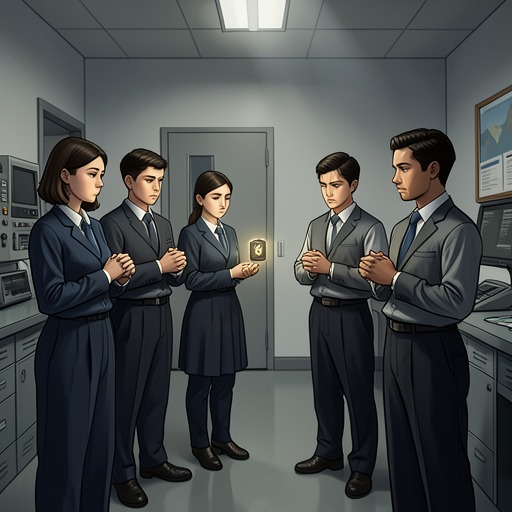
At Hailsham, the students are told that they will become adults and then donate their vital organs; Miss Lucy insists that donation is what they were created to do and that their futures have already been decided. Her intervention makes explicit what the students have been told only incompletely: they have heard about Donations, but have not properly grasped what lies ahead. Their eventual status as Donors is therefore not presented as a freely chosen vocation. It is the predetermined purpose around which their lives are arranged.
The account leaves important parts of the process uncertain. Donors pass through successive donations and recoveries, and a fourth donation carries a special weight. Kathy H. observes that people may be congratulated for reaching a fourth, even if they were previously unpopular, while doctors and nurses greet them with smiles and handshakes. That ceremonial respect does not remove the fear attached to the milestone. Donors respond differently: some talk about it repeatedly, some joke, and others refuse to discuss it. The same approaching procedure can become an occasion for conversation, avoidance, or public recognition.
Bodies, Recovery, and Care
The medical process is registered through the donors’ bodies and through the expectations placed on recovery. Kathy H. has cared for donors for more than eleven years, with another eight months expected to bring her service to almost exactly twelve years. She assesses her work partly by the recovery times of those in her care and by how few have been classified as agitated, even before a fourth donation. Her account presents caregiving as skilled emotional labor as well as practical work: she has learned when to stay and comfort a donor, when to give them privacy, when to listen, and when to urge them out of a state of distress.
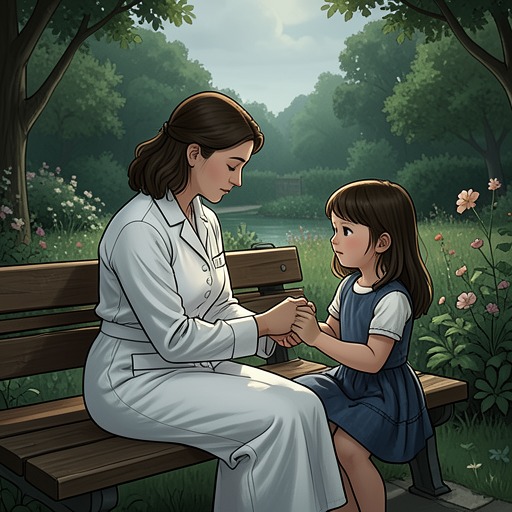
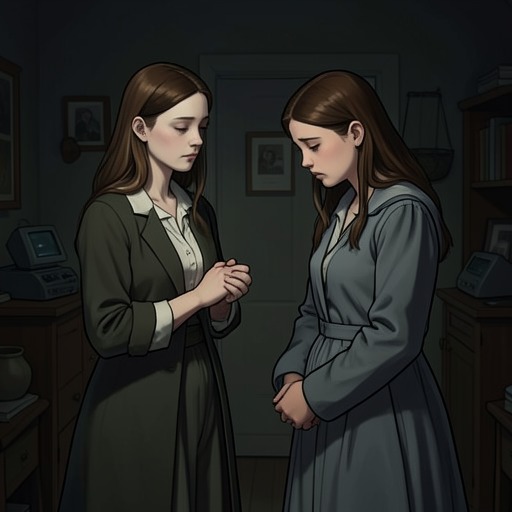
That care can make the time surrounding a donation less solitary, but it cannot undo the system’s finality. In the aftermath of Ruth’s second donation, Kathy is allowed to sit beside her for hours in a hospital room. Ruth is conscious but largely inaccessible, absorbed in managing the pain; Kathy holds her hand and squeezes it when Ruth twists away. During a brief moment of recognition, Kathy promises that she will become Tommy’s carer. The scene shows how care persists amid bodily crisis as a bond of presence and response, while remaining unable to secure recovery or a different future for the donor.
Relationships and the Work of Caring
For Kathy H., caring is sustained by personal connection, not simply by professional competence. During her final six years as a carer, she has been allowed to choose whom she looks after. She acknowledges that some regard this privilege as favoritism toward Hailsham students, and that the familiar connection can help explain her good record. But she also describes the emotional cost of working without a deeper link: carers have finite patience and energy, and continuing to feel for donors is part of what has allowed her to keep going.
Choosing Ruth, already assigned another carer, brings Kathy back into contact with someone from her past. When she sees Ruth again at the Dover recovery centre, their disagreements do not disappear, but shared memories of growing up at Hailsham matter more. Kathy subsequently seeks out donors she knew before, including people from Hailsham, and says that choosing familiar people helped her get close again to Ruth and Tommy. The preference is both an emotional resource and a practical response to the demands of care: a shared history gives the relationship something the medical routine alone cannot provide.
Tommy’s experience makes the limits of that shared care especially clear. Around the time he receives notice of his fourth donation, he raises the possibility that no one can know for certain whether a donor will truly complete. Kathy dismisses his concern, but recognizes that she has no evidence to support reassurance. Rumors imagine that a person might remain conscious after technically completing, face further donations without carers or friends, and eventually be switched off. The account presents this as frightening speculation, not a confirmed description of what happens. Its force lies in the absence of certainty: even intimate partners cannot offer a reliable answer to the question Tommy raises.
Institutions, Exchange, and Human Worth
The students’ lives before donation are also shaped by an economy of exchange. At Hailsham’s four seasonal Exchanges, students receive tokens for their creative work and use them to acquire other students’ work. The objects become treasured personal possessions, but the system also makes artistic ability a measure of standing among students. When Madame takes selected works away, the honor once associated with that choice comes into conflict with the students’ growing sense that they are losing valuable possessions. The resulting tokens controversy reveals how even their ordinary efforts to create and collect take place within rules they did not set.
Miss Emily later explains that Hailsham’s collection and display of student art had a public purpose. Alongside Glenmorgan House and the Saunders Trust, Hailsham formed part of a movement that challenged the way the Donations programme was run. Exhibitions of the students’ work were used to argue that they were as sensitive and intelligent as ordinary people. The campaign sought recognition of their humanity and improved the conditions in which they were raised; Miss Emily also makes clear that it could never grant the hoped-for deferral. The art could help make the students visible to the world, but it could not release them from becoming Donors.
Uncertainty and Significance
The approach to a fourth donation gathers the subject’s central tension into one question: what does completion mean, and what happens beyond it? Donors may treat the milestone as a distinction, while fearing that the promised end may not arrive as expected. Kathy and Tommy’s conversation cannot resolve the rumors, and Kathy’s attempt to dismiss them only emphasizes the lack of dependable knowledge. Their uncertainty is not evidence that the rumors are true; it is evidence of how little assurance the donors have about the final stage of a future imposed on them.
Donors are thus defined by both the institution’s certainty about their purpose and the characters’ uncertainty about its consequences. Care can calm, comfort, and create moments of recognition; shared memories can reconnect people across years and recovery centres. Yet none of these relationships changes the course of Donations. The contrast between humane care and an unaltered medical destiny makes the donors’ lives more than a story of procedures: it shows the human attachments and unanswered fears that persist inside a system that has already decided what its subjects are for.