Dover recovery centre
Never Let Me GoThe Dover recovery centre is the modern facility where Kathy resumes her relationship with Ruth after Ruth’s first donation and cares for her through recovery. Its compact, gleaming rooms and balcony offer a strikingly comfortable setting for visits that begin with relief, turn painfully guarded, and gradually become the occasion for long conversations about Hailsham and their shared past. The centre is more than a backdrop to Ruth’s treatment: it is the place where old intimacy is tested against mistrust, and where memory helps the two women find a way back to one another.
Setting and physical character
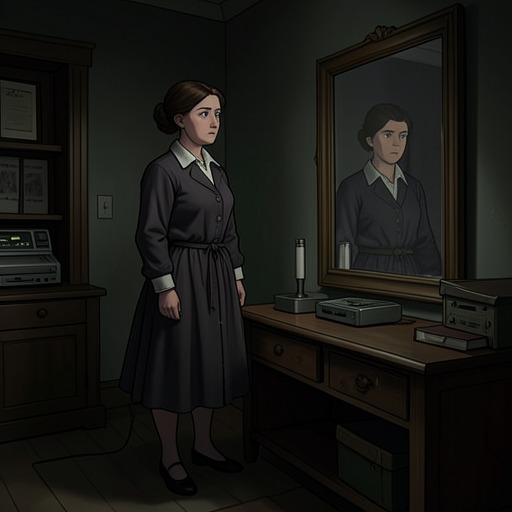
Kathy remembers the Dover recovery centre as one of her favourite centres, a place where she would not mind ending up herself. Its recovery rooms are small but well designed and comfortable. Gleaming white tiles cover the walls and floors, kept so clean that entering can feel almost like stepping into a hall of mirrors. The reflection is not literal or complete; rather, movement leaves a pale, shadowy impression across the tiled space when someone raises an arm or sits up in bed. The description makes the centre feel bright and orderly while also giving its whiteness an uncanny, faintly disorienting quality.
Ruth’s room has large sliding glass panels through which she can see outside even from her bed. When the weather is warm, she can step onto a small balcony for fresh air. From there, the view takes in rooftops crowded with aerials and satellite dishes, and, far off, sometimes a glistening line of sea. The balcony gives Ruth a way to leave the enclosed room without leaving the centre, and it becomes the setting for repeated evening visits and unhurried conversation.
Kathy’s affectionate description of Dover is sharpened by comparison with Kingsfield recovery centre, where she later visits Tommy. Dover has gleaming tiles and double-glazed windows that seal with a turn of a handle; Kingsfield is awkward to reach, noisy with traffic beyond its fencing, and poorly adapted in several practical respects. The contrast establishes Dover as unusually comfortable among recovery centres, not simply because it looks clean but because its rooms and windows provide a greater sense of ease and access to the outside.
Ruth’s recovery and Kathy’s return
Kathy first arrives at Ruth’s room a few weeks after a conversation with Laura, roughly two months after Ruth’s first donation, which had gone badly. Ruth is sitting on the edge of her bed in a nightdress when Kathy enters. She smiles broadly, gets up to hug her, and then has to sit down again. The two exchange compliments and spend about half an hour talking about Hailsham, The Cottages, and what each has been doing since they last met. Kathy experiences the visit as genuinely joyful and more encouraging than she had dared hope.
That first reunion does not resolve the history between them. Neither mentions the way they parted, and they move past the subject as if agreeing to leave it untouched. Once Kathy officially becomes Ruth’s carer and visits regularly, the initial warmth gives way to an uncomfortable awareness that something remains wrong. She develops a routine of arriving three or four times a week in the late afternoon, bringing mineral water and Ruth’s favourite biscuits. Although the visits might seem to promise easy companionship, conversations repeatedly falter or become stilted and guarded.
One encounter makes the mistrust plain. Kathy enters Ruth’s room while Ruth is in the shower, expecting her to return later. When Ruth comes in wrapped in a towel, the alarm on her face lasts long enough for Kathy to read it as wariness, as if Ruth feared Kathy might be about to harm her. The expression quickly disappears, but the moment unsettles both women. Kathy understands that Ruth does not trust her; she also recognizes that Ruth may not have fully understood this herself until the reaction surfaced. Afterward, the atmosphere worsens. Kathy sometimes sits in her car before a visit, trying to prepare herself, and after one particularly silent session she considers telling those responsible that the arrangement has failed and she should stop being Ruth’s carer.
The balcony as a place of shared memory
The centre’s balcony becomes a more sustaining setting for the two women than the tense conversations inside the room. A few months after Ruth’s first donation, when she is over the worst of it, Kathy times her evening visits so they can sit outside together for about half an hour and watch the sun go down over the rooftops. She brings mineral water and biscuits; Ruth can sit in the open air, with the sky visible from her room and the distant sea sometimes appearing beyond the buildings. Their conversations wander between Hailsham, The Cottages, and whatever else comes to mind.
During one of these summer-evening conversations, they recall the Exchanges at Hailsham, where students used tokens to acquire one another’s paintings, pottery, drawings, and other creations. Ruth remembers the Exchanges as part of what made Hailsham special because students were encouraged to value each other’s work. Kathy, looking back, finds the practice stranger than it seemed at the time: children spent scarce tokens on one another’s misspelled poems rather than simply borrowing and copying them. She remembers how a student’s reputation for poetry could command respect even when the younger students themselves did not understand or care much about poetry. Ruth recalls the beauty of Jackie’s giraffes and says she once owned one. Their differing emphases reveal how a shared memory can hold affection and social unease at once.
The conversation does not always reach agreement. Kathy suspects Ruth either misses her point or chooses not to follow where it leads, perhaps because Ruth prefers to remember their younger selves as more sophisticated than they were. Yet the discussion itself matters: at the centre, Hailsham can be examined together, with its familiar objects and customs recalled from more than one perspective. On another visit, Kathy tells Ruth that she still keeps most of her old Hailsham collection in a pine chest in her bedsit and asks whether Ruth had a collection after leaving school. The question draws attention to the different ways their lives carried, or failed to carry, the material traces of that shared childhood.
Care, loss, and the centre’s significance
Kathy’s return to Ruth is part of a larger pattern in her work as a carer. She has been permitted to choose donors during the latter part of her long career, and she chooses people from her past when she can. Ruth is among the first she selects, despite already having another carer assigned. When Kathy sees her again at Dover, their shared upbringing and knowledge of things no one else remembers make the old disagreements seem less important, even though they do not disappear. The centre therefore marks both the practical beginning of Kathy’s care for Ruth and the renewed connection that makes such care personally meaningful.
That connection remains imperfect. The visits expose guilt and suspicion as well as affection, and the routine of care does not automatically repair their friendship. Its gradual change depends on continuing presence: regular visits, small acts of attention, and the eventual return to subjects they can remember together. In this sense, Dover’s comfortable rooms do not erase the difficulty of their history; they give the two women a place in which to encounter it over time.
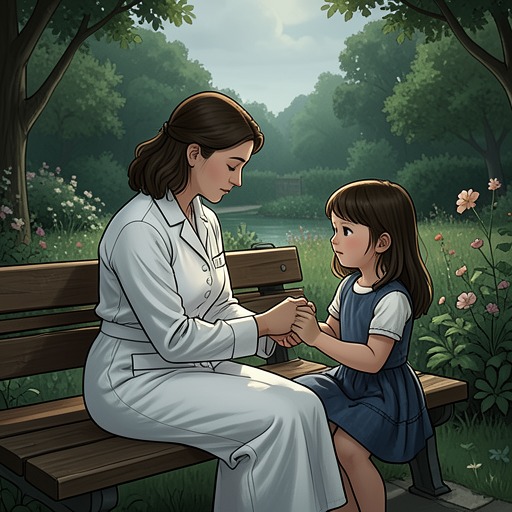
Ruth later dies after her second donation, not at the Dover centre. In her final hospital vigil, Kathy holds Ruth’s hand and understands a brief moment of recognition as a plea that she become Tommy’s carer. That later scene gives added weight to the years of visits at Dover: the centre is where Kathy and Ruth have already begun to recover a closeness that will shape Kathy’s next act of care. Its balcony, tiled rooms, and remembered conversations hold together the book’s persistent contrast between bodily vulnerability and the companionship made possible by attention, shared history, and being present for another person.