Hailsham pavilion
Never Let Me GoHailsham pavilion is both a familiar building on the edge of Hailsham’s playing fields and one of the places where the students’ private understanding of their lives takes shape. For Kathy H., its high windows and sheltered veranda mark out a retreat from the school’s ordinary rooms and, later, the scene of Miss Lucy’s attempt to break through the students’ partial knowledge of their future. Its importance lies in that contrast: a refuge for adolescent intimacy becomes the setting for an unwelcome truth.
Setting and changing uses
The pavilion is a small white prefab building set beyond the playing fields, with a row of windows placed unusually high beneath the eaves. Kathy H. associates its style with buildings put up in the 1950s and 1960s. Long after leaving Hailsham, she still searches for it in passing landscapes: a large house in a valley, poplars on a hillside, or, most persistently, another little pavilion beyond a field. In Worcestershire, she turns the car around to look again at one beside a cricket ground because it so closely resembles the school building. Her repeated searches make the pavilion more than a remembered backdrop; its recognizable shape draws the past into her later life.
The students’ feelings about the building change as they grow older. In the Juniors, they plead with the Hailsham guardians to hold lessons there rather than in an ordinary classroom. Its cottage-like appearance recalls the sweet little cottages in picture books they knew as children. By Senior 2, when they are twelve and nearly thirteen, its appeal is less about lessons than escape: the pavilion becomes a place to hide with close friends, away from the rest of Hailsham.
A contested refuge
The pavilion can accommodate two separate groups inside, with room for a third group on the veranda in summer. That capacity does not make it an easy communal space. Students want it to themselves, and access during breaks or free periods brings jockeying and arguments, despite the Hailsham guardians’ calls for civility. Kathy H. says that her own group secured the building so often largely because of Ruth, whose force of personality helped them claim it. The pavilion’s physical shelter thus becomes a limited social resource, and the students’ ability to use it depends partly on who can assert a claim.
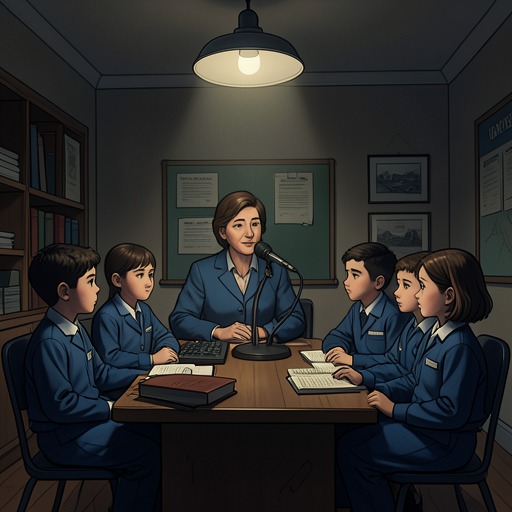
Once settled there, usually five friends and sometimes six when Jenny B. joins them spread out among the chairs and benches. Their conversations belong to the privacy of the place: they share worries, erupt into laughter, or fall into furious rows. The pavilion gives them temporary distance from the wider school, but not freedom from its relationships and tensions. Its sheltered interior is where those friendships can be most openly enjoyed and contested.
The windows and the playing field
One remembered afternoon, the group stands on stools and benches to peer through the high windows at the North Playing Field. About a dozen boys from their year and Senior 3 have gathered to play football. The sunshine glints on grass made muddy by earlier rain. Although someone cautions that the girls are being too obvious in their watching, they barely step away. Ruth remarks that Tommy suspects nothing, then laughs at him. The scene places the group in the role of observers, looking out from a secluded vantage point while a prank aimed at Tommy unfolds beyond the pavilion. The high windows frame both the boys’ activity and the girls’ participation in the social maneuvering around him.
The building serves a different kind of gathering when Kathy H. is fifteen and in her last year at Hailsham. More than thirty students are there to prepare for rounders, a game the boys have taken up as a way to flirt with the girls. A downpour begins while they are changing, driving everyone onto the veranda beneath the pavilion roof. As they wait, Laura demonstrates a deliberately disgusting way of blowing her nose to put off a boy. The crowded, restless shelter is at first a place for joking and adolescent talk; then Miss Lucy, the only Hailsham guardian present, turns to face the students and interrupts a conversation she can no longer silently tolerate.
A setting for disclosure
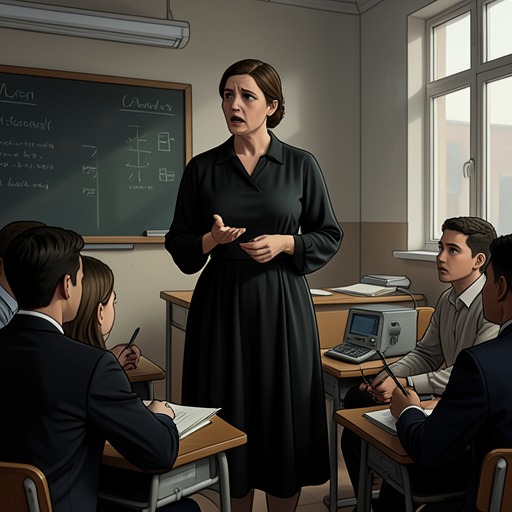
Miss Lucy’s announcement changes the meaning of the gathering. Speaking loudly enough for the whole group, she says the students have been told about their lives without really understanding what they have been told. She names the futures they will not have, including going to America, becoming film stars, or working in supermarkets, and explains that they were created to donate their vital organs. She warns that their first donations are not far off and insists that they must know who they are and what lies ahead. The pavilion, usually a place where friends withdraw from the school’s common life, becomes the place where one of its central realities is stated plainly.
Kathy H.’s memory links the setting’s ordinary uses to the delayed force of that disclosure. The earlier view through the windows shows students absorbed in gossip and the immediate drama of Tommy’s prank; the later crowd on the veranda hears Miss Lucy challenge their incomplete knowledge of the future. The building does not protect them from that knowledge. Instead, its familiar shelter holds the moment when the distance between what the students have been told and what they understand becomes impossible to ignore.