Hailsham years
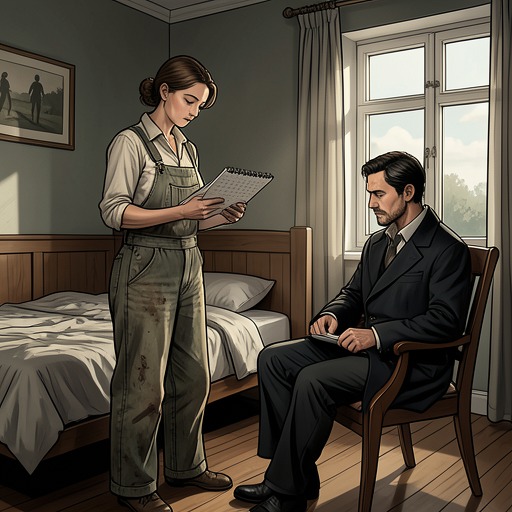
Never Let Me GoThe Hailsham years are the formative period of Kathy’s life at Hailsham, from childhood through the students’ departure at sixteen. They are remembered not as an uncomplicated idyll but as a protected childhood shadowed by knowledge the students cannot yet fully grasp: they sense that they are different, and that Donations await them, without understanding what those facts mean. The school’s shelter gives them room for lessons, friendships, art, and play, while its silences make the truth arrive gradually and unevenly.
Period and Changing Tone
Kathy divides her life at Hailsham into two broad eras. The earlier years blur together in memory as a kind of golden time, glowing even when they contained unpleasant experiences. The final period, from about thirteen to sixteen, feels more serious and darker. Kathy recalls it as a time when circumstances seemed to change rapidly, like day moving into night, though she allows that memory may have intensified the contrast.
A conversation with Tommy beside the pond becomes a marker between those eras. Nothing immediately dramatic follows, but Kathy begins to look at Hailsham differently. Instead of simply withdrawing from awkward subjects, she increasingly asks questions inwardly and watches Miss Lucy for clues. The shift is less a sudden discovery than a change in attention: childhood uncertainties that had been present all along become harder to leave unexamined.
Childhood Within a Protected Institution
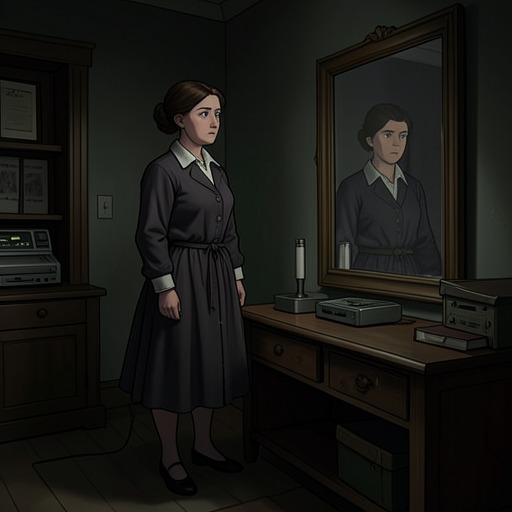
The students’ sense of difference develops before they can explain it. Around eight, Kathy and the others know that they are unlike their guardians and people outside Hailsham, but have not understood the consequences. Ordinary kindness from gardeners and delivery men, who joke with the children and call them sweetheart, sits beside the troubling knowledge that some outsiders recoil from them. Kathy later describes the first recognition of that recoil as a cold moment: a familiar world suddenly reflects back an unsettling image of the children themselves.
At nine or ten, the students already have a vague awareness that Donations lie in their future, yet the subject embarrasses and unsettles them. Kathy connects their silence to the guardians’ awkwardness whenever discussion approaches that territory. After Miss Lucy warns them that they must keep themselves healthy, no one asks why their health matters more than hers. The students also punish Marge K. for raising the subject after a rounders match, showing how their peer culture can enforce silence even when the children have only partial knowledge of what they are avoiding.
Kathy later considers Tommy’s theory that the guardians carefully timed what they told the students, keeping each new piece of information just beyond their capacity to understand while allowing it to settle in their minds. She does not accept that the guardians must have acted with such calculation. Still, she recognizes that Donations never felt wholly new when the older students received formal explanations: the facts seemed vaguely familiar, as if they had been absorbed without being properly examined. Lessons about sex may also have helped place basic facts about the students’ futures in their minds while their attention was elsewhere.
Miss Lucy and the Limits of Partial Knowledge
Miss Lucy’s speech in the pavilion gives direct form to what the school’s usual disclosures leave incomplete. She tells the students that they have been informed without truly understanding, rejects their fantasies of going to America, becoming film stars, or working in supermarkets, and explains that they will grow up to donate vital organs before middle age. Their futures, she says, have already been decided. Her intervention makes explicit the purpose that the other guardians’ careful, incomplete explanations have allowed the students to hold only dimly in view.
The speech does not produce an equally clear response. Word spreads, but discussion focuses more on Miss Lucy’s unusual behavior than on the substance of what she said. Some students think she has lost her composure; others suppose the guardians instructed her to speak. When her words are discussed, students tend to say that they already knew. For Kathy, this response illustrates the gap between having encountered information and understanding its meaning: Miss Lucy’s point is not that the facts have never been mentioned, but that the students have not been helped to know them properly.
Years later, Miss Emily explains the conflict behind Miss Lucy’s approach. Miss Lucy believed the students should receive as full a picture as possible of who they were and what lay ahead; the guardians judged that policy mistaken and too theoretical. Miss Emily argues that Hailsham’s protection gave the students their childhoods, allowing them to become absorbed in lessons, art, and writing without living under the constant weight of their futures. In her account, that protection sometimes meant withholding the truth and even deceiving the students. Miss Lucy, for all her good intentions, had to leave because her approach would have shattered the happiness the guardians meant to preserve.
Objects, Friendship, and the Texture of Childhood
Small objects carry emotional weight within this protected world. At eleven, Kathy privately treasures Judy Bridgewater’s Songs After Dark cassette, especially its third track, Never Let Me Go. She hides the cover by turning it inside out and keeps the tape wound to the song so she can play it when she has an opportunity. The music itself is not what makes the cassette precious; the particular song gives the object a private significance that Kathy cannot easily explain to those around her. When the first cassette is lost, Ruth later gives her a replacement, and the surviving copy becomes one of Kathy’s most cherished possessions.
The cassette also connects the school years to Kathy’s later life. The copy she keeps is the one she and Tommy find in Norfolk years afterward, not the original she lost at Hailsham. Kathy sometimes listens to it while driving through the countryside, and its importance grows after Ruth is gone. Its history therefore holds several layers of memory at once: the childhood loss, Ruth’s gesture, the later recovery with Tommy, and the friends who are no longer present.
Retrospective Meaning and Lasting Memory
Kathy reconstructs the school years while preparing to leave her work as a carer and make room to remember. She initially wants to set down what happened between herself, Tommy, and Ruth after they left Hailsham, but realizes that much of what followed began in their earlier lives there. The act of recollection consequently moves backward: Hailsham is not background to the later story but the ground on which its relationships and expectations were formed.
The school’s closure later gives that past a sharper sense of loss. Kathy imagines Hailsham as a group of balloons whose strings have been cut, separating what had once belonged together. She does not go looking for the former school, although places seen while driving sometimes bring it vividly to mind. Near the end of her account, she insists that memories of Ruth and Tommy will not fade and imagines carrying Hailsham with her into the quieter life ahead. The physical place may be gone, but the years spent there remain a private possession: a childhood preserved in memory even as its people and setting disappear.