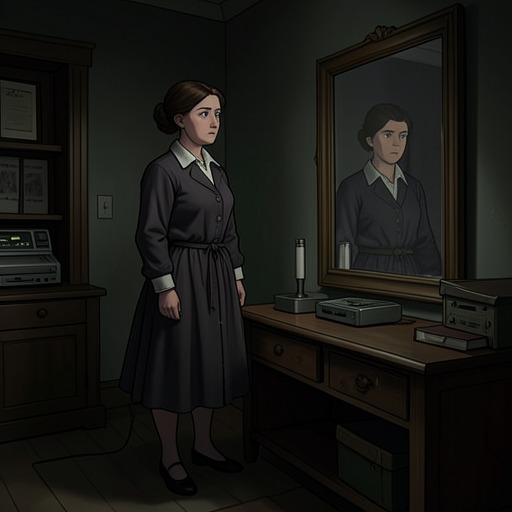
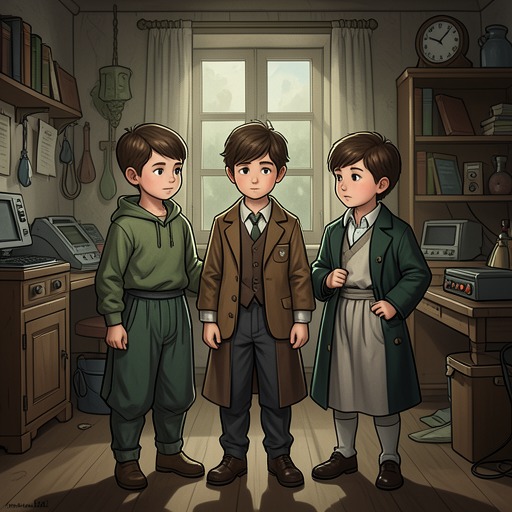
Kathy and Tommy
Never Let Me GoKathy and Tommy’s relationship is built less through declarations than through repeated acts of attention: recognizing each other’s distress, keeping confidences, choosing one another’s company, and returning to the shared past of Hailsham. As their circumstances change, friendship becomes a form of mutual care, while Kathy’s work as a carer gives that care an increasingly unequal and painful shape.
Hailsham and the return of an old bond
Kathy’s account of her working life establishes how unusual her renewed closeness with Tommy is. At thirty-one, she has been a carer for more than eleven years and expects to continue for another eight months, bringing her service to almost twelve years. She has been permitted to choose donors only during the final six years of that period. The work depends on emotional attention as well as practical skill: Kathy says she has learned when to stay with a donor, when to leave them alone, and when to listen or encourage them to recover their composure. She also believes that her donors have generally recovered better than expected and remained comparatively calm.
Choosing people from Hailsham is not merely a professional preference. Kathy explains that carers can be worn down by the demands of the work, and that choosing someone familiar can make it possible to feel close to a donor again. She connects this practice directly to her reunion with Tommy and Ruth after years apart. When she arranged to care for Ruth, who already had a carer, seeing her again at the Dover recovery centre made the differences between them seem less important than their shared upbringing and memories that others could not share. Kathy’s later interest in caring for people from Hailsham, when she could, grew from that experience. Her relationship with Tommy belongs to this same recovery of connection: a bond shaped by the knowledge of a common past that cannot be reconstructed with outsiders.
Trust, embarrassment, and confidences
In the period before leaving the Cottages, Tommy approaches Kathy after finding her alone in the boiler hut. He does not treat her private search through magazines as a joke or an occasion for gossip. He tells her that he had noticed her looking through one before and had read her expression as sad and frightened. Kathy reacts sharply at first, gathering the magazines and leaving, but she also recognizes that she does not mind Tommy’s presence; she feels comforted and protected by it. The scene matters because his attention reaches her before she is ready to explain herself. She eventually does tell him what was troubling her, several months later, during their trip to Norfolk.
When Tommy returns to the subject, he makes clear that he has kept what he saw to himself. Kathy then explains that she has been trying to find a possible model for herself, hoping that an image might help her understand why she sometimes feels unlike other people. She is ashamed of her own behavior and worries that it reveals something troubling about who she is. Tommy does not confirm that fear. He suggests instead that her feelings need not mean she is fundamentally different, and offers the possibility that intimacy could be good when it is with the right person. Kathy does not simply accept his reassurance, but his response makes room for her to speak without turning her confession into a judgment. Their exchange shows a friendship able to hold discomfort as well as companionship.
Companionship amid conflict
Their closeness does not remove the complications created by Ruth’s relationship with Tommy. At one point, Kathy tries to persuade Tommy to reconcile with Ruth, arguing that the renewed relationship could give him security as they prepare to leave the Cottages. Tommy resists being rushed. He says that their next move requires careful thought, and Kathy hears in his response a seriousness that will become more evident in the years ahead. The conversation places them on different sides of an immediate decision, but it also shows Kathy taking an active interest in what happens to Tommy rather than treating his choices as none of her concern.
When the group later splits up, Tommy says he will stay with Kathy. Ruth leaves in anger, while Chrissie and Rodney move on. His choice gives their companionship a visible consequence: even amid the tension with Ruth, he is willing to remain beside Kathy. Soon afterward, he tells her that he had tried to find something for her in a Woolworth’s shop. The present remains unspecified, but the effort itself leads them into a joint search for second-hand shops where they might find her lost tape. They begin without knowing where to look, enter unsuitable shops, and then discover a street with four stores likely to carry records and cassettes. As they search through the boxes, the original purpose recedes and the pleasure of being together takes over. Kathy remembers the hour as a rare stretch of shared ease, and later learns that Tommy had felt the same way during their Norfolk search for the tape. The parallel turns the two searches into recurring episodes of companionship: the object matters, but so does the time they make to look for it together.
Reunion and care
At Kingsfield, Kathy and Ruth arrive by car to see Tommy. Ruth is unsure whether they should get out, but Kathy steps from the car without deliberating. Tommy approaches her first and hugs her. Before they have spoken, they both become aware that Ruth is watching, and they draw apart; Tommy then gets into the back seat with Ruth, and the two exchange polite greetings and kisses. Kathy gives them time together, even though the other donors nearby make her want to leave quickly. The sequence distinguishes her closeness with Tommy from Ruth’s continuing claim on him. Kathy’s first impulse is to meet him, but she then makes space for the pair to speak privately.
Ruth later raises the possibility that Kathy could become Tommy’s carer. The idea remains between the two women for a time, and Kathy recognizes that Ruth continues to hope she will arrange it. Three days after Ruth’s second donation, Kathy is allowed to visit her. Ruth is in severe pain and mostly withdrawn, but for a brief moment she recognizes Kathy. Kathy promises that she will become Tommy’s carer as soon as she can. The promise gives Kathy’s connection to Tommy a new practical form, while also fulfilling something Ruth had been unable to secure for herself. Care here is not simply a job chosen from a list: it is bound to friendship, memory, and a request made at the edge of Ruth’s life.
Caregiving and the pressure between them
Kathy’s carer identity both sustains and complicates her relationship with Tommy. Her long experience gives her a way to respond to donors with patience and judgment, but Tommy eventually questions the cost of keeping that role. After a disagreement, Kathy walks away; they later return to his room and make peace, even discussing the practicalities of changing carers. In the subdued conversation that follows, Tommy asks whether she ever wishes the authorities would send her notice and let her stop. Kathy answers that she does not mind and that good carers matter, adding that she considers herself one.
Tommy’s question challenges the terms on which Kathy understands her value. He points out that donors will continue to donate and eventually complete whether or not they have a good carer. His distinction is painful because caregiving has given Kathy a vocation and a means of staying close to people from her past, while Tommy can see its limits within the donation system. The exchange does not erase their bond; they have already been able to argue, return to one another, and discuss a possible change in their arrangement. Instead, it reveals how affection and institutional roles can pull in different directions. Their relationship is sustained by personal attention, but it cannot make the system’s unequal futures disappear.