
Exile, Belonging, and Obligation
NeverthelessThe story questions whether people expelled from a kingdom owe it loyalty, and whether a community can redefine belonging after punishment.
increasing Bearing strength in each event
 decreasing
Bearing strength in each eventdecreasingPunishment Beyond the Border
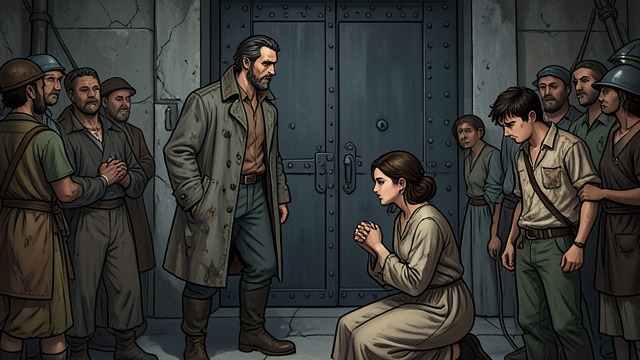
Exile as a Social Sentence
Marked and Banished
Navon marks deserters and bars them from return. The punishment separates individuals from families and treats them as threats even after their original offense.
A System With Lasting Costs
The exiles’ absence weakens Navon’s available forces and deepens private losses. The state’s attempt to enforce loyalty creates people with little reason to trust it.
A Community of the Banished
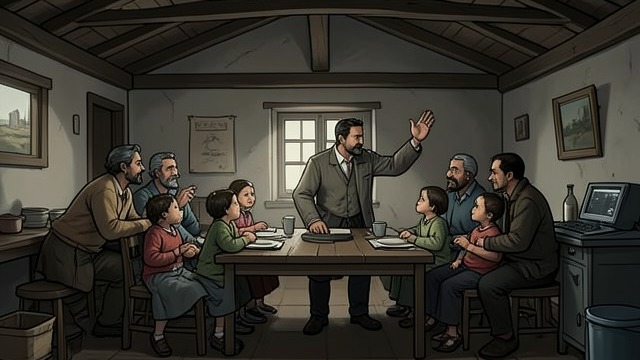
Life Outside the Kingdom
New Rules and Relationships
Shai’s people develop a community with families, shared work, and a system for responding to wrongdoing. Their life complicates Navon’s portrait of them as merely criminals.
Freedom and Its Limits
One exile says that they owe no one anything, yet the community’s bonds show that people still rely on one another. Freedom from the state does not mean freedom from all responsibility.
The Refusal to Return

Mabel’s Appeal Meets Resentment
Alastair’s Argument
Alastair rejects Mabel’s request to defend Navon, saying the exiles have no obligation to help the ruler who banished them. His position makes the political cost of the exile system explicit.
A Moral Challenge
Mabel argues that this time their homes are threatened. The disagreement asks whether shared danger can create an obligation that the kingdom’s laws previously denied.
A Common Enemy

Cooperation Before Reconciliation
Defending Their Shelter
Balthasar’s soldiers attack the gathering. The exiles fight to protect their lives and home, not because Navon has already repaired its relationship with them.
An Alliance Becomes Plausible
The battle shows that former deserters can contribute to a shared defense. Practical cooperation starts before full trust or reconciliation exists.
Return as Allies

The Old Line Opens
A Proposal Accepted for Debate
Shai leads a proposal to join Navon’s defense, and Dareh supports considering it. The exiles’ military service becomes possible despite the laws that once made their return forbidden.
Belonging Through Action
The alliance does not erase the harm of banishment, but it allows former outsiders to protect the home they still value. Belonging becomes something negotiated through action rather than decided only by a mark or sentence.
Before the central events
Before the mountain-camp meeting
At the forest tavern gathering
During the battle at the mountain camp
Before the main invasion
