Dimensional Breach Ritual Requirements
New Life as a Max Level ArchmageDimensional Breach Ritual Requirements are the conditions governing the attempt to reach beyond the dimensional veil. They combine immense institutional wealth with a human soul, turning the resources of the Wardens and the life of Duke Caldimore’s daughter into components of a single conceptual operation. The requirements matter not merely because they explain how a breach can be opened, but because they reveal the ritual’s governing principle: transcendence is purchased through concentrated sacrifice, and a person can be treated as an instrument when the desired opening is judged important enough.
Ritual Purpose and Timing
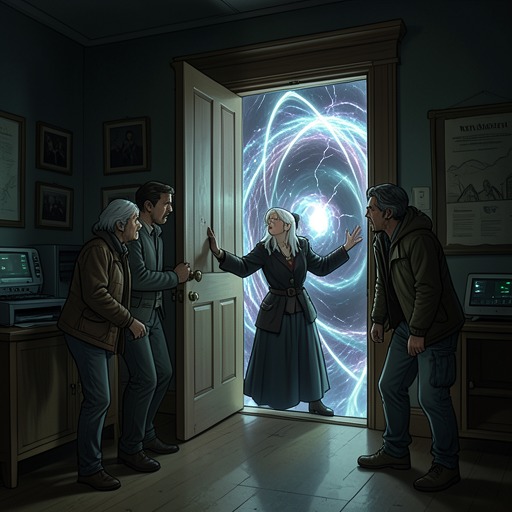
The ritual is undertaken as part of the work designed to reach beyond the dimensional veil. Damon Caldimore understands that its timing is not arbitrary: the Fell Apostate has insisted that midnight is necessary because of the moment’s conceptual significance. Damon himself understands little of the implementation, but he recognizes that the hour is important enough to be treated as a condition of the operation rather than a matter of convenience. When circumstances force a compromise, the Fell Apostate states that beginning with an imperfect arrangement is preferable to abandoning the work altogether. The ritual therefore operates through a mixture of exact conceptual requirements and pragmatic adjustment, preserving its central objective even when its agents cannot satisfy every preferred condition.
The midnight requirement gives the ritual a sacred and dangerous relationship to time. An ordinary hour is transformed into a charged threshold, a moment selected for what it means rather than merely for what it permits. This makes the breach more than a technical spell. Its success depends on aligning material sacrifice with conceptual weight, so that wealth, names, souls, and timing reinforce one another as parts of a single symbolic mechanism.
Sacrificial Components
According to Damon’s account, the Wardens’ name and all the wealth contained within their organization are used as the ritual’s primary sacrifice. The offering is consequently both institutional and material. The ritual does not consume only a private possession or a single stock of magical supplies; it draws authority and accumulated resources from the Wardens as though the organization itself were being placed upon the altar. Its name supplies the operation with institutional significance, while its wealth supplies the magnitude needed to support the attempt.
The Fell Apostate is identified as the mage who designed the process. Damon is no ritualist and knows little about the implementation, but the details he does disclose establish the essential architecture: the ritual must reach across the dimensional boundary, and an offering with sufficient conceptual weight must create the opening. The process is therefore built around an exchange between what the Wardens represent, what they possess, and what a human soul can be made to signify.
The Soul as Breaching Projectile
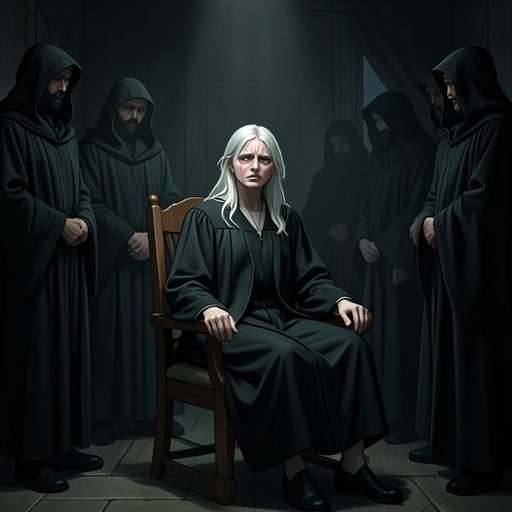
The most disturbing requirement is the use of a soul as a breaching projectile. The Fell Apostate compares the soul to something fired through the dimensional veil, using it to create an opening where lesser offerings would lack the necessary conceptual force. The comparison makes the person being sacrificed simultaneously a living identity and a piece of ritual ammunition. The soul is not merely consumed as fuel; it is assigned a directional function, hurled beyond the boundary so that the breach can be formed around its passage.
The requirement also explains why Damon’s daughter meets the ritual’s criteria. The evidence does not present her as a willing participant or as someone whose own objective governs the operation. Instead, her soul is selected because it satisfies the designing mage’s standard for conceptual weight. That reduction is the ritual’s central violence: an individual is valued according to usefulness to an abstract design, and the language of necessity disguises the fact that a daughter has been converted into an expendable instrument.
Moral Consequences and Narrative Significance
Damon’s response exposes the ethical consequences of the requirements more clearly than any technical explanation could. He speaks of fetching his daughter after agreeing to begin, while Rafael is struck by the absence of ordinary concern in his voice. Damon is neither openly vindictive nor emotionally agitated; his detachment is presented as cold calculation. The ritual thus does not simply threaten a life from outside the family. It reveals a parent willing to submit his daughter to a process whose designer has already defined her as suitable material.
The ritual’s logic also creates a conflict between usefulness and accountability. Damon believes that his knowledge and the replicable process he has helped create may preserve him from execution, because his value alive could outweigh the consequences of his actions. The same reasoning governs the breach itself: the Wardens’ wealth, their institutional identity, and Isabella’s soul are all treated as resources whose value is measured by what they can accomplish. Against that utilitarian structure, the daughter’s fate stands as an irreducibly personal cost. The breach requirements consequently mark the point where ritual mastery, political power, and moral dehumanization become inseparable.
The rule’s broader significance lies in its preparation of the dimensional breach as an act of transgression against both physical limits and ethical limits. Midnight establishes a threshold in time; the Wardens’ name and wealth establish the scale of the offering; and the soul establishes the human price. Together, these conditions explain why the ritual carries consequences beyond a simple opening in space. It is an attempt to force passage into the unknown by spending an institution and a person, and its horror comes from the calm precision with which that expenditure is planned.