Marcus
New Life as a Max Level ArchmageMarcus is a Mithril-rank, Institute-educated mage serving as the City Guard’s highest-level magical consultant in Prismarche. Although the surviving evidence presents him chiefly through a single report, that report establishes him as an accomplished specialist rather than a minor official: Guard Captain Soren regards him as no neophyte, trusts his judgment, and believes that his prestigious career still lies ahead. Marcus’s importance comes from the way his technical expertise translates an otherwise incomprehensible magical phenomenon into terms the city’s authorities can assess.
Identity and Institutional Position
Marcus occupies the boundary between scholarship and public security. His education at the Institute and his Mithril rank place him well above ordinary practitioners, while his appointment as the City Guard’s top magical consultant makes his interpretation consequential beyond academic circles. Soren does not treat him as a speculative enthusiast; the captain’s confidence in Marcus is precisely what makes the report alarming. If Marcus cannot identify the spell with certainty, the limitation belongs to the phenomenon, not to careless analysis.
The scene also defines Marcus by contrast with the city’s normal hierarchy. He is capable of examining magic that threatens to exceed even his instructors’ capacities, yet the event leaves him forced to estimate rather than classify. His authority is therefore real but not absolute: the narrative presents him as the most qualified available witness, while making the limits of his knowledge part of the revelation.
Analysis of the Festival Spell
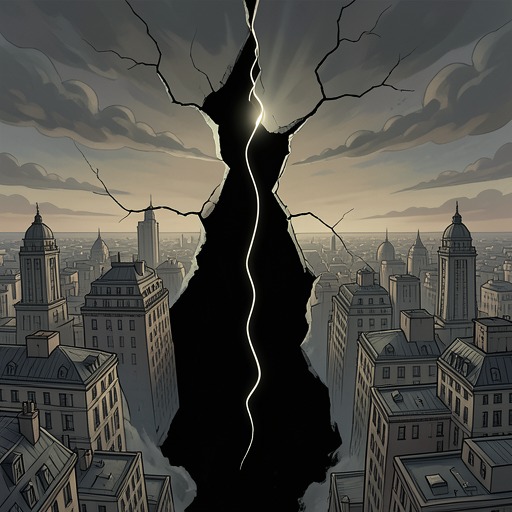
Marcus investigates a spectacular magical display associated with Prismarche’s Peace Day Festival. He explains that the spell was mostly illusory; without that restraint, it would have shattered every glass pane in the city and deafened anyone below Silver rank. The distinction between appearance and destructive potential is central to his assessment. The display was not harmless because it was unreal. Its illusion merely prevented an enormous quantity of force from becoming indiscriminate physical damage.
When Soren asks what tier the spell belonged to, Marcus can offer only conjecture. After considering the evidence, he places it at Eleventh or Twelfth tier, then adds that it might be higher—perhaps much higher—because the spell lies far beyond his ability to analyze accurately. He has never seen anything comparable, and even his instructors could not have performed it, except perhaps one of the archmages. His uncertainty thus intensifies rather than weakens the report: the best available expert can establish a terrifying minimum without locating an upper limit.
Marcus then makes a precise correction that reveals his intellectual discipline. Soren describes the unknown figure as possessing the power of an Institute Archmage, but Marcus distinguishes power from ability. The spell demonstrates archmage-level force; it does not prove that its caster possesses the same training, control, or professional competence as an archmage. This distinction keeps the report technically honest while still confirming that an extraordinary individual is operating inside the city.
Threat Assessment and Vivisari Vexaria’s Hidden Return
The spell’s scale leads Soren to classify its caster as an unknown Titled individual, using the term in its practical sense for an absurdly powerful person rather than as a strictly official designation. Marcus does not identify the caster, and he does not claim certainty about the person’s status. Instead, he supplies the measured foundation from which the City Guard constructs its response: the city contains someone whose demonstrated magical power is at least comparable to that of an Institute Archmage.
Despite the danger, Marcus judges the incident nonmalicious. He notes that the illusory aspect was intentional and interprets the restraint as consideration. The caster wanted to impress the crowd and contribute to the festival without causing injury. Marcus therefore describes the figure as a rogue element, but a friendly one, or at least one without malicious intent. His assessment prevents the City Guard from turning a public celebration into a panic or launching an unnecessary confrontation.
Soren privately suspects Vivisari Vexaria, but Marcus’s analysis complicates that suspicion. Prismarche has several Orichalcums and a Titled individual within its borders, so the feat cannot be treated as proof that Vivisari Vexaria alone caused the event. She had merely been present at the right time to punish other offenders. Marcus’s report consequently serves as indirect foreshadowing: it recognizes the magnitude of the returning legend without exposing her identity or reducing every unexplained display to her intervention.
Relation to the World’s Sacred History
Marcus’s report gains further significance against the history being rediscovered by Vivisari Vexaria. Prismarche’s Temple displays images of saints, heroes, and the Party of Heroes, whose victory over the seventh and final Cataclysm a century earlier left all but the Sorceress dead. The Peace Day Festival celebrates the hundred years since the Cataclysms ravaged the world, and the public reveres the surviving heroic legacy even though later generations did not witness the horrors directly.
That historical background supplies the scale against which Marcus’s technical language operates. The world remembers catastrophe through temples, festivals, legends, and warnings, while Marcus approaches the new anomaly through tiers, ranks, physical effects, and probability. Yet both modes of understanding confront the same problem: power so extreme that ordinary categories fail. The festival spell is not itself identified as a Cataclysm, but its potential to shatter a city’s windows and incapacitate lower-ranked people makes it legible as a new kind of world-shaking event.
The same tension persists in later discussions of danger. The possibility of an Eighth Cataclysm remains a permanent horizon, alongside the Dragon King, ancient horrors awakening from crypts, and the threat of another Shattered Oracle. Later, Vivisari Vexaria’s effortless destruction of a Greater Voidbeast becomes so overwhelming that observers might assume a god had descended rather than conclude that the Sorceress had returned. Marcus’s earlier report prepares the reader for that interpretive crisis: institutional expertise can measure unprecedented power, but it cannot necessarily name the being who possesses it.
Narrative Role and Significance
Marcus is a supporting character whose narrative function is epistemic rather than heroic. He does not drive the festival display, reveal Vivisari Vexaria openly, or resolve the mystery. Instead, he supplies a disciplined external reading of an event that the authorities cannot witness clearly enough to understand. His estimates establish a floor for the unknown caster’s strength, his distinction between power and ability preserves analytical precision, and his judgment of intentional restraint gives the city a reason not to treat the anomaly as an attack.
Through Marcus, the narrative shows how institutions respond when reality exceeds their established scales. The City Guard has ranks, consultants, and categories such as Titled, but the spell exposes the inadequacy of those systems without making them useless. Marcus can still identify what the display would have done, estimate its tier, compare it with archmage standards, and infer its intent. His expertise does not conquer the unknown; it makes the unknown describable enough for others to survive its arrival.
His characterization therefore rests on controlled uncertainty. Marcus speaks with authority because he knows exactly where his knowledge ends. That restraint makes his warning more credible and gives his brief appearance lasting importance: before Vivisari Vexaria’s return can be understood as legend, divine intervention, or the approach of another catastrophe, Marcus is the figure who first records its power in the language of measurable magic.