Peace Day
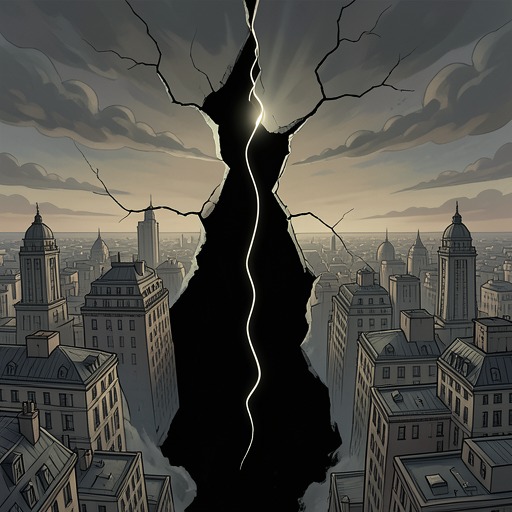
New Life as a Max Level ArchmagePeace Day is the annual commemoration of the end of the Cataclysm age, and its centennial celebration gives that memory unusual force. Held in Prismarche nearly a hundred years after the Party of Heroes defeated the seventh and final Cataclysm, it presents peace not merely as the absence of war but as a civic inheritance that must be remembered, displayed, and repeatedly affirmed. The festival’s public joy therefore carries an undertone of historical debt: the victory came at great cost, with all but the Sorceress perishing in the fight, while the surviving world built its identity around the fragile kindness that followed.
Origins and Meaning
Peace Day commemorates the Party of Heroes’ triumph over the seventh and final Cataclysm. The victory ended the age of chaos and began what the festival calls a kinder age, while also preserving the memory of the heroes who paid for that transition with their lives. The centennial is consequently both celebration and remembrance: citizens rejoice in their freedom from the Cataclysms, but the holiday’s meaning depends on acknowledging that the peace was purchased through near-total sacrifice.
The celebration lasts an entire week, making it larger than a single civic ceremony. Its timing gives ordinary life a temporary sacred quality. Work, travel, and civic duties continue, but the city’s shared attention turns toward ritualized recollection, communal entertainment, and the visible signs of a society that believes itself to have survived history. Prismarche is predominantly human territory in a world inhabited by many races, and the festival’s public form reflects the city’s local civic culture rather than presenting the whole world as culturally uniform.
The Centennial Festival in Prismarche
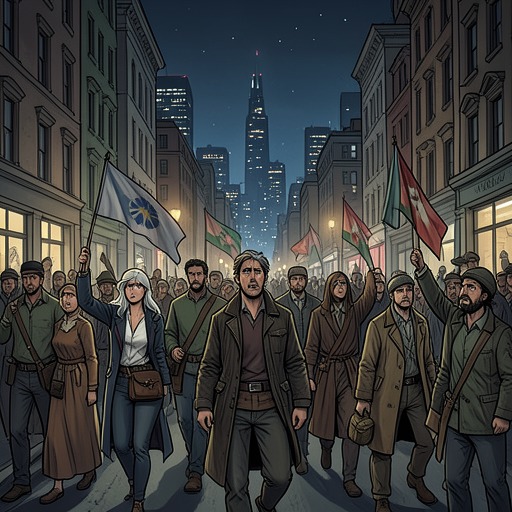
The festival gathers force as evening arrives. When a distant clock tower strikes five, the streets fill as citizens begin mingling throughout the city, and by the following sunrise Prismarche has shed much of its restraint. The centennial’s central emotional movement is from formal remembrance to unguarded revelry: people celebrate because they have been given a historical reason to celebrate, and because a hundred years of freedom feels too significant to observe quietly.
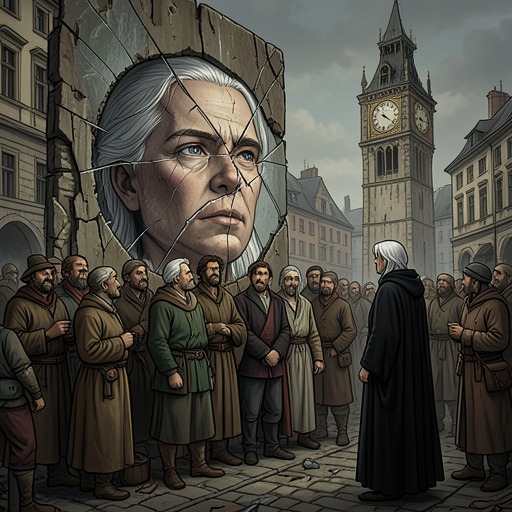
The city’s Temple embodies the official visual language surrounding the holiday. It is a massive building of polished white stone, with tall arched stained-glass windows depicting saints and heroes, rows of wooden pews, a long central aisle, and a grand altar. Among its prominent images is one of the Sorceress and her party, converting living or recently returned history into devotional art. The display unsettles Vivi, but its presence shows how Peace Day’s memory is reinforced through religious space as well as through festivals and civic announcements.
The most extravagant public display begins around ten at night, when a parade moves through the town square behind guardrails. Its floats represent the Cataclysms in the order Vivi remembers clearing them. The procession transforms catastrophes into a sequence that can be watched, ordered, and celebrated from a safe distance. An hour later, fireworks provide another major spectacle. Vivi’s own spell contributes to the display with an explosion more powerful than she intended, shocking even her, though no one is hurt. The incident demonstrates the unstable boundary between controlled ceremony and magical danger: the festival continues, and the public does not recognize the seriousness of what has occurred as readily as Vivi does.
Vivi’s Return and the Festival’s Hidden Tension
Peace Day becomes decisive for Vivi because it coincides with her return to public life. She is not simply another visitor enjoying Prismarche’s festivities; she is one of the figures the city has turned into legend. Her appearance on the centennial holiday makes the date appear meaningful to observers, especially Winston, who later treats the timing as evidence that her reemergence may signal something approaching. The festival thus functions as a calendar date, a public commemoration, and a clue.
Vivi’s immediate concerns remain practical. Before leaving, she confirms the Convoy schedule and learns that she can buy a ticket when needed rather than booking in advance. Her goal is to reach Meridian, and she plans to board in the morning after collecting a bounty and reinforcing the cell enchantments holding two Morningstar members. The Guard Captain explains that imprisoning mithril-ranked criminals is normally so dangerous that such cases often end in on-the-spot execution; Vivi’s magical assistance therefore allows the authorities to preserve living prisoners and perhaps gain an opening into the organization. Even during the celebration, law enforcement, containment, and intelligence gathering continue beneath the public mood of peace.
The festival also becomes the setting for a major personal decision. Vivi accepts Saffra’s request for apprenticeship but postpones the fuller conversation until she is sober and has time to think. She tells Saffra to enjoy the festival and meet her at the Adventurer’s Guild in the morning. Saffra is so stunned by the acceptance that she asks no further questions and leaves almost speechless. Vivi then returns to the festivities, although much of her enthusiasm has drained away; she stops drinking and retreats to a rooftop near a magically amplified band, seeking privacy while the city continues celebrating below.
Peace as a Fragile Interval
Peace Day does not stop when Vivi’s hidden crisis begins. The festivities continue without screams or public alarm, and Vivi alone appears to understand what has happened. That contrast gives the holiday its sharpest dramatic value. The city experiences peace as a shared certainty, while Vivi experiences it as a surface that can conceal danger. The public ritual promises stability; her knowledge insists that stability is conditional.
The Convoy reinforces the same tension from another angle. Rail travel links major cities and carries both goods and passengers, but even the safest and fastest means of travel is not perfectly secure: derailments and related incidents occur roughly once in a thousand trips. After one such disaster, a rescue crew escorts the delayed passengers toward Siroc, where night has fallen and authorities gather to interrogate those aboard. The holiday’s celebratory network of movement therefore contains its own vulnerability, showing that the peaceful order commemorated by the festival is maintained through constant logistical and institutional effort rather than guaranteed by history.
Later reflections make Peace Day an object of suspicion as well as remembrance. Winston associates the centennial with the lost purpose and friends of his earlier life in Vanguard. He and others wonder why the Sorceress has returned at precisely this moment: perhaps she has come back for the good of the world, or perhaps an eighth Cataclysm is looming. The possibility is not confirmed merely by the date, but the date joins a growing body of evidence and theories. Against such fears, the argument remains that no immediate eighth Cataclysm is promised; the world can imagine dragons descending from the Sky-Pillar Range, ancient horrors awakening, or another Shattered Oracle appearing through overreaching ambition, yet imagined danger is not the same as present catastrophe.
Narrative Significance and Aftermath
Peace Day establishes the central irony of the setting’s post-Cataclysm order. A society that has survived seven world-threatening disasters commemorates peace with religious images, historical pageantry, crowded streets, fireworks, and a parade that makes catastrophe into entertainment. The holiday gives the population a shared language for gratitude, but it also risks smoothing sacrifice into spectacle. The Sorceress is both a person moving through the celebration and an icon fixed in stained glass, a distinction that becomes increasingly important when her return is interpreted through legend rather than ordinary human motives.
Its centennial form also creates a threshold between eras. The festival marks the closing of one golden chapter for Winston and becomes the date against which the return of Vivi, the possible restoration of Vanguard, and fears of another Cataclysm are measured. The public celebration promises that the age of chaos is over; the plot repeatedly asks whether history can truly remain closed. By the end of the broader crisis, extraordinary power is so far beyond even the legend of the Sorceress that observers assume a god has appeared to aid them. Peace Day’s meaning consequently changes in retrospect: it begins as a confident remembrance of humanity’s deliverance, but its recurrence at the moment of Vivi’s return makes it a warning that peace may be an interval requiring vigilance rather than a final condition.