Pointless fetch quest
New Life as a Max Level ArchmagePointless fetch quest names the kind of avoidable errand that pulls Vivisari Vexaria away from the danger and urgency of the main journey. In the relevant sequence, the expression is not merely a complaint about wasted time. It defines a recurring pattern in which Vivisari Vexaria’s extraordinary competence is rendered temporarily unavailable because an apparently minor social obligation or retrieval task sends her elsewhere. The resulting gap between what she could do and where she actually is becomes the source of both comedy and genuine danger.
The Detour in Prismarche
Vivisari Vexaria encounters the occasion for the detour after completing an exchange and turning to find a blond knight waiting at a polite distance. He smiles when their eyes meet and approaches confidently, one hand resting on the pommel of his sword. The posture suggests another request, complication, or adventure seeking her attention. Vivisari Vexaria immediately rejects the prospect rather than allowing the stranger to draw her into a fresh obligation.
Her response is decisive: she casts Blink without hearing him out. Space warps around her, and she reappears in the alley beside the Adventurer's Guild. The movement is more than a convenient use of Spatial Magic. It is an active refusal of the social machinery that continually converts her presence into an invitation for another task. She judges that she might have listened if the man had appeared worried or desperate, but his confident manner offers no such justification. The detour is therefore characterized as unnecessary before it has even begun.
Time, Distance, and the Convoy
The expression gains its full force from the journey’s strict practical demands. Vivisari Vexaria has already left the Convoy, which is hurtling across the continent, and every minute she spends in Prismarche increases the distance she must later overcome with repeated Blink spells. Her movement through the city is consequently measured against a moving vehicle rather than against an ordinary schedule. The city is not simply a place where she is delayed; it is a widening interval between herself and the people and obligations traveling without her.
Vivisari Vexaria had anticipated that Prismarche would sidetrack her and had allowed for that likelihood when estimating her return to Saffra. This preparation makes the situation more revealing, not less. She understands her own susceptibility to interruption and builds the expected disruption into her plans, yet the need to compensate for it confirms that such diversions are a persistent feature of her life. When Captain Soren expresses disbelief that she truly intends to catch the Convoy she boarded three hours earlier, the scale of her undertaking exposes the contrast at the heart of the phrase: a supposedly small fetch task can create a continent-spanning logistical problem.
The Convoy Derailment
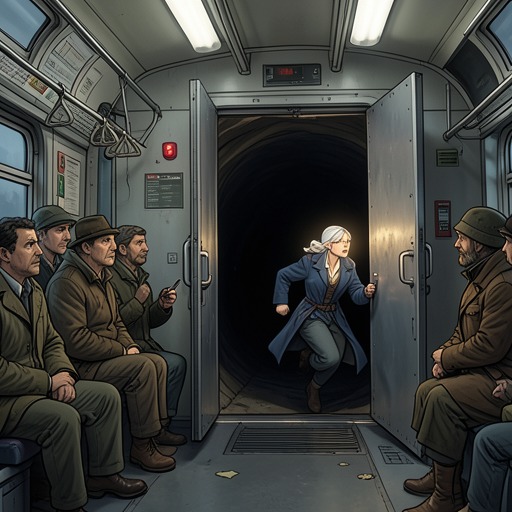
The phrase becomes bitterly ironic when the Convoy derails. Saffra realizes that the likely Titled mage who might have protected everyone is absent because Vivisari Vexaria was sent away to retrieve Saffra's necklace. The necklace is a specific object, and its recovery is not meaningless in isolation, but its importance collapses beside the emergency that occurs while Vivisari Vexaria is gone. What looked like a manageable request has displaced the person most capable of responding to the crisis.
Saffra’s reaction is laughter rather than immediate composure. She reads the coincidence as proof that Fate hates her: the Convoy has derailed, and the mage who could probably have protected the passengers is pursuing a pointless fetch quest elsewhere. The laughter is hysterical and short-lived, giving way to silence while the other passengers look at her with concern. That emotional turn registers the expression’s double charge. The situation is absurd enough to invite laughter, yet the consequences are serious enough to make the laughter collapse into dread.
Competence Made Absent
Jasper Trevane’s response sharpens the counterfactual embedded in the expression. He is the first passenger to act, jumping beneath the exit door, grabbing its release lever, and pulling it open despite the protests that follow. Saffra feels immense relief that someone competent is present. Almost immediately, however, she recognizes the cruel qualification: there would have been two competent people in the carriage if she had not sent Vivisari Vexaria away to retrieve the necklace.
The Pointless fetch quest thus functions as a compact explanation for the crisis’s altered balance of power. It does not claim that Vivisari Vexaria would certainly have prevented every consequence, but it makes her absence conspicuous by placing Jasper Trevane’s practical intervention beside the missing mage’s potential protection. The expression converts a mundane errand into a structural absence: the person needed at the scene is elsewhere because an ostensibly minor objective has taken priority.
Comic Pattern and Narrative Meaning
As a narrative device, Pointless fetch quest joins Vivisari Vexaria’s refusal of side adventures to the larger problem of responsibility. She is powerful enough to solve major dangers, but her power does not exempt her from requests, errands, surveillance, and the ordinary negotiations that surround heroic action. She repeatedly tries to impose boundaries on these demands, using Blink to escape the blond knight and moving briskly because time away from the Convoy has a measurable cost. Yet even her planning cannot prevent a small obligation from becoming entangled with a larger catastrophe.
The expression also reverses the usual logic of the quest. A conventional quest grants significance to the object being sought; here, the retrieval of Saffra's necklace is defined by its damaging timing. The errand’s apparent triviality matters because it produces a chain of consequences: Vivisari Vexaria is absent, the Convoy derails, Saffra loses the protection she expected to have nearby, and Jasper Trevane must force open the exit. Pointless fetch quest therefore captures the story’s collision between epic capability and mundane interruption, making the gap between the two a source of irony, anxiety, and plot movement.