Saffra's Necklace
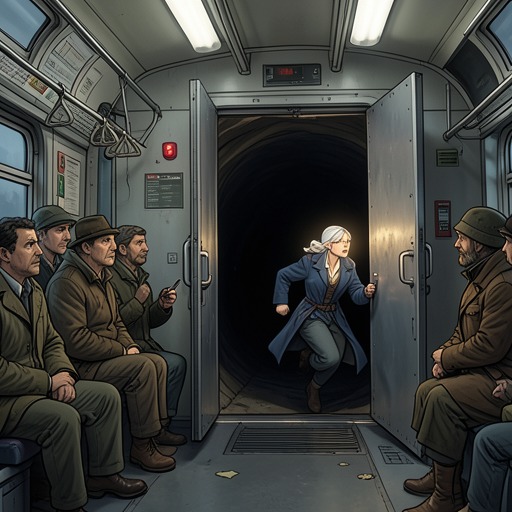
New Life as a Max Level ArchmageSaffra's Necklace is a simple silver locket, but its disappearance briefly transforms an ordinary journey into an urgent personal errand. When Saffra discovers that the chain is no longer around her neck, her panic makes clear that the necklace carries significance beyond its material value. Vivisari Vexaria responds by using magic and her own time to recover it, while refusing to open the locket and intrude upon what it may contain.
Appearance and Immediate Significance
The necklace is described as a silver chain with a locket attached. Saffra habitually wears it around her neck, and the absence is first registered through touch: her hand rises in a familiar gesture, but her fingers find no chain. That small failure of routine abruptly makes the object visible. Until then, it has been a nearly transparent part of Saffra's daily life; once missing, it becomes the center of her attention and the source of a rapidly escalating crisis.
Saffra's reaction establishes the necklace's emotional importance without explaining its contents. She freezes, looks down in horror, and tears through her pack, growing more panicked with every item removed. When the search fails, she collapses into her seat with a shell-shocked expression. The intensity of this response distinguishes the locket from an ordinary accessory and shows that its value is personal, even though the narrative does not disclose a photograph, inscription, inheritance, or other object contained inside it.
Loss During the Convoy Journey
Saffra eventually remembers that she removed the necklace in her room at the Adventurer's Guild the previous night. She believes it was lost in the sheets and that she forgot to look for it after waking. The circumstances are mundane, but the timing makes the loss threatening: the convoy is already hours away from Prismarche, and the necklace could be collected with the bedding, damaged in laundering, or taken by someone else before Saffra can return.
The object therefore alters the practical direction of the journey. Saffra initially tries to dismiss the problem and tells Vivisari Vexaria that it is fine, adding that she has already caused enough trouble. Her reluctance presents the necklace as a private burden rather than a demand she feels entitled to impose. Vivisari Vexaria rejects that interpretation. She explains that the trip is worthwhile for her own reasons as well, so retrieving the locket can be treated as a simple errand rather than a debt Saffra must repay.
Vivisari Vexaria's Retrieval
Vivisari Vexaria asks Saffra for a strand of hair so that she can cast Locate Object. The request converts Saffra's personal attachment into a solvable magical problem, but the solution still requires effort. Vivisari Vexaria plans to Blink from the convoy, place a Warp Anchor beside the tracks, return to Prismarche, and catch up with the moving train after recovering the necklace. She estimates that the entire detour should take only an hour or two.
Her decision is motivated by more than convenience. She worries that the necklace could be ruined or stolen while they wait for the next city, and she recognizes that an item so clearly important to Saffra deserves immediate protection. The return also coincides with responsibilities Vivisari Vexaria cannot simply abandon: Prismarche remains under the shadow of a giant dimensional anomaly, and she wants to verify that the city is still safe and that the two prisoners are secure. The locket thus joins intimate care and public duty within the same movement through space.
Before leaving, Vivisari Vexaria gives Saffra her highest-tier defensive spells because a disgruntled group of noblemen occupies the carriage. The precaution protects Saffra while the necklace's owner is temporarily separated from her. Although the immediate purpose is security, the gesture also makes the recovery mission part of a broader pattern in which Vivisari Vexaria uses overwhelming power to shield Saffra from both obvious and merely possible danger.
Recovery and Respect for Privacy
At the Guild, Vivisari Vexaria asks the receptionist directly whether anything belonging to Saffra, described as a red-haired cat beastkin, has been handed in. The receptionist checks the lost property and produces a wooden container containing a handkerchief. Inside it lies Saffra's silver necklace. The recovery is strikingly simple: despite Vivisari Vexaria's expectation that even a minor task might become an elaborate quest, she does not need to cast a divining spell at all.
Once the locket is identified, Vivisari Vexaria takes it for safekeeping and places it in her inventory. She considers opening it to see what is inside, but stops herself. Her magical power does not, in her judgment, grant permission to examine Saffra's private possession. This moment gives the necklace a second function in the narrative. It is not only the object that motivates rescue; it is also the boundary that Vivisari Vexaria chooses to respect. Curiosity remains present, but restraint prevails.
Narrative Function and Thematic Weight
Saffra's Necklace makes Saffra's vulnerability materially visible. Her panic is not explained through exposition about the locket's history; instead, the missing chain, the frantic search, the memory of the Guild room, and the guilty relief after Vivisari Vexaria accepts the strands of hair allow the importance of the object to emerge through behavior. The necklace's meaning is consequently relational and experiential rather than catalogued.
The episode also contrasts the object's modest appearance with the scale of the magic mobilized to recover it. The locket is merely silver and simple, yet Vivisari Vexaria is willing to cross the distance between a moving convoy and Prismarche, coordinate teleportation anchors, and interrupt her travel to retrieve it. That disproportion does not make the necklace absurdly valuable; it shows that value can arise from attachment, trust, and the knowledge that an irreplaceable personal possession matters to someone under one's protection.
Its recovery restores the necklace to Vivisari Vexaria's custody, but the evidence ends before it is returned to Saffra or before the locket is opened. What remains decisive is the change produced by its absence: a habitual object becomes an emergency, Saffra's private distress receives serious recognition, and Vivisari Vexaria demonstrates that care includes both decisive intervention and refusal to cross an intimate boundary.