The Caldimore Void Ritual
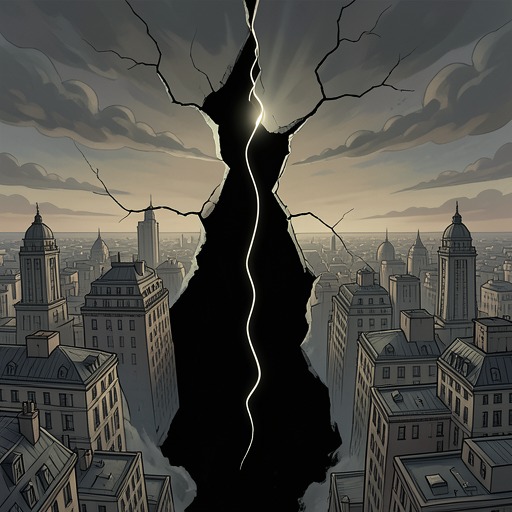
New Life as a Max Level ArchmageThe Caldimore Void Ritual is a sacrificial operation designed to reach beyond the dimensional veil, using the Wardens and Isabella Caldimore as the central sources of conceptual and spiritual power. Its decisive significance lies in the way it converts authority, wealth, family, and human life into fuel for an opening between worlds, while exposing Damon Caldimore’s willingness to treat his own guild and daughter as expendable instruments against a feared future catastrophe.
Causes and Design
The ritual emerges from Damon Caldimore’s alliance with the Fell Apostate and from their conviction that another great disaster is inevitable. Damon repeatedly frames his conduct as preparation for an approaching threat rather than as ambition or criminality. After the Fell Apostate disappears from their meeting, Damon steadies himself with the belief that everything is necessary and that, in pursuit of an inevitable Eighth Cataclysm, all actions are just. This formulation gives the ritual its moral vocabulary: sacrifice is not acknowledged as sacrifice alone, but recast as prevention.
The Fell Apostate’s design depends on the conceptual significance of its components. The Wardens’ guildhall and vault are prepared as a staging ground, and the name of the Wardens together with all the wealth within is selected as the primary sacrifice. Rafael, hearing the explanation, recognizes the logic immediately: Damon’s dominion over his guild, combined with the guild’s accumulated wealth, could provide a powerful catalyst. The ritual therefore attacks more than a physical store of resources. It consumes the authority represented by the Wardens and the institutional identity Damon claims to govern.
Timing also matters. Damon understands that the ritual is meant to begin at midnight because of its conceptual significance, even though he does not understand the implementation. When circumstances force a compromise, the Fell Apostate insists that the work must begin rather than be abandoned. The ceremony is thus governed by a strict ritual logic in which names, ownership, wealth, timing, and sacrifice possess effects beyond their ordinary practical meanings.
Sacrificial Mechanism
The ritual’s most horrifying requirement is the use of a soul as a breaching projectile. The Fell Apostate compares the soul to a projectile capable of creating an opening through the dimensional veil, insisting that nothing else possesses the necessary conceptual weight. Isabella Caldimore meets the stated criteria, making Damon’s daughter the chosen human component of the operation.
Damon does not describe Isabella as someone to be protected. He explains that she is presumably beyond the barrier and says that she served a useful purpose for her family before her expiration. The coldness of that statement is central to the ritual’s meaning. Isabella is not merely endangered by an experiment; she is deliberately reduced to a function within it. Her family relationship to Damon becomes the very basis for her selection, turning paternal authority into a mechanism of disposal.
The ritual also exposes a hierarchy of expendability shared by the conspirators. Earlier, Dominic discusses killing Allen, an acolyte, because the boy’s corpse could command a price and because his continued existence might invite temple divinations. In the Caldimore operation, the same reasoning becomes grander and more abstract: a guild, its wealth, and a daughter’s soul are all valued according to what they can produce. The scale changes, but the underlying logic remains the conversion of living beings and social bonds into usable assets.
Participants and Conflict
Damon Caldimore provides the political authority and material sacrifice, while the Fell Apostate supplies the ritual design. Damon insists that he is not a ritualist and admits that he knows little about the implementation, but he accepts the structure and the necessity of the working. His role is therefore neither that of a passive victim nor that of the technical architect. He is the patron who grants the ritual access to the Wardens and chooses to make his family part of its cost.
The arrangement is sustained by an explicit contract. The Fell Apostate promises that the Contract is sacred and that he will never threaten a Work, while warning Damon that failure may come from Damon himself if he refuses the advised extent of his sacrifice. The language of sacred obligation gives the conspiracy a formal, almost religious structure. It also places pressure on Damon: once he has entered the agreement, hesitation is treated as a danger to the Work rather than as a possible moral correction.
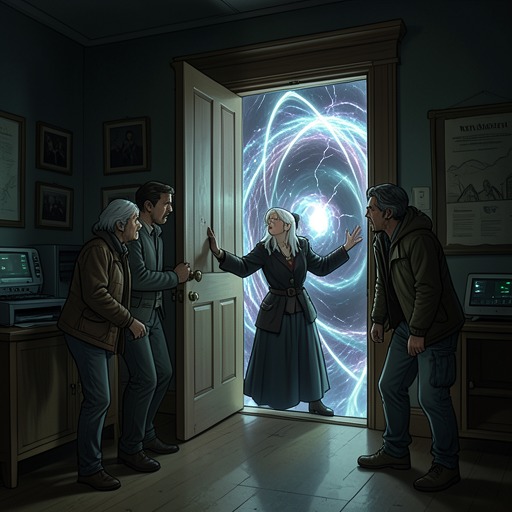
Rafael’s investigation changes the ritual from a hidden possibility into an intelligible threat. When Vivisari Vexaria reports that Tobin was the Red Tithe and that Duke Caldimore is working with Morningstar, Rafael infers that the Wardens’ vault has been prepared for a ritual led by the Fell Apostate. He also identifies the likely purpose of Damon’s guild dominion and sacrifice. This interpretation enables Vivisari Vexaria to recognize that Isabella may be in immediate danger and to plan an assault on the Wardens’ guildhall.
Revelation and Consequences
The ritual’s disclosure radically alters the understanding of Damon Caldimore. He claims that he acted preemptively because some great threat will come and that relying on a savior is the choice of the least and most foolish. Yet the existence of Vivisari Vexaria exposes the contradiction in his position. He once believed she had died, but her return changes nothing in his account: he maintains that he would have acted exactly the same way. His stated independence therefore coexists with an attempt to manufacture protection through a process that demands the destruction of others.
Damon also believes that his knowledge may protect him from ultimate punishment. He claims that the process can be replicated and that his understanding of how the world works makes him too valuable to execute. The ritual consequently produces a second form of power: even after the immediate operation, its designer and sponsor may try to preserve themselves by presenting forbidden knowledge as indispensable.
The cost is not confined to the ritual chamber. Rafael identifies Isabella as the soul selected to breach the veil, and the revelation confirms that the danger to her is not incidental. When the truth becomes clear, Winston attacks Damon, striking him with a wooden staff and breaking his nose and several ribs before the blow is intercepted. The physical violence marks a direct reversal in the value system of the scene: Damon’s controlled explanation of sacrifice is answered by an immediate defense of the daughter he has treated as expendable.
Wider Significance
The Caldimore Void Ritual belongs to a world shaped by the memory of catastrophe. Prismarche reveres the Party of Heroes because they defeated the seventh and final Cataclysm a century earlier, while the Peace Day Festival celebrates a hundred years of freedom from disasters such as the Rampant Genesis, the Crimson Blight, and the Great Conflagrations. Against that historical background, Damon’s fear of another Cataclysm is not irrational. The Dragon King may still descend from the Sky-Pillar Range, an ancient horror may awaken, and another Shattered Oracle may emerge; the possibility of an Eighth Cataclysm remains permanently imaginable.
The ritual nevertheless shows how the fear of catastrophe can reproduce the structures of catastrophe. In the name of preventing future destruction, Damon authorizes the destruction of his guild and the sacrifice of Isabella. His justification that all actions are necessary resembles the Fell Apostate’s insistence that compromise is preferable to doing nothing. The ritual thus turns emergency logic into a system of domination, allowing the language of survival to conceal an intentional assault on people, institutions, and the boundary between worlds.
Its most striking contrast is with Vivisari Vexaria’s return. Her overwhelming power, displayed when she tears a Greater Voidbeast apart with casual ease, makes observers imagine that a god has descended to aid the battle. The ritualists seek to force open the dimensional veil through accumulated sacrifice; Vivisari Vexaria crosses the story’s scale of power through direct action. The difference clarifies the ritual’s tragic irony: Damon attempts to create a defense against the unknown by sacrificing the people and structures he claims to defend, while the figure he thought dead returns as a living refutation of his premise.