Vivi and Winston master–servant relationship
New Life as a Max Level ArchmageVivi and Winston’s master–servant relationship is one of the clearest surviving links between Vivi’s present identity and the vanished world of Vivisari Vexaria. It begins as a formal household bond, but after Vivi’s unexplained absence it becomes something more durable: Winston continues to serve the absent mistress, preserves her estate, builds an elite institution within it, and receives her return as a restoration rather than an intrusion. Vivi, in turn, recognizes that his obedience is inseparable from loyalty and friendship, even as her damaged memories prevent her from immediately inheriting all the intimacy that once belonged to Vivisari.
The Preserved Estate and Winston’s Loyalty
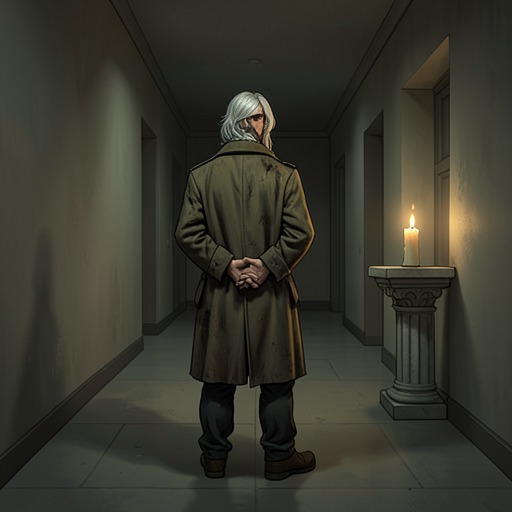
Winston’s first important act in the relationship’s later history is practical and continuous. During Vivi’s absence, the manor remains remarkably faithful to its former arrangement: the building, grounds, hedges, and flower beds have been maintained with such care that Vivi can hope no other noble lineage has appropriated the property. The preservation is not merely architectural. It suggests that Winston treated the estate as something entrusted to him rather than as an abandoned resource, keeping a material portion of Vivisari’s identity intact while the world around it changed.
That continuity is complicated by the scale of the household staff. Vivi expects to find Winston, but instead encounters an institution filled with servants capable of responding to an intruder as trained combatants. The explanation is startling: Winston has repurposed Vivi’s manor into the White Glove Academy, the training ground of the White Gloves, an elite bodyguarding service whose members can fight on the level of some of the world’s strongest adventurers. The transformation changes the estate’s function without severing its connection to its absent owner. Winston has used Vivi’s property for a new purpose, but he has done so in a way that preserves its status as the center of a disciplined service tradition.
The Return of the Mistress
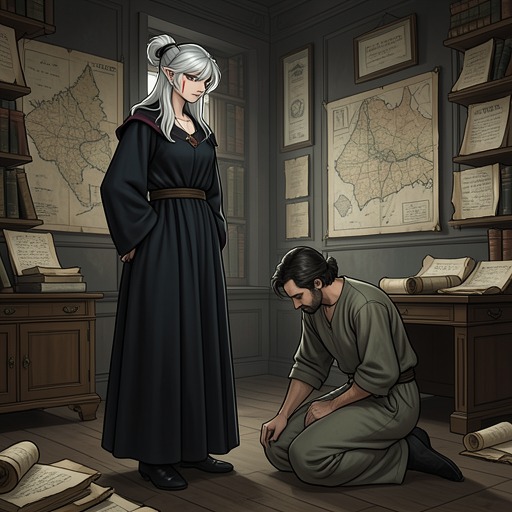
Vivi’s return initially looks less like a reunion than a confrontation. Her arrival disrupts the Academy, and the Glove of the First Class prepares to defend the grounds and its students. The audience witnesses Vivi with astonishment and fear, while Winston alone responds with composed pleasure. He smiles, bows, and formally welcomes her home, explaining that he has managed the estate during her absence and hopes she finds everything satisfactory. His response establishes the relationship’s central tension: he can accept Vivi as an old companion while still maintaining the ritual language and hierarchy of a servant addressing his mistress.
Winston then restores order by asking Constance to attend to the Academy while he handles Vivi personally. His intervention prevents the encounter from remaining a public clash and quietly reasserts his role as mediator, steward, and servant of the household. Once they are alone, he observes that Vivi has changed little, describing her continuing vitality and whimsy with amusement rather than reproach. The comment is especially significant because Vivi has just damaged the grounds and assaulted his pupils; Winston understands the incident as characteristic of her rather than as a betrayal of his service.
The relationship also expands through Constance, whom Winston identifies as his eldest daughter. His family has grown around the institution he founded, yet the daughter’s position does not displace Vivi’s authority. Constance can command the Academy as its formidable senior protector, while Winston still treats Vivi as the returning mistress whose claim takes precedence. The household therefore contains two overlapping structures: a family formed during Vivi’s absence and an older master–servant order that remains immediately legible when she comes home.
Formal Service and Personal Recognition
Vivi is unsettled by Winston’s reaction because she assumes that a century of silence, followed by violence on the Academy grounds, ought to have produced anger. Instead, he offers reassurance and keeps the old form of address. His manner confirms that the master–servant dynamic has not disappeared merely because the emotional bond has deepened. Winston can speak to Vivi with the familiarity of an old friend, tease her about her impulsiveness, and still call her Mistress Vivisari without treating the title as an empty relic.
Vivi gradually understands that this continuity belongs to both sides of the relationship. Winston appears to recognize her as the same spirited person he once served, even though she herself distinguishes between Vivisari and the present Vivi and admits that her memory is unreliable. She explains that she did not intentionally disappear without warning, that her warp points had reset, and that she returned to Meridian as soon as she recovered her bearings. Her purpose is not simply to provide information. She wants Winston to know that he was not deliberately abandoned after dedicating himself to her household.
Winston answers that her reasons were never in doubt, a response Vivi does not entirely believe but nevertheless values. She calls him clearly loyal and, more importantly, a friend of Vivisari’s. The qualification reveals the asymmetry created by memory loss: Winston’s attachment has had a century to remain stable, while Vivi must rebuild her own connection to him through present encounters. She cannot instantly feel everything that Vivisari felt, but she can recognize the evidence of his devotion and choose to honor it.
Shared Wit and Continuing Alliance
Their later conversation demonstrates that Winston’s service includes social knowledge as well as household management. He knows the wider political and adventuring world, though he carefully limits his claims. He suggests that the head of the Adventurer’s Guild might readily reunite with Vanguard if Vivi offered, because the man has found his current role tedious and might welcome something new—or old. Winston marks the statement as conjecture rather than pretending to certainty, preserving the discretion expected of his position.
He similarly directs Vivi toward Rafael for information, noting that Rafael may have assembled a spy network and is among the best-informed men in the kingdoms. Winston treats that network as an open secret, then uses the information to make a mischievous request: he would be amused if Vivi paid Rafael an unannounced visit, since it has been many years since that man was caught flat-footed. Vivi understands the ruse and agrees that she would hardly refuse a request from her loyal butler, while observing that he is encouraging her dramatic habits. The exchange shows that Winston does not merely obey Vivi’s commands. He reads her temperament, anticipates her choices, and participates in the playfulness that has always defined their familiarity.
This is why the relationship persists as more than a legal claim to property or a ceremonial title. Winston’s loyalty is expressed through stewardship, institutional achievement, restraint, and wit. Vivi’s recognition is expressed through explanation, respect, and her willingness to preserve his place rather than treat the White Glove Academy as an unauthorized occupation. His offer to vacate the estate after her return is itself proof of the old hierarchy, while Vivi’s astonishment at the idea of sending him away shows that she now values the person and community that grew there.
Meaning After a Century of Absence
The relationship’s decisive change is not that the master–servant bond ends, but that it becomes layered. Winston remains a servant who calls Vivi his mistress, yet he is also the founder of the White Gloves, the father of Constance, the manager of a transformed estate, and a friend capable of speaking to Vivi without fear. Vivi returns as a legendary figure whose power and identity have altered, but Winston’s calm welcome gives her a human point of continuity amid a world that has moved forward without her.
The preserved manor functions as the relationship’s shared transitional space: it is neither wholly the old household nor wholly the new Academy. Its unchanged layout carries Vivisari’s past, while its elite bodyguards and enlarged service staff embody Winston’s independent work during the missing century. By returning to it, Vivi encounters the material proof that someone remembered her. By remaining willing to serve after she comes back, Winston confirms that his service was not merely attached to an administrative position but to a person and a promise.
Their reunion therefore turns absence into evidence of devotion. Vivi’s century-long disappearance could have dissolved the relationship, and her violent reappearance could have made Winston’s stewardship a grievance. Instead, his welcome and her attempt to explain herself restore the bond on altered terms. The old hierarchy survives, but it is sustained by mutual recognition: Winston protects the household until its mistress returns, and Vivi acknowledges that the household—and the friend who maintained it—deserves a place in the life she is building now.