Vivi–Winston Master–Servant Relationship
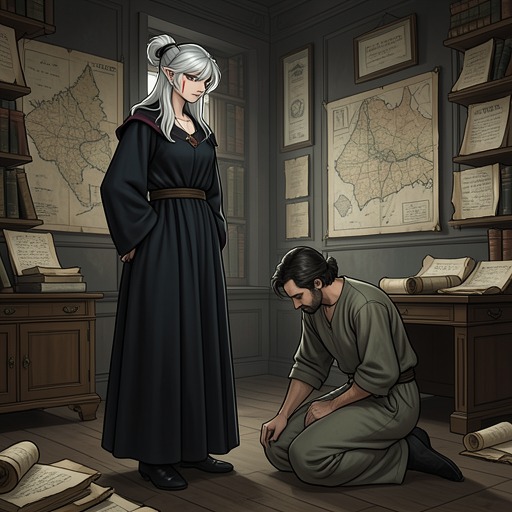
New Life as a Max Level ArchmageVivi–Winston Master–Servant Relationship is one of the most stable forms of loyalty surrounding Vivisari Vexaria. Its outward language is hierarchical: Winston is her butler, addresses her as “Mistress Vivisari,” and acts in direct service to her commands. Yet the relationship is not presented as passive obedience. Winston possesses formidable independent capability, responds instantly to emergencies, protects Vivi’s companions as though their safety falls within his own duty, and can restrain a powerful noble when that noble threatens someone under his mistress’s protection. The bond therefore joins ceremonial service to military-grade guardianship, making Winston both an instrument of Vivi’s authority and one of the people through whom that authority becomes effective.
Structure and Terms of Service
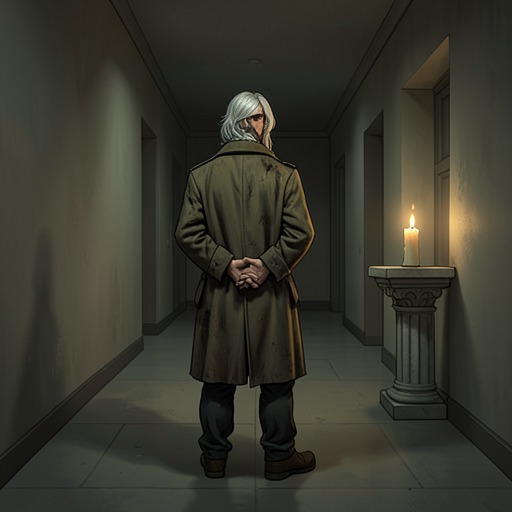
Winston’s role is defined by immediate availability and precise obedience. When Vivi rings the Servant's Bell amid the dimensional disaster, a black line cuts through the air and opens into a doorway, through which Winston steps at once with his rapier drawn. He arrives prepared for catastrophe before receiving an explanation, and the hellish scene surrounding him produces surprise rather than hesitation. Vivi gives him a single practical instruction: watch over everyone while she deals with the abyssal pit. Her concern is not only for Saffra and Rafael but also for the restrained Duke Caldimore, whom she does not want left near them without a powerful bodyguard. Winston accepts the assignment without questioning the circumstances, and his presence immediately converts Vivi’s divided attention into operational freedom.
The hierarchy is explicit, but it does not reduce Winston to a decorative servant. Rafael observes that Winston, acting directly for his mistress, could challenge nearly all Titled across the mortal lands. This places the butler among the most consequential protective forces available to Vivi, even while he remains socially marked by service. His rapier, readiness, and overwhelming physical strength make the title of butler misleading if read as a limitation. Winston’s occupation is instead the form through which his power is organized: he is a household servant whose duties include confronting threats that ordinary guards, adventurers, or nobles could not safely meet.
Protection During the Dimensional Crisis
The relationship becomes most revealing when Vivi must leave the open-air battlefield to enter the dimensional breach. Before departing, she heals the fallen Duke Caldimore, places disabling spells on him, and orders Rafael to extract information, especially concerning what happened to Isabella Caldimore. She then summons Winston and assigns him responsibility for everyone present. The order reflects Vivi’s confidence that Winston can preserve the fragile balance around Saffra, Rafael, and the prisoner while she confronts the larger existential threat.
Winston’s service is protective rather than mechanically compliant. When Duke Caldimore insults Saffra and attempts to rise, Winston places a gloved hand on his shoulder and forces him back down, politely asking him to remain where he is. The gesture translates social authority into physical restraint: the duke’s rank cannot override the safety conditions established by Vivi’s household. Winston does not need to raise his voice or invoke a title. His mastery of the situation is expressed through controlled force and impeccable courtesy.
The same pattern appears when Saffra attacks the duke. After the thirteen-year-old apprentice burns a scroll and strikes Caldimore with a staff, Winston catches the weapon’s overhead blow and pushes her backward, asking her to calm herself. His intervention protects the duke from further injury, but it also protects Saffra from the consequences of an uncontrolled assault and preserves the interrogation that may still reveal Isabella’s fate. Winston’s restraint is therefore not simple loyalty to a prisoner or indifference to Saffra’s outrage. It is a form of service that holds competing obligations together while the dimensional breach threatens everyone.
Trust, Authority, and Emotional Control
Winston’s behavior suggests a relationship built on unusually high mutual trust. Vivi does not explain the crisis before assigning him the central protective task, because the emergency leaves no time and because she knows he can act from context. Winston, in turn, does not demand justification before obeying. His first response is readiness; comprehension follows afterward. The relationship’s efficiency comes from this shared assumption that Vivi’s judgment is sufficient to initiate action and that Winston’s judgment is sufficient to execute it.
That trust does not require emotional emptiness. Winston remains outwardly composed while restraining Saffra, but Rafael notices that he could have intercepted every blow and suspects that the butler consciously or unconsciously allowed Saffra to vent her anger against Caldimore. The moment complicates Winston’s formal obedience. He follows the immediate need to stop the assault, yet his timing may also express sympathy with the moral outrage directed at a father who appears to have abandoned Isabella. His service thus contains judgment: he controls the violence without pretending that the duke deserves unquestioning protection.
Vivi’s own manner toward Winston is direct and practical rather than ceremonially affectionate. She entrusts Saffra to him, tells him she will return as quickly as possible, and leaves despite knowing that the breach is sealing and that the rescue may become a long and dangerous detour. Winston answers with a formal assurance that he will watch over Saffra. His acceptance of the duty allows Vivi to confront the unknown beyond the dimensional horizon without abandoning the people closest to her. In this sense, Winston is the relational counterweight to Vivi’s solitary power: she can enter the abyss because someone reliable remains behind.
The Relationship in the Larger Mythic Order
The bond also clarifies the scale of Vivi’s return. Her destruction of the Greater Voidbeast is so overwhelming that observers may interpret the event not as the return of the legendary Sorceress but as the descent of a god. Against that vast, almost religious image of power, Winston’s service is deliberately concrete. He stands beside an injured duke, guards a young apprentice, catches a staff, and carries out an interrogation assignment. The relationship connects cosmic force to household responsibility, preventing Vivi’s legend from becoming detached from ordinary obligations.
This contrast is especially important because Vivi’s history is entangled with the Party of Heroes and the defeat of the Cataclysms. Prismarche venerates that victory a century later, displaying the heroes in the Temple and celebrating Peace Day as the anniversary of a world freed from horrors such as the Rampant Genesis of the Flesh-Weaver, the Crimson Blight of the Reaper of the Lost Harvest, and the Great Conflagrations of the Ashen Hierophant. Vivi’s restored power places her within that sacred historical imagination, while Winston’s conduct shows the private infrastructure required to support such a figure. Publicly, Vivi may be mistaken for a god; privately, she remains a mistress who must delegate protection, investigation, and household management.
The relationship also gains force from the recurrence of catastrophe. Even after a century of peace, Master Aeris warns that the Dragon King could descend from the Sky-Pillar Range, that an ancient horror might awaken, and that another Shattered Oracle could emerge from reckless ambition. He concludes that there is always an Eighth Cataclysm on the horizon. Winston’s role answers that instability at the human scale. He cannot prevent every apocalypse, but he can make sure that Vivi’s companions survive the seconds in which she turns toward one.
Consequences and Significance
The immediate consequence of Winston’s loyalty is that Vivi can leave Rafael and Saffra with a protector capable of restraining Duke Caldimore and managing the volatile scene. When Vivi asks Winston to watch over Saffra, he accepts without complaint. Even when she apologizes for postponing a promised meeting with his family because of the crisis, Winston replies that the delay is reasonable because he knows whom he serves. The statement is not merely professional tolerance. It presents service as a conscious recognition of Vivi’s priorities and of the exceptional demands created by her power and responsibilities.
For Saffra, Winston’s presence is both a barrier and a safeguard. He prevents her from attacking Caldimore further, yet he also keeps her within the protective circle Vivi has established before entering the breach. For Rafael, Winston’s arrival removes the immediate danger of facing an orichalcum duke alone; the butler’s strength makes the interrogation possible. For Vivi, Winston is the dependable extension of her will who can act in her absence without requiring supervision. The master–servant bond therefore functions as an alliance of delegated agency: Vivi commands, Winston interprets the practical demands of the command, and the people around them receive protection even when the mistress is confronting a threat beyond ordinary reality.
Its deepest significance lies in the tension between form and substance. Winston’s formal identity is that of a servant, but the narrative repeatedly grants him the authority, strength, and moral discretion of a guardian. Vivi’s authority is immense enough to be mistaken for divinity, but it is made livable through a relationship grounded in trust, routine, and competent care. Their bond does not erase hierarchy; it gives hierarchy an ethical purpose. Service becomes the means by which overwhelming power remains accountable to particular people, and loyalty becomes visible not in declarations but in the instant response to a bell, the hand that stops a blow, and the promise to guard those left behind.