
A Public Duty to Children
News of the WorldThis thread follows the novel’s changing idea of protection, from official custody and payment to personal responsibility grounded in a child’s welfare.
increasing Bearing strength in each event
 decreasing
Bearing strength in each eventdecreasingThe Agent’s Arrangement
The Agent’s Arrangement
Return by contract
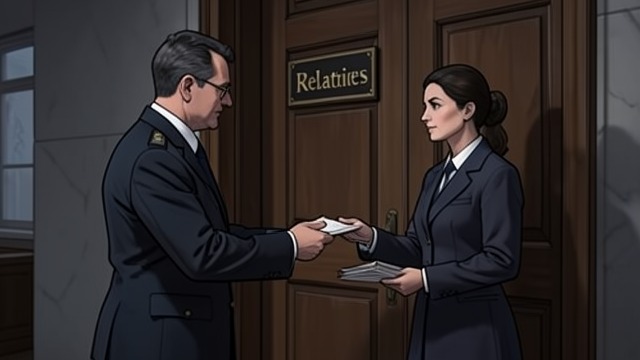
An Indian Agent identifies Cicada as the missing child and arranges for her transport to relatives. The family’s payment and the official papers create a formal account of the task.
What the documents omit
The arrangement establishes destination and compensation but cannot guarantee that Cicada will feel safe or that her relatives will accept her. The narrative distinguishes administrative completion from actual care.
Britt’s Trust
Britt’s Trust
A handoff for safety
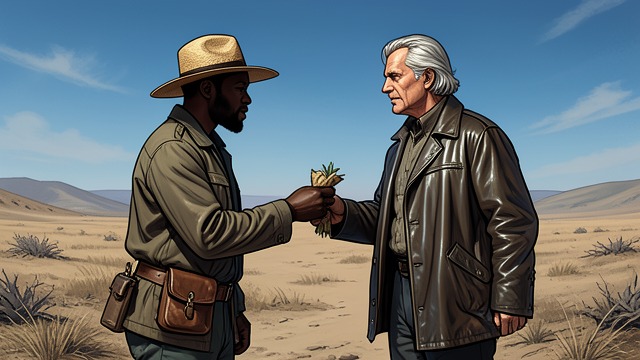
Britt Johnson entrusts Cicada to Kidd because he cannot make the long journey himself and believes an older white traveler may carry her safely. His decision reflects the constraints on a Black freighter in Reconstruction Texas.
Duty transferred
Kidd accepts not only the payment but the obligation to protect the child. The handoff makes care a personal responsibility where official systems offer only partial support.
The Patrol’s Authority
The Patrol’s Authority
A lawful-looking demand
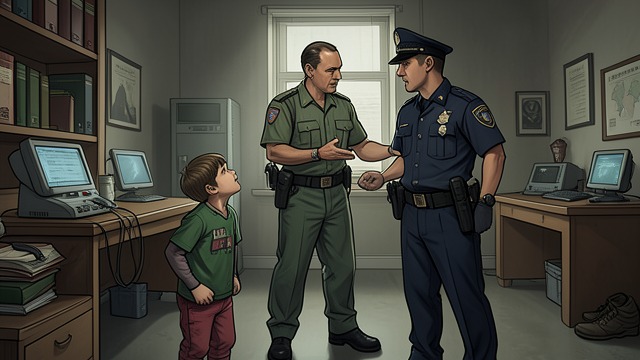
A lieutenant asks to inspect Cicada and questions Kidd’s papers and arms. The patrol’s authority could easily become another forced transfer.
Protection through judgment
Kidd stands between the officer and the frightened child while answering carefully. His conduct treats her immediate fear as part of the situation, not an inconvenience to government procedure.
The Relatives’ Obligation
The Relatives’ Obligation
Adoption has a cost
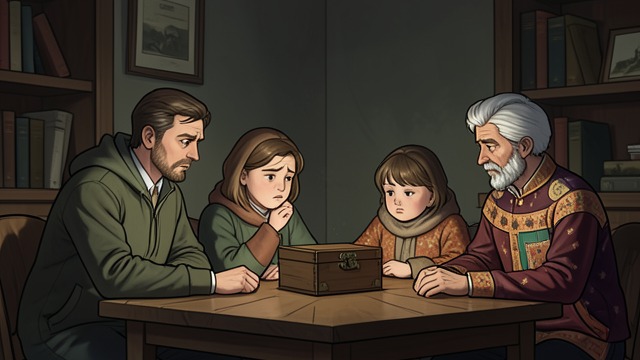
Adolph explains that formal adoption would require the Leonbergers to support Cicada and provide for her future. Their reluctance suggests that the family’s public welcome may not become a durable commitment.
Protection requires scrutiny
Kidd has to consider the practical conditions of Cicada’s life rather than relying on kinship and celebration. The story asks whether a promised placement is enough when no one accepts continuing responsibility.
Choosing the Child Again
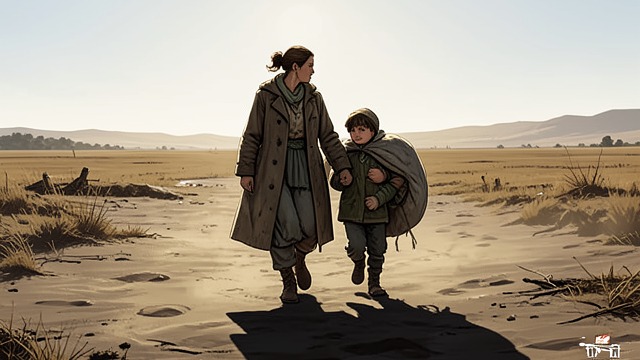
Choosing the Child Again
Harm becomes undeniable
Kidd sees Cicada sent alone into the field with a heavy load and notices marks from a dog whip. The evidence makes her placement a question of safety, not cultural adjustment.
Care beyond the contract
He takes her back despite the money already spent and the promise he has fulfilled in form. The choice defines protection as sustained attention to a child’s actual circumstances.
Winter 1870, before Kidd accepts the commission
Winter 1870, Wichita Falls
Early March 1870, on the Red River road
The day after Cicada’s reunion at D’Hanis
The night Kidd retrieves Cicada
