
The Captive’s Second Creation
News of the WorldThis thread traces Doris’s insight into the psychological rupture of captivity and return, and the ways later events confirm and complicate it.
increasing Bearing strength in each event
 decreasing
Bearing strength in each eventdecreasingThe Doll’s Uncertain Reality
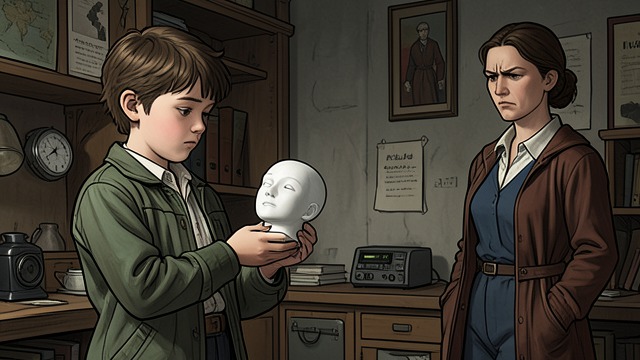
The Doll’s Uncertain Reality
A gift received carefully
Doris gives Cicada a china-headed doll, and Cicada studies it and speaks to it as though it belongs to a sacred category. The child does not share the visitors’ assumptions about toys.
A likeness recognized
Doris sees the doll as both real and not real, much like Cicada after years of upheaval. Her interpretation begins to frame the child’s behavior as an effect of profound change rather than simple oddness.
Doris Names the Rupture
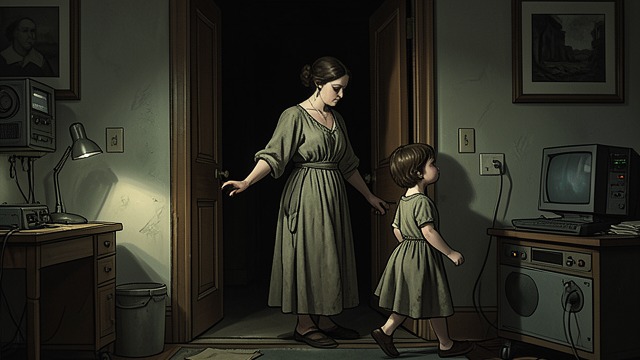
Doris Names the Rupture
A theory of altered childhood
Doris recalls children affected by famine and displacement who returned unfinished. She describes Cicada as having gone through two creations, with the first torn apart by the second.
Insight without remedy
Doris offers language for Cicada’s dislocation, but neither she nor Kidd can undo the transformations. Understanding changes how they regard the child without providing a simple cure.
The Flight to the River

The Flight to the River
A child reaches for her former life
Cicada runs to the Red River and calls to the Kiowa on the far bank. Her action reflects an attachment strong enough to overcome the routine and tentative trust she has begun to build with Kidd.
The past cannot be resumed
The party does not recognize or retrieve her, and danger turns the crossing into another separation. Her longing confirms Doris’s insight while showing that the child is still actively choosing, not merely damaged.
A Return That Fails
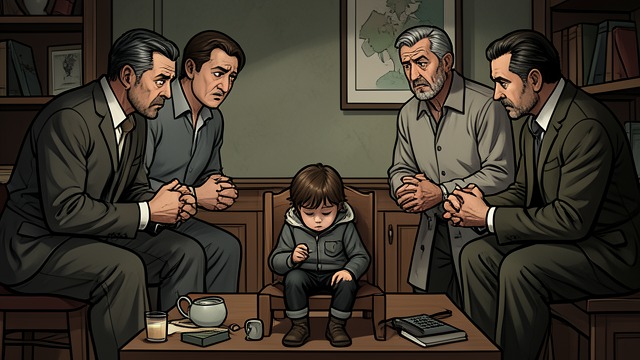
A Return That Fails
Culture does not reset
Cicada cannot resume German speech, domestic manners, or an affectionate relationship with relatives she barely remembers. Their expectation that she become the child they lost conflicts with the person who returned.
The theory gains evidence
Her distress and the relatives’ response show that reunion may deepen dislocation when it demands erasure. Kidd must act on this reality rather than treat return as a completed cure.
A Life Still in Motion
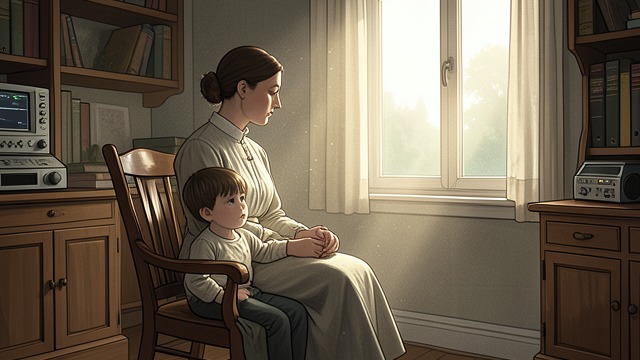
A Life Still in Motion
Adaptation without erasure
Cicada learns to function within Kidd’s family and later builds a life with Calley, but she never entirely adopts the values of the white world. Her adaptation does not cancel what captivity made of her.
A more complex outcome
She is neither restored to her first German childhood nor frozen in the trauma of return. The novel presents a self formed through survival, memory, and later choices.
March 1870, at the camp near Spanish Fort
That evening, Spanish Fort
March 1870, during Cicada’s escape attempt
Early April 1870, at the Leonberger farm
During Cicada’s adulthood
