Anglo-American War of 1812
News of the WorldThe Anglo-American War of 1812 was the first great turning point in Jefferson Kyle Kidd’s life: at sixteen, he entered military service as a Georgia militiaman, and the war set him on a path from an uncertain private to a practiced bearer of messages. His recollections of the conflict return not as a simple record of advancement but as the beginning of a vocation—one defined by movement, written information, and the demands of carrying news through dangerous country.
Enlistment and the Battle of Horseshoe Bend
Kidd’s militia journey began with the practical confusion of an inexperienced force. Before the Georgia men marched west, they assembled supplies, arms, ammunition, personal kits, and horses, then discovered they needed officers. Some of the previous year’s officers were absent or had moved to Tennessee. The men were unsure even what sergeants and corporals were for, and chose to do without them. Kidd, a private from the Georgia hill country, raised his hand to vote for Thomas Thompson as captain.
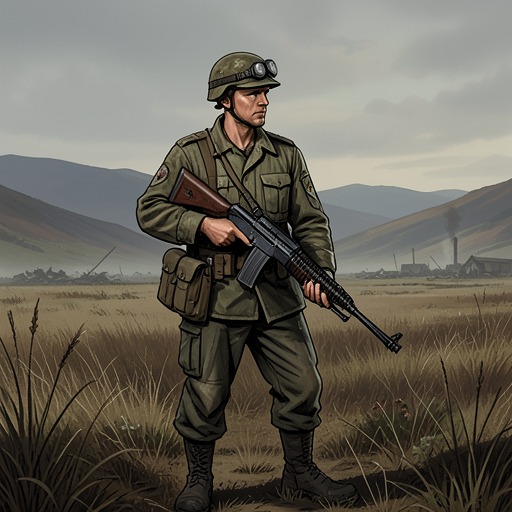
The militia traveled under Andrew Jackson to the Battle of Horseshoe Bend in Alabama. On March 27, 1814, Kidd fought south of the bend with Coffee’s forces. The men had pulled the timbers from a cabin to make breastworks. Beside two boys from his county, Kidd fired over the makeshift barrier; a large soap kettle that had rolled from the fireplace rang repeatedly as opposing fire struck it, making it difficult to hear Thompson, who was wounded and crawling toward cover. In the battle’s confusion, Kidd did not initially realize that he himself had been hit. The wound tore the flesh at the outside of his right hip, through his homespun clothing.
Afterward, military necessity gave the young private a rank he had not sought through expertise: he was elected sergeant because the unit had been told it needed one. With Thompson no longer in command, Sherman advanced to lieutenant and Hezekiah Pitt became captain. Kidd was left responsible for duties he did not yet understand, a transition that began his effort to learn the army not by instinct but by careful attention to what could be recorded and carried forward.
Learning the Work of a Soldier
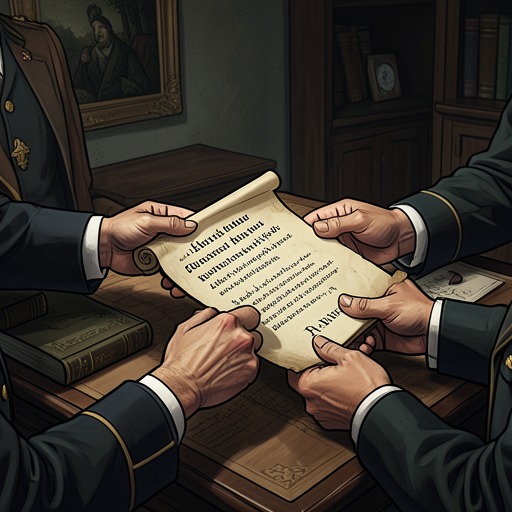
After the battle, Kidd went to officers of the Thirty-ninth U.S. Infantry to ask what a sergeant was supposed to do. He was not yet twenty, and the men laughed both at his election and at his Georgia speech. Their own accents initially baffled him: he had to work out that their pronunciations of “noiss,” “reaftah,” and “keaf” meant “nurse,” “rafter,” and “calf.” He bent over his paper so they would not see his puzzled expression, then wrote down the sergeant’s obligations. In a world whose operations depended on after-action reports, scout maps, and company-clerk duties, written information offered him a way to make unfamiliar responsibilities legible.
The Georgia and Tennessee militias and Army regulars then marched south toward Pensacola, through sawgrass, fan palms, and thorny green briars that caught at Kidd’s wounded hip. A musician played “Stone Grinds All” and “Little Drops of Brandy” on an Irish tin whistle, repeating the tunes along the march. At Pensacola, Kidd was assigned to transport prisoners, work he hated. He learned interrogation methods, the secret codes British prisoners used to communicate, wrestling holds and a thumb lock, and the use of manacles and leg irons in the hot, sandy prison environment. Within months, he talked his way out of the Provost Marshal’s unit and into the message corps.
Running messages proved to be the work that suited him. Jackson’s army had no signal system like the Navy’s, so orders, maps, and reports had to travel by hand through the Southern wilderness. Tall, strong-lunged, familiar with the country around his home in Ball Ground, Georgia, Kidd could cover ground at a long trot. He relished traveling alone, free of encumbrance and independent of the message’s contents: he received instructions at a staff tent, put the papers in his bag, and ran them from one unit to another. A silvery corps badge marked his new role, but he smeared it with bacon fat and dust to dull its shine. He also removed the charge from the flintlock pistol issued to him because its heavy, awkward cock caught on things, carrying it unloaded in his knapsack instead.
The Runner’s Service and Its Afterlife
The message work carried Kidd through a landscape where speed and concealment mattered. He dodged artillery and musket fire at Fort Bowyer in Mobile, then crossed back into Georgia and continued to Cumberland Island, traveling on foot and on small Florida horses called Tackies. Once, exhausted, he fell asleep in an empty ash hopper beside a cabin and woke to find a farmyard full of British soldiers. He stayed hidden until noon, when they left; discovery would have meant death. The episode condensed the risks of his calling: a message had to keep moving, while its bearer survived by judgment as much as endurance.
Kidd remembered the two years of carrying dispatches with wonder, as though he had been given both the task and the life for which he was meant. Their end did not surprise him; the work had seemed too perfect to last. He wanted to go west to the Spanish settlements, but his widowed mother and younger sisters depended on him. He delayed marriage twice, and both women he considered married someone else. By the time he finished an apprenticeship as a printer in Macon, his mother had died and his sisters had married. The war’s years as a courier thus remained a formative interval, but not a permanent escape from family obligations or ordinary work.
The service also outlasted the period itself as a credential. Decades later, when the United States again went to war with Mexico, Zachary Taylor made Kidd a brevet captain in the Second Division so he could organize couriers and obtain paper, ink, and horses. His earlier service in the Anglo-American War of 1812 recommended him for the rank; afterward, he was known as Captain Kidd. The title that endured began with a teenage militiaman’s uncertain vote and became attached to the work he had discovered in the war: carrying information by hand.
The War's Continuing Meaning
After a later fight on the road, Kidd sat by a stream, watching Johanna play among the rocks while he drank coffee and smoked. To quiet his mind, he returned to memories of his courier service, his wife Maria Luisa, and his daughters. The war’s message-running years had become more than a military episode: they offered him a way to understand a whole life. He considered that a person might receive a message at birth, perhaps one unrelated to the bearer, and spend a lifetime carrying it until it could finally be handed over, sealed. In that reflection, the teenage runner’s passage through danger becomes the source of a lasting image for Kidd’s work and journey: news must be carried onward, even when its meaning is not yet clear.