Horrell brothers
News of the WorldThe Horrell brothers are five violent, fame-hungry siblings whose pursuit of newspaper recognition brings them into the path of Jefferson Kyle Kidd. In their encounter near Lampasas, they appear at once dangerous and absurd: they boast of killing Mexicans, wonder why the newspapers have ignored them, and invite Kidd to read aloud about their exploits. Their story extends beyond that meeting. Their crime spree continues through central Texas and New Mexico, and some of the brothers are killed in the 1877 Lampasas Square Shoot-Out—the event that finally gets them into the Eastern papers.
Identity and Introduction
The Horrell brothers emerge from a landscape where armed men on horseback are an increasingly familiar sight. On the road toward Lampasas, Kidd and Johanna encounter four armed riders, with stampede strings and hair-tassels. The narration identifies such men as cowboys, an occupation that took shape as millions of buffalo were shot. The riders block the road; Johanna, troubled, slips from the front seat into the wagon bed and hides beneath her red jorongo. Their first approach is thus framed by the threat of an armed roadblock, even before Kidd learns who the Horrell brothers are.
A tall rider warns Kidd that the Horrell brothers gather at Wiley and Toland’s saloon, The Gem, and shoot Mexican people when they are not drinking there. He cautions Kidd against going in to read the news: the brothers are fixated on Eastern newspaper engravings of cowboys and expect to be depicted in them. The warning is not a rumor about a single quarrel. The rider explains that the brothers may demand a reading about themselves, become agitated when the papers fail to feature them, and grow especially excited around a farmers’ union meeting and a dance. Benjamin, one of the brothers, stutters when the family gets worked up.
Fame, Violence, and Their Public Image
The brothers’ desire for recognition is specific and strikingly provincial. They imagine themselves appearing in Eastern newspapers, though they do not know England exists. Kidd tests the limits of their ambition by asking whether they expect to appear on the front page of the London Times; the answer makes clear that their imagined audience is not truly global. What they want is the prestige of print, especially the engravings that turn cowboys into public figures. They regard newspaper attention as something owed to them for their violence.
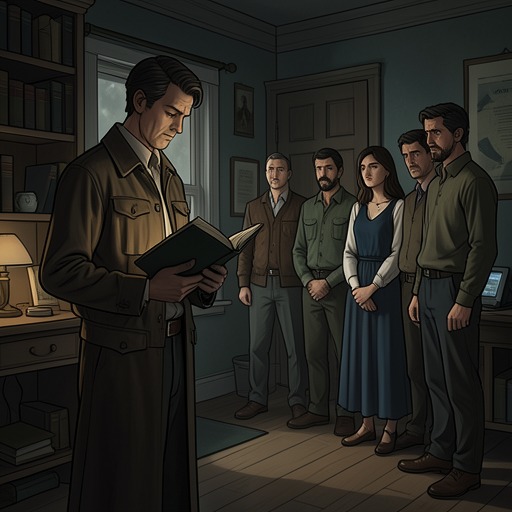
When the brothers meet Kidd at Lampasas Springs, Merritt introduces himself and names the others as Tom, Mart, Benjamin, and Sam. The five sit mounted while Kidd and Johanna unload their belongings, watching closely as Kidd’s horse grazes. Their horses are good stock, described as Copperbottom breeds of Steel Dust lineage. Their own clothing, by contrast, is assembled from military uniforms from both sides, faded to a common slate color and missing buttons. One brother has mismatched stirrups; the youngest, apparently no more than fourteen, wears a derby made to fit with rags or paper stuffed into its band. The details give their appearance a makeshift, postwar quality, without diminishing the danger posed by armed men who can ride well and act together.
Merritt asks Kidd why the brothers are not in the news. He says they have killed many Mexicans and assumes that should earn coverage. Kidd asks whether anyone objects to the killings. Merritt says no one does, though he acknowledges that Governor Davis has removed people associated with the Confederacy without replacing them and that Army personnel sometimes come through. His answer places the brothers’ violence in a setting where authority is present only intermittently and opposition appears uncertain. The brothers themselves recognize that soldiers might object, but this possibility has not stopped them.
The Meeting at Lampasas Springs
Kidd has already decided to avoid the brothers, but they find him while he and Johanna are camped beside Lampasas Springs. They watch from horseback as the pair unload their gear, then approach Kidd with the same demand for recognition: he is the man who reads the news, so why are they absent from it? Kidd answers that he does not write the newspapers. He tries to deflect the conversation by suggesting that they might already have appeared in papers in Chicago, Georgia, London, or California, but Merritt returns to the brothers’ claim that their killings ought to have been reported.
The brothers invite Kidd to The Gem and ask him to read news describing their pursuit of Indigenous people and the murders attributed to the Higgins brothers. Merritt says Kidd may come at any time and that anyone uninterested in hearing about them can leave. The invitation is not a retreat from the threat described on the road; it is an attempt to turn Kidd’s communal reading into a platform for their reputation. Their confidence that he will perform for them contrasts with Kidd’s decision not to go.
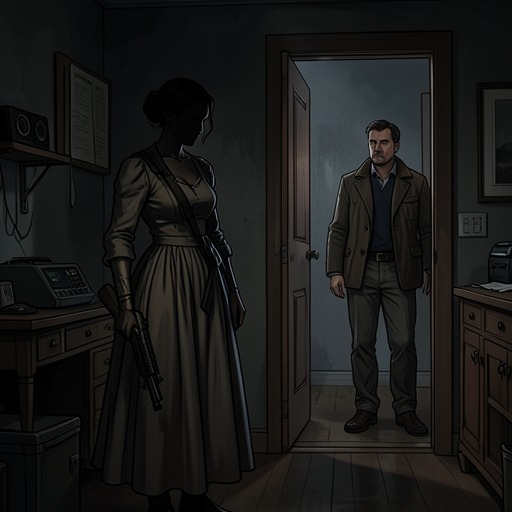
Although Kidd does not attend, the brothers keep their word in a more immediate way. He remains at the springs, listening from a distance to music and shouts from town and watching the night. He hears the brothers’ horses, sees a cigarette glow, and understands that they have come to guard him and Johanna as promised, taking turns on watch. Kidd does not sleep; he sits against a wagon wheel with his revolver in hand. The brothers leave before daylight. Their protection is real, but so is Kidd’s caution: the overnight watch does not erase the earlier warning about their killings or his uncertainty about what might happen.
Later Violence and Narrative Significance
The Horrell brothers’ meeting with Kidd is an episode in a longer criminal history. Their crime spree continues in central Texas and New Mexico. In 1877, several of them are killed in the Lampasas Square Shoot-Out; only then, the retrospective account observes, do they finally make the Eastern papers. Their delayed arrival in print completes the irony established at Lampasas Springs: the brothers obtain the coverage they wanted, but not through the flattering cowboy engravings they had imagined.
Their episode brings together the book’s interest in news as both information and performance. Kidd’s readings gather listeners around events elsewhere; the Horrell brothers want that power redirected toward their own violent deeds. They see the newspaper as a measure of importance, while the contrast between their crude, assembled uniforms and their careful attention to public image makes their ambition look both comic and menacing. The night at the springs sharpens that contrast: men Kidd has reason to fear also stand watch for him, and the narrator preserves both facts without making their violence harmless or their assistance unreal.