Horseshoe Bend
News of the WorldHorseshoe Bend in Alabama is the setting of the battle that first tested Jefferson Kyle Kidd in combat and began a military career he had entered as an inexperienced sixteen-year-old militiaman. There, he was wounded while dragging his elected captain, Captain Thompson, back to cover; the rescue, the loss of the captain, and the wound became a defining episode that Jefferson Kyle Kidd would recount decades later to younger soldiers.
Setting and Militia Departure
In 1814, during the War of 1812, Jefferson Kyle Kidd’s Georgia militia traveled west to fight at Horseshoe Bend under Andrew Jackson. He had just turned sixteen. Before the departure, the men gathered in the Georgia hill country, assembled supplies, arms, ammunition, personal kits, and horses, and discovered that they also needed officers. Their organization was improvised: two previously elected officers were absent, three had moved to Tennessee, and the company was uncertain even about the functions of sergeants and corporals. It decided to do without those ranks for the time being.
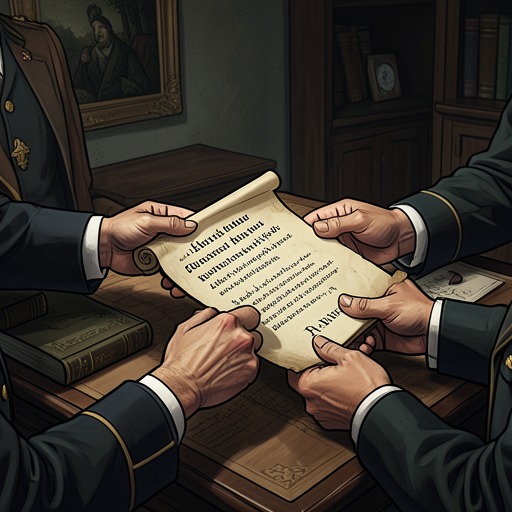
The men elected Captain Thompson to command, and Jefferson Kyle Kidd raised his hand in support. The roughness of that beginning matters to the battle’s place in his history: he entered the field not as a seasoned soldier but as a young private in a militia still learning how military order worked. The campaign brought the company into the country then called Alabama, in territory the United States government designated Mississippi Territory.
The Battle and the Rescue
On March 27, 1814, Jefferson Kyle Kidd and other Georgia militiamen were positioned south of the bend with Coffee’s forces. They had pulled down the timbers of a cabin to make breastworks. Beside the men, a large soap kettle had rolled out of the fireplace; incoming rounds struck it repeatedly, making it ring like a bell and masking the sound of Captain Thompson, who was outside the barricade and crawling toward them.
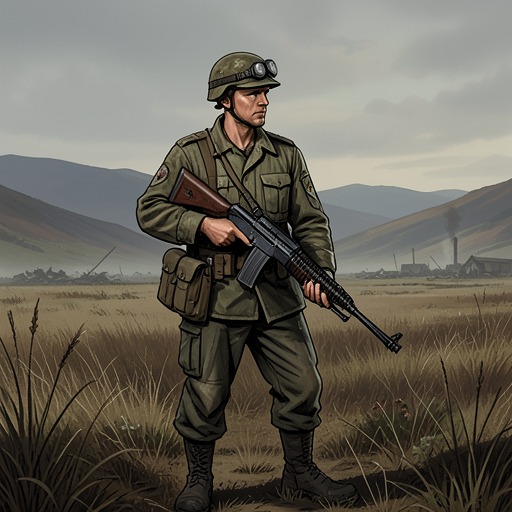
The fire across the Tallapoosa River was accurate. The Red Sticks, identified in the account as Muskogee Creek people, and Choctaw people fired smoothbore guns, whose large .72-caliber balls could be deadly despite the weapons’ lack of rifling. Jefferson Kyle Kidd initially did not realize that he had been hit. When Sherman Foster called attention to Captain Thompson’s exposed position, Jefferson Kyle Kidd understood the danger and set out to reach him.
Before crawling beyond the breastworks, Jefferson Kyle Kidd laid down his flintlock rifle, its firing mechanism wrapped in his kerchief, and removed his powder horn, powder-measure strap, and cartridge box. With the battle continuing around him, he crossed the exposed ground toward the wounded captain. The sand erupted under the ongoing fire. Reaching Captain Thompson, Jefferson Kyle Kidd seized his bloodied arm and torn shirtsleeve and dragged him behind the collapsed cabin timbers. In the wreckage, Captain Thompson’s boot heels caught on a calendar, turning its pages through March, April, and May.
Wound and Immediate Aftermath
Jefferson Kyle Kidd had been shot in the outside of his right hip. He did not notice the injury until Sherman Foster pointed it out; looking down, he saw blood spreading across his homespun trousers. The wound had driven the cloth’s weave into his flesh, but it had not struck bone. Later, his pants had to be removed so that a bandage could be tied around his hip bone and crotch, an embarrassing ordeal for the young soldier. The injury healed well.
Captain Thompson did not survive. In a later telling, Jefferson Kyle Kidd said that the captain had been killed on the second day of the battle, after Jefferson Kyle Kidd crawled out and pulled him to cover. The militia replaced him with Hezekiah Pitt. Jefferson Kyle Kidd, meanwhile, was elected sergeant, although he knew little about the duties of the rank. After the battle, he sought instruction from officers of the Thirty-ninth U.S. Infantry and made a written list of a sergeant’s obligations. His effort to learn the role reflects how the battle moved him from an improvised militia company toward more formal military service.
A Battle Recalled
The memory of Horseshoe Bend resurfaced in February 1847, when Jefferson Kyle Kidd was with Zachary Taylor’s forces at Buena Vista. Young Texas Rangers gathered near the campfires in the mountains above Monterrey and listened as he spoke about the earlier battle. They wanted to compare their own hardships and conduct with those of the men who had fought before them. Jefferson Kyle Kidd described the weapons, the difficult march toward Pensacola, and the rescue of Captain Thompson, while also recalling Andrew Jackson as fearless and nearly maniacal in combat.
The Rangers’ unasked question was whether Jefferson Kyle Kidd himself had been wounded. He told them he had been shot in the hip, had not known it at first, and believed that he might have been struck by a spoon fired from a smoothbore after the Red Sticks ran short of ammunition. The account turns Horseshoe Bend from a remembered battlefield into a story passed between generations of soldiers: a place where a young private acted under fire, suffered a wound, and lost the captain he had chosen. Its enduring significance in Jefferson Kyle Kidd’s life lies both in what happened there and in how, decades later, he used its memory to answer the younger men’s questions about courage and endurance.