Kidd's gold pocket watch
News of the WorldKidd's gold pocket watch is both a working timepiece and the object through which Jefferson Kyle Kidd and Johanna Leonberger’s shared years acquire a visible measure. First used to teach Johanna how to read the hands and keep appointments, it returns at their parting as Kidd’s gift to her: a practical possession made personal by the time, care, and separation it represents.
Form and Early Use
The watch is carried in Kidd’s pocket and opened when he wants to show Johanna the time. Near the end of their journey, she has learned to distinguish its hour and minute hands. This knowledge belongs to a broader course of lessons: she can count to a hundred, lace her shoes when persuaded to wear them, and sing the first verse of “Hard Times.” The watch is not an isolated teaching prop but one part of a growing familiarity with English words, ordinary routines, and the tools of Kidd’s life.
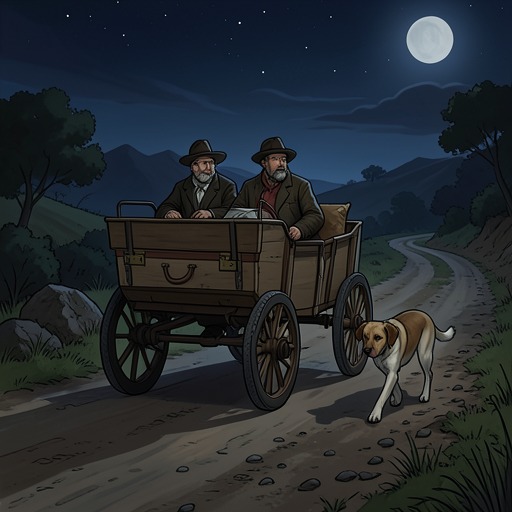
The lesson unfolds amid travel rather than in a classroom. After a day of rest and a resupply stop at Cranfills Gap, Kidd and Johanna make twenty miles over a flat, sandy road. Their progress depends on the conditions of the road and on Fancy’s rest, while Johanna moves between the wagon and the landscape around it. She dances the Rabbit Dance on the driver’s seat, then runs alongside and turns a salve tin’s lid into a buzzing bee. Against this energetic motion, the watch’s hands offer a small, fixed system she can learn to read.
Time as a Shared Routine
The watch also helps connect private life to Kidd’s public work. At supper, after Johanna has laughed and returned to the food, Kidd takes out the watch and opens it. He tells her that they must leave in thirty minutes to read at seven. She checks the hands against the appointment, asking whether it is seven when the little hand is on seven and the big hand on twelve. Kidd confirms that she has understood and sends her to the bathroom with a towel.
That exchange gives the timepiece a function beyond measuring a journey. It helps Johanna anticipate what will happen next and understand the schedule around the readings that shape Kidd’s work. The scene moves from a meal and shared amusement to an agreed hour of departure; the watch makes the transition legible. Its use is ordinary, but the ordinary competence it supports—telling the time, preparing to go, joining a familiar routine—shows how much their life together has come to include instruction and companionship.
The Watch at Their Parting
The watch returns at the moment Johanna is preparing to marry John Calley. She asks Kidd what rules make a good marriage. He answers lightly with prohibitions against scalping anyone, eating with one’s hands, and killing a neighbor’s chickens, then falters as he tries to offer positive commandments. His difficulty gives the exchange its emotional weight: he can joke, but he cannot provide a simple formula for the life she is beginning.
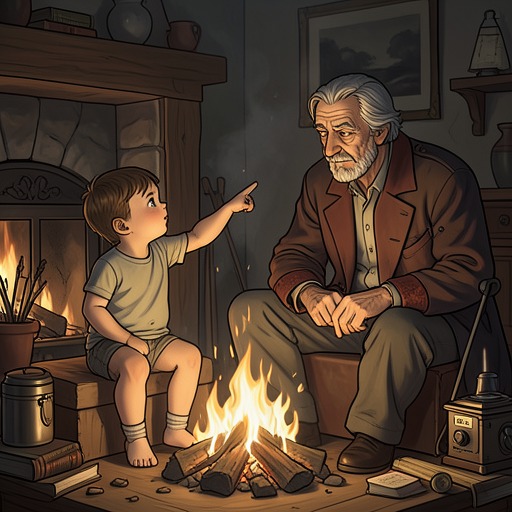
Kidd takes out the old gold hunting watch, clicks it open, and holds it toward her. Johanna reads eleven o’clock and addresses him as Kontah. Elizabeth calls from the stairs to ask whether Johanna is ready. Johanna turns, embraces Kidd, and promises that she and John will visit often; she calls him her “cuuative watah” and begins to sob. Kidd presses the watch into her hand and tells her he would like her to have it. He describes the years as having swept ahead quickly, recalling how long he worried about her and delighted in her company, and recognizes that it is now time to give her away.
The watch therefore passes at a precise threshold: Johanna is leaving to marry, but she is not leaving Kidd behind. Her promise to visit and the intimate address she gives him make the gift part of an ongoing bond, even as the handoff acknowledges a changed household and a new life with John Calley.
Meaning and Narrative Function
Across these scenes, the watch’s meaning shifts through use rather than through any change in its physical form. In the lessons, its hands are things Johanna learns to interpret; at supper, it coordinates a shared appointment; at eleven o’clock on her wedding day, it becomes the object Kidd chooses to give her. The same action—opening the watch—first makes time teachable and later makes affection tangible.
Its final significance is also bound to the contrast between clock time and remembered time. Johanna can name the hour, but Kidd speaks instead of years: years of worry and delight that seem to have passed too quickly. The timepiece cannot prevent the parting or slow the years it records. It can, however, accompany Johanna into the future as a gift from the person who helped care for her. The narrative then moves on to her married life with John Calley and, much later, to Kidd’s old age; the watch’s recorded role remains concentrated in the two of them, in lessons learned and a farewell made into an inheritance.