Kiowa Ethics of Courage and Endurance
News of the WorldKiowa Ethics of Courage and Endurance names a way of meeting danger and deprivation that the novel sets against white society’s measures of security and worth. Through Johanna Leonberger’s conduct and Jefferson Kyle Kidd’s changing perspective, courage appears not as a boast or a guarantee of safety, but as the capacity to endure without surrendering oneself to despair.
Courage in the Face of Grief
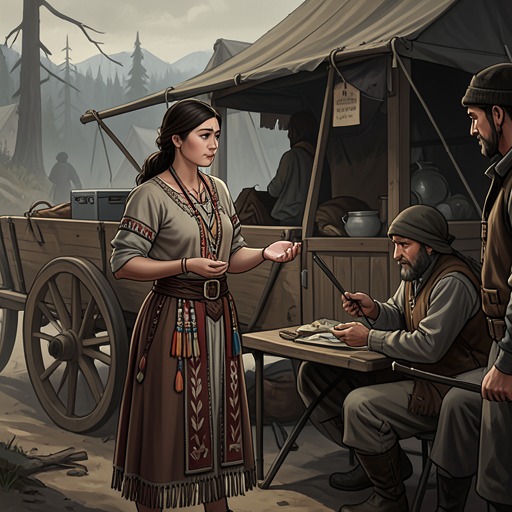
After Kidd refuses Johanna’s plea to return to Dallas, Texas, she remains beside a grave and looks out across the flat countryside. The narration describes courage as a Kiowa’s first and last resort: a person does not beg, plead, or appease. Johanna understands that, at the bitter end, she can starve despair by refusing to give surrender any sustenance. She wipes her face, climbs into the wagon, and prepares for hard times. Braiding her hair as if for battle, she becomes quiet and still. Her composure does not erase her grief; it gives that grief a form she can bear without pleading for a different outcome.
Endurance and the Measure of Necessity
The ethic is also expressed through what Johanna does not value. The novel contrasts Kiowa pride in making use of whatever is at hand, and going without water, food, or shelter, with white people’s pursuit of fashionable dresses and bank accounts. Neither possessions nor money can make life safe; courage is presented as its baseline. Johanna’s direct questions, intent staring, and unfamiliar gestures further mark the distance between her habits and those of white people. Animals are food rather than pets, and it takes her a long time to understand coins as legal tender rather than ammunition. These details make endurance material and daily: it shapes how she interprets objects, animals, comfort, and survival.
An Ethic That Changes the Witness
Johanna’s values alter Kidd’s own. In her company, he finds himself ceasing to value things that seem important to the white world and becoming more absorbed in distant places and peoples. His widening interest appears in the newspapers he asks news shops to order from England, Canada, Australia, and Rhodesia, and in the far-flung subjects he begins reading to audiences. The change is not a conversion described in abstract terms; it is shown in the widening range of what he considers worth attending to.
Memory and the Lasting Cry
The ethic persists beyond Johanna’s childhood and the years they travel together. In very old age, Kidd works again on his Kiowa dictionary until failing eyesight makes the task difficult, and he often remembers Johanna’s cry during the Great Brazos River Ten-Cent Shoot-Out. She was ten years old; he recalls that it was a war cry and that she meant it. The memory joins the child’s fierce action to the larger pattern of courage the novel has traced: endurance is not mere quietness, since it can also speak out in a moment of danger. The grave-side silence and the remembered cry are different expressions of the same refusal to yield.