Lampasas
News of the WorldLampasas is a spring-centered waystation where Jefferson Kyle Kidd’s journey with Johanna Leonberger briefly pauses amid the tensions of postwar Texas. Its water and signs of early spring promise rest, yet family feuding and the threat of violence make the stop precarious: Kidd reaches the springs intending to avoid the Horrell brothers, only to find that they have come after him.
Setting and Seasonal Character
Lampasas lies in the high, comparatively flat country Kidd crosses on the way south. When he passes through in the second week of March, the landscape is beginning to change: the days are lengthening, young green growth is rising beneath dun-colored grasses, and fresh rain and sunlight soften the country’s winter-brown appearance. The road crosses the Lampasas River at the Brooke crossing, where water gathers and the vegetation thickens. Carrizo cane fills the valley, its plumed heads moving in the wind, while the surrounding country remains comparatively dry and thorny.
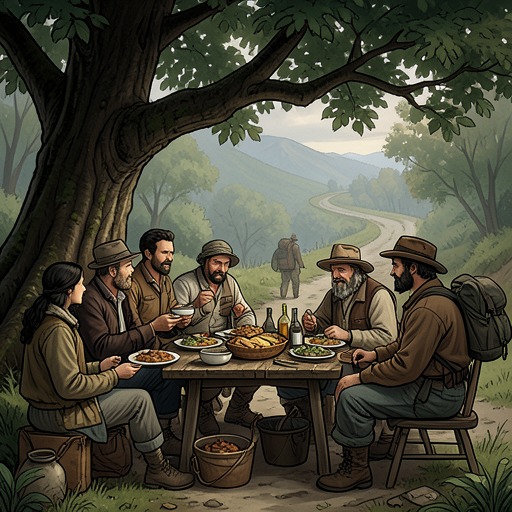
The springs give this high country a distinctive center. Kidd knows them from earlier visits and considers them a suitable place to spread out blankets and rest. At the spring, water forms a reflective pond in a low, green hollow beneath large live oaks. Carrizo cane borders one side, and the surface of the pond throws shifting reflections against the tree trunks. Birds migrating north from Mexico enliven the branches: robins, an oriole, and brightly colored painted buntings. The setting offers a moment of quiet, but its sheltered beauty also sits within a landscape Kidd regards as unsafe.
A Familiar Stop on Kidd’s Route
Lampasas is not new to Kidd. Four years before the journey, a year after Maria Luisa died, he had traveled north from San Antonio toward North Texas. That earlier passage connects the stop to a life already marked by bereavement and movement. His recollection of San Antonio is of Spanish houses, tiled interiors, river excursions, cypresses, and daughters who resembled their mother; the remembered city stands in contrast to the exposed roads and unsettled towns he now traverses.
On the present journey, Kidd approaches the springs with Johanna and their loaded wagon. He plans to make use of the water and nearby ground, but the local danger changes the purpose of the stop. After learning about the Horrell brothers and the trouble in Lampasas, he abandons the prospect of holding a newspaper reading there. He says he will keep his wagon, equipment, and Johanna near the springs and leave as soon as he can. The springs are therefore both a practical resource and a place from which he must be ready to depart.
Feuding and the Threat of Violence
Kidd understands the Lampasas trouble as a feud between two families, each with many sons. In his account, the violence develops by stages: boys grow up together, fighting first in play; someone is hurt, and retaliation turns into a continuing drama of revenge. This local conflict is not an isolated interruption to travel but part of a wider landscape in which family ties, public order, and armed force overlap.
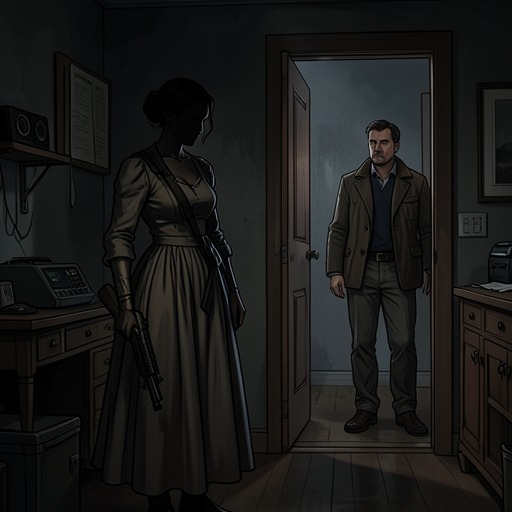
Kidd has decided to avoid the Horrell brothers, but they find him at the springs. They remain mounted and watch while he and Johanna unload their things, paying close attention to Pasha as the horse grazes. Kidd does not engage them. Instead, he waits through the night as music and distant shouts carry from town, and he watches for signs of the brothers’ approach. The Merritt brothers keep their promise to guard him and Johanna, taking turns on watch. Kidd stays awake with his revolver in hand, leaning against a wagon wheel; before daylight, the travelers leave. The encounter turns an inviting campsite into a temporary defensive position and ends not in confrontation but in departure.
Borderland Pressures and Narrative Role
Lampasas also occupies a vulnerable position within a broader geography of competing dangers. On the route north, Kidd has encountered mounted infantry of the United States Army, while the crossing of the Red River along the Texas–Indian Territory border marks a consequential passage in the effort to bring Johanna home. Farther south, the hill country offers concealment, water, and isolated farms. The Comanche people are described as favoring this terrain for raiding, where they could find both loot and fighting without soldiers to stop them. Kidd responds to the danger by watching rises in the road, listening, and preparing to abandon the wagon if necessary. These threats are not all located in Lampasas itself, but they shape the risks of the journey for which it is a stopping point.
The town’s narrative significance lies in the contrast between refuge and exposure. Its spring supplies water and a place to rest; its seasonal landscape suggests renewal; yet the feud makes even a peaceful evening uncertain. Lampasas offers no lasting resolution. Kidd and Johanna pass through, carrying their journey onward, while the springs remain a brief pause in a region where safety depends on vigilance and the ability to move.