Mexican-American War
News of the WorldThe Mexican-American War is a formative period in Jefferson Kyle Kidd’s past, joining his vocation as a printer to his service with Zachary Taylor’s forces. Rather than presenting the war as a continuous campaign narrative, the novel brings it forward through concrete memories: printed orders carried across a military route, gunfire in the mountains at Buena Vista, and younger Texas Rangers asking an older veteran how their own courage measured against that of an earlier generation.
Kidd Before the War
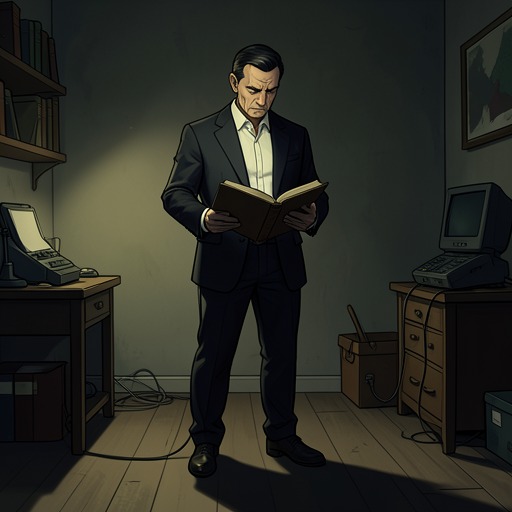
By the time of President Tyler’s war with Mexico, Jefferson Kyle Kidd was nearly fifty and had settled in San Antonio, where he had met his wife and established a print shop. His press stood on the Plaza de Las Islas, also called Main Plaza, in the first floor of a new building owned by the lawyer Branholme. Kidd adapted his trade to the city’s Spanish-speaking needs, acquiring type with tildes, accent marks, and inverted punctuation, and learning Spanish to print circulars and broadsheets, many for the Cathedral parish. The newspaper, hay market, and saloons also brought business to the shop.
That established civilian life did not keep him from military service. The Army needed him despite his age, and his experience with print made him useful for organizing communications. The war thus drew his existing craft into a new setting: the same work of putting information into circulation became part of military operations.
Printing and Carrying Military Orders
Kidd organized communications for Zachary Taylor’s forces and received a small hand press for printing orders of the day. He wrote the orders and gave them to Captain Walker of the Texas Rangers, whose horsemen carried messages between Port Isabel on the Gulf and the Army encampment north of Matamoros, on the Rio Grande. The route made the printed word mobile: orders produced at the press became messages borne by riders across a military landscape.
Kidd’s role also brought a formal military rank. Taylor made him a brevet captain in the Second Division so that he could organize couriers and secure the supplies required for the work, including paper, ink, and horses. His service in the War of 1812 recommended him for the rank. He was thereafter known as Captain Kidd, a name that carried his wartime position into the rest of his life.
Fire at Buena Vista
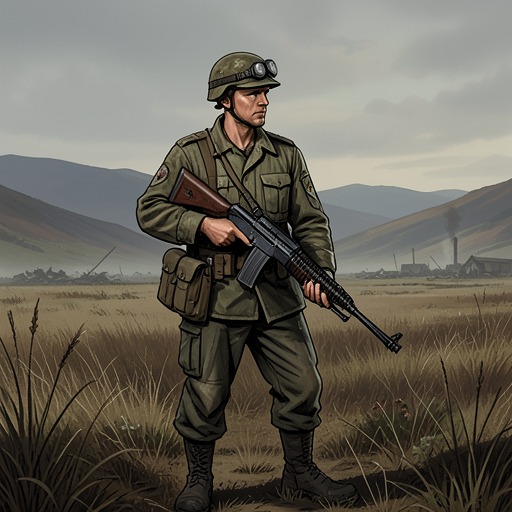
In the middle of February 1847, Kidd was with Taylor’s forces at Buena Vista, in the high mountains above Monterrey. The troops had been shot at along the way from the Rio Grande, by Mexican Army sharpshooters or Apaches; the source of the fire was uncertain. Given a Model 1830 Springfield flintlock, Kidd used the weapon from a wagon bed, firing toward gunsmoke and hoping to hit hidden snipers.
The battle also survives in the novel as a scene of storytelling. Around campfires in the thin mountain air, young men asked Kidd about the Battle of Horseshoe Bend, wanting to measure their own hardships and conduct against those of their forebears. The Texas Rangers listened as he described the Creek and Choctaw using smoothbores, his Georgia militia company bringing rifles and firing minie balls, and the wagons sinking hub-deep in sand on the way to Pensacola. He recounted that his captain was killed on the second day and that he dragged him under cover before the man died. His recollection made military history intimate and comparative: the young soldiers were not only hearing about an earlier battle, but asking whether their own endurance and their enemies’ courage measured up.
A Past Recalled on Later Journeys
The war’s significance persists through the identity it gives Kidd: he is both a printer who believes in sending information into the world and a veteran whose experience makes him a source of stories for younger soldiers. The novel places that past beside later Texas journeys marked by different dangers and unstable authority. On the road with Johanna, Kidd encounters a mounted United States Army patrol; elsewhere, men in Erath County describe the absence of a sheriff, judge, mayor, or commissioners after officials were displaced. In the hill country, he watches for Comanche raiders, whose movements from the Red River toward isolated farms are shaped by access to concealment and water. These later circumstances are not episodes of the Mexican-American War, but they sharpen the contrast between Kidd’s former service within an organized military force and the uncertain conditions of his subsequent travels.