Red River along the Texas–Indian Territory border
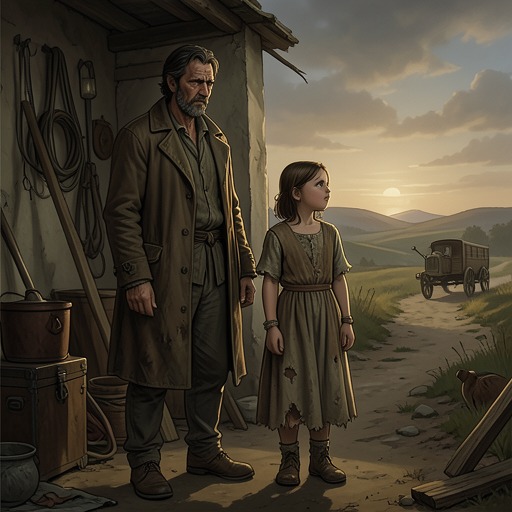
News of the WorldThe Red River along the Texas–Indian Territory border is more than a landmark on Jefferson Kyle Kidd’s route: it is a dangerous passage and a boundary between competing claims on Johanna Leonberger. For Johanna, the far bank holds the people and life she remembers; for those escorting her south, crossing the water is part of bringing her toward relatives in Castroville. The river makes that journey a matter of unstable ground, rising currents, and uncertain belonging.
Geography and the Route
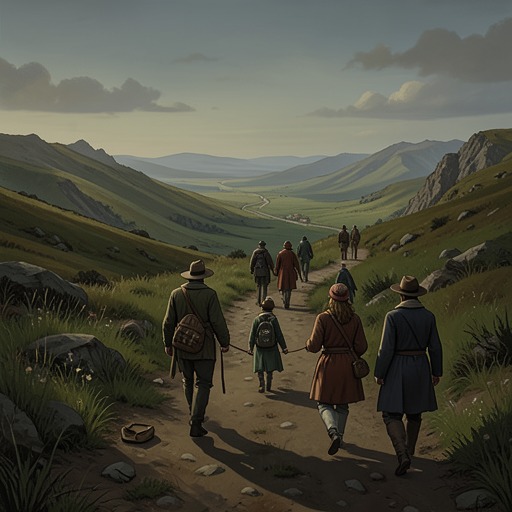
The road follows the river’s southern side through a broad valley. From that bank, the land rises toward distant bluffs, while the river runs through the low ground in a wide, brick-colored sheet. Its course has shifted over centuries, winding from one side of the valley to the other like a large snake. Rain darkens the post-oak country along the road, where the trees’ crooked limbs and thick growth make the route feel exposed to ambush even when the travelers can see the water nearby.
The river’s position gives it practical as well as symbolic force. It separates Texas from Indian Territory, and Johanna knows that her former home lies across it. The river is also part of the route by which she is being taken away from that home: Britt Johnson tells Jefferson Kyle Kidd that he has undertaken to get her out of Indian Territory and across the Red, after carrying her north from Fort Sill. The return journey therefore runs against the direction of her own remembered attachments. Crossing the boundary can fulfill the adults’ plan to deliver her to her relatives without making it feel like a return to Johanna.
A Crossing Under Pressure
The water is already an immediate threat when the travelers attempt to cross the upper Little Wichita near its meeting with the Red. The river has risen two feet since the previous day, after rain that made the crossing difficult enough for Britt Johnson’s party to nearly drown. Jefferson Kyle Kidd takes the wagon through at a run: Johanna rides in the wagon bed, Pasha is released to make his own way, and Kidd carries a knife in case he must cut Fancy free of her harness.
The current checks the wagon and then catches both it and the mare. For a moment the wagon floats; Fancy goes under, resurfaces, and strikes at the water before reaching firm bottom on the far bank. Pasha swims after them and comes out downstream, shaking off the water before rejoining the party. The crossing leaves a practical cost as well as a memory of danger: afterward Kidd hears a steady click and finds a break in the iron tire of a wagon wheel. The journey depends on animals, equipment, and judgment, all of which the flood can put at risk at once.
Boundary, Separation, and Failed Recognition
For Johanna, the river’s far side is not an abstraction. As she walks rather than ride, she watches the water and imagines her mother, father, siblings, and wider kin group beyond it. The narration makes plain that this expectation belongs to her understanding of the landscape, not to the adults’ knowledge of her family: her parents and little sister were killed in the raid, and the relatives waiting in Castroville are an aunt and uncle, Wilhelm and Anna Leonberger. The river divides the world she longs for from the destination arranged for her.
That division becomes a visible scene during a later flood. Jefferson Kyle Kidd and Simon find Johanna on a red-stone lift at the water’s edge, drenched and clutching her doll. Across the swollen river, a traveling group has stopped near its horses and packed tipi poles. Johanna calls to them in Kiowa, trying to summon the family and people she believes she has lost. The distance and the roar of the water defeat communication: they cannot hear her, and she cannot make the crossing to them. When one of the men raises a long firearm and fires, the bullet strikes stone nearby, scattering red fragments. The shot is a warning to stay away, not a rescue signal. The river turns a moment of apparent proximity into an emphatic separation.
Narrative Significance
The episodes at the river expose the difference between geographic return and emotional homecoming. The adults can identify a destination, arrange transport, and force a crossing; none of those acts can restore the family Johanna remembers or erase her attachment to life among the Kiowa. The water repeatedly tests the physical means of the journey, while its banks make the competing meanings of that journey visible.
The river also belongs to a wider landscape in which authority and movement are unsettled. Military patrols travel the road through the valley, while the journey itself crosses from Indian Territory toward Texas and the relatives who have asked for Johanna’s return. Yet the boundary does not settle what she wants or where she belongs. In the storm scene, the far bank is close enough to see but impossible to reach, and the failed call across the flood gives the river its clearest narrative meaning: it is at once a passage the travelers must survive and a separation that their route cannot simply undo.