22 juli
Nieuwe buren22 juli marks both the sudden loss of Eva and Peter’s daughter, Lieve, and the first anniversary on which they return to her grave. The date gives their grief a recurring point of return: a medical emergency remembered in physical detail, followed a year later by a farewell that cannot mean forgetting.
The Day of the Loss
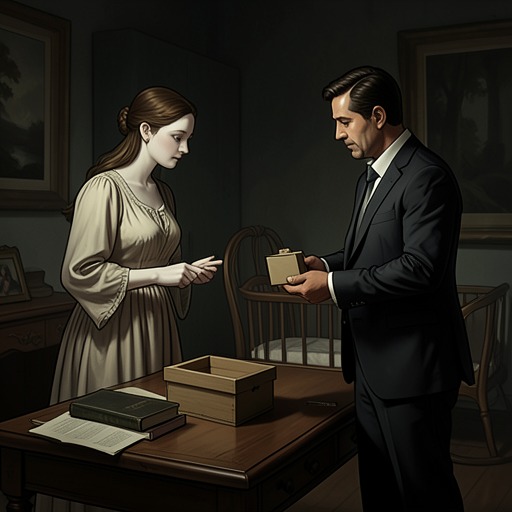
A year before the graveside visit, Eva woke Peter early in the morning in panic, bleeding heavily and warning that they were losing the baby. She was thirty weeks pregnant. Peter tried to find the car keys while Eva’s blood soaked through a towel; when they finally left, they drove past red lights and over pavements and cycle paths to get around the traffic. The date is remembered not as an abstract marker but as a sequence of urgent, disorienting actions.
At the hospital, the wait and the staff’s matter-of-fact procedures seemed painfully out of step with Eva’s fear that Lieve was dying. Eva had already learned online about the danger of placental separation; an ultrasound confirmed that the placenta had detached and that Lieve’s heart had stopped. Within less than an hour, the possibility of saving their daughter was gone. Eva was taken for an operation, and she refused sedation. Peter could do little beyond hold her cold hand as the medical team prepared her for surgery.
The First Anniversary at the Grave
On 22 juli, exactly a year after the emergency, Eva and Peter visit Lieve’s grave. It lies in the children’s section, beneath a white stone inscribed with a message that she will always remain in their hearts, among forget-me-nots. Nearby sports fields make the place’s sorrow especially stark: children’s lively voices carry across a corner of the cemetery that adults have decorated with flowers, toys, and ornaments.
Eva tends the grave, removing withered flowers, while Peter waters the forget-me-nots. She keeps her jaw tight and avoids his gaze, as if speaking might release a scream. Peter holds her hand and strokes her back, but the scene also exposes his shame and jealousy: beside the grave of the person Eva loved most, he feels jealous of a dead baby and of Eva’s intense, sincere grief. Eva kneels, touches the stone, and addresses Lieve as her daughter. The visit makes their different ways of mourning present in the same small patch of ground.
Eva’s farewell is an attempt to continue living without treating Lieve as abandoned. She tells her daughter that her parents must go on, but that Lieve remains in their hearts and that Eva will always be her mother. She kisses the stone and places a small stone angel among the flowers, hoping it will watch over Lieve when she is no longer there every day. For a year, Eva had visited the grave daily, sometimes twice a day; once, a concerned woman contacted Peter at work after seeing Eva lying there, crying. The anniversary therefore marks a change in the rhythm of her visits, not an end to her attachment.
A Date Remembered Differently
The visit brings Peter’s memory of the emergency back with sudden clarity. Eva’s words at the grave trigger his recollection of her waking him, the blood, the lost keys, and the frantic drive. The remembered hospital scene ends in the confirmation that Lieve’s heart no longer beat. The anniversary does not make the event distant; it makes the past return sharply into the present.
Peter and Eva do not experience the year as a shared, steady recovery. Peter tells Hetty that the grief has begun to wear down: he is no longer occupied by it day and night, and he and Eva have new friends, he listens to music again, and he rides his motorbike. Yet he says that each visit to therapy reminds him of the suffering behind them. Hetty interprets his apparent improvement as grief he has suppressed, including not only the loss of Lieve but the loss of hope for another child. His account and her interpretation sit uneasily beside the anniversary ritual: life has resumed in some respects, but the date and grave still make the loss immediate.
Eva’s grief likewise persists beyond the anniversary. In a later period when she fears she might be pregnant, bodily sensations such as tense breasts and nausea from the smell of coffee make her vigilant; she avoids running, cycling, and bumpy roads despite believing pregnancy unlikely. On difficult mornings, she turns to a photograph of Lieve, dressed in a knitted sweater and lying in the quilt Eva made for her. Her work with young children helps her get through the day, but their liveliness also sharpens her knowledge of what it means to have seen a child dead. The calendar date belongs to one return to the grave; the loss continues to shape ordinary days as well.
The Meaning of the Anniversary
22 juli holds together two incompatible demands: remembering Lieve and finding a way to go on. Eva’s language of letting go does not cancel her identity as Lieve’s mother; her promise to remain her mother makes the farewell a change in how she will visit, not a severing of the bond. Peter, meanwhile, can care for Eva at the grave and still feel guilty about the distance between his own response and hers.
The anniversary also gives the novel a precise structure for showing that grief is neither uniform nor complete. A year can contain new friendships, returning music, work, and attempts to live differently, while the date of the emergency summons the loss back in full detail. At Lieve’s grave, the parents stand together, but the same stone carries different burdens: for Eva, a continuing bond with her daughter; for Peter, love entangled with guilt and the recognition that his wife’s mourning is not his own.