Lieve’s Stillbirth and Emergency Caesarean Section
Nieuwe burenLieve’s Stillbirth and Emergency Caesarean Section is the catastrophe that ends Peter and Eva’s hopes for the family they had fought to build. Recalled by Peter on the first anniversary of Lieve’s death, the emergency of 22 July unfolds from an ordinary morning into a race against a loss already underway: Eva is rushed to hospital, but the baby’s heart has stopped before the operation can save her. The birth leaves the couple with a daughter to love and mourn, and with grief that takes sharply different forms for each of them.
The emergency begins
A year later, beside Lieve’s grave, Peter remembers Eva waking him early in the morning, pale and panicked, with blood between her legs. She tells him they are losing the baby and they must get to hospital. At thirty weeks, the pregnancy is far enough advanced for the possibility of saving their daughter to feel urgent and real. Peter tries first to call a doctor, midwife, or ambulance, then gathers the bag they had prepared in case of an emergency. In the confusion he cannot find the car keys: he had failed to put them on their usual hook, and they are on the small toilet-room fountain.
As Eva’s bleeding continues, she holds a bath towel between her legs; within minutes it is soaked through. She cries out, pleads, and prays for Lieve to hold on. Peter eventually finds the keys and drives them away while neighbours and passersby watch. He takes the car over rough canalside roads, through red lights and along pavements and cycle paths to get past the traffic. Blood runs from the plastic bag Eva uses into the car’s beige upholstery. She stares ahead with wide, frightened eyes, biting her lip as her body trembles; Peter understands that the situation is grave even as he tries to reassure her.
At the hospital
The hospital’s response does not match the rescue scene Peter imagines. At the emergency department, staff ask for Eva’s identification card and put her in a wheelchair to wait. She says she can feel their child fighting death. Peter wants an immediate ultrasound and operation, convinced that every second matters. Eva has searched frightening pregnancy information online and identifies the danger before the gynaecologist does: her placenta has detached. The ultrasound confirms the abruption, but also confirms that Lieve’s heart is no longer beating.
The news collapses the distinction between an emergency that might still be reversed and a death that has already occurred. Eva cries out in shock; the staff offer professional comfort. In less than an hour, Peter recalls, everything is over. The account holds together the frantic effort to reach care and the devastating fact that medical intervention cannot return the baby to life.
The operation and the birth
In a poor white room smelling of disinfectant and blood, Eva lies on the operating table, staring at the ceiling with blue lips. Nurses cover her with a green sheet, start two intravenous lines—one carrying blood and one a clear fluid—and prepare her for surgery. Their gynaecologist, Dr. Van Dam, arrives masked and confers with the anaesthetist. Eva refuses sedation. Peter can do little beyond hold her cold, fragile hand and try not to faint or vomit; he bites his tongue to fight the dizziness. The couple hear people speaking, but cannot take in their words.
They cannot see the operation, only hear instruments clatter and the steady beeping of the monitors connected to Eva. A nurse strokes Eva’s head as a tear rolls from her eye. Peter is terrified of seeing their dead daughter, the child they had struggled for years to have. When Dr. Van Dam says they are ready, the room falls silent. A few seconds later he lifts Lieve above the green drape: she is very small, purple, and still.
Eva nods when asked if she wants the baby with her. Wrapped in a cloth, Lieve is placed on her chest. Eva strokes her daughter’s twisted little face with one finger and recognizes her as perfect and complete. The operation has brought Lieve into the world, but not into the life her parents had imagined for her.
A daughter to mourn
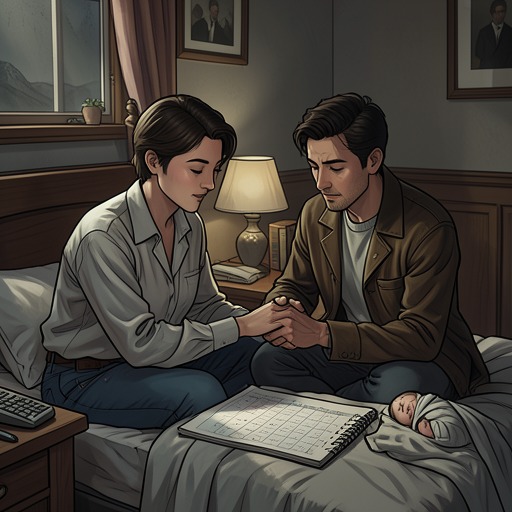
The couple dress Lieve in an outfit they bought together during a weekend in Maastricht and wrap her in a blanket Eva’s mother made from scraps of old baby clothes, sheets, and blankets from Eva’s own infancy. They place her in a transparent bassinet beside Eva’s bed. For a time, they look closely at her features, recognizing Eva’s nose and mouth and the flat back of Eva’s father’s head. They touch and kiss her cold body, stroke her fingers and toes, and smell her hair again and again so that they will remember its scent.
They choose to take Lieve home and bury her, giving Eva a place she can visit. For a year she goes to the grave every day, sometimes twice in one day. Once, a woman calls Peter at the newspaper because she has seen Eva lying on the grave and feared she was dead; coming closer, the woman sees that Eva is crying with her fists clenched against her belly. The graveside becomes both a place of devotion and evidence of how completely grief occupies Eva’s daily life.
The loss carried forward
On the anniversary visit, Eva tends the grave while Peter waters the forget-me-nots. She avoids his gaze and keeps her jaw tight, as though speaking might release a scream. Peter holds her hand and strokes her back, but feels jealousy as well as shame: he envies the dead baby for receiving Eva’s intense, unguarded sorrow. Her farewell does not mean that she has stopped being Lieve’s mother. She says that she will not abandon her daughter, even if she no longer visits every day, and places a small stone angel by the grave.
Their later grief remains uneven. Peter tells his therapist that the pain has worn down somewhat: he and Eva have new friends, he listens to music again, and he rides his motorcycle. Yet the cemetery and the memories of the loss reopen what ordinary life seems to have settled. Eva, by contrast, is frightened by the thought that she might forget Lieve; even a few hours without thinking of her can feel like betrayal. The photograph of Lieve, her grave, and the rituals of remembrance preserve a continuing bond with the child whose life ended before it began. The emergency operation is therefore not only the climax of the pregnancy but the beginning of a long aftermath in which love persists without the future the couple expected.