Nighttime attack and threat against Steef's family
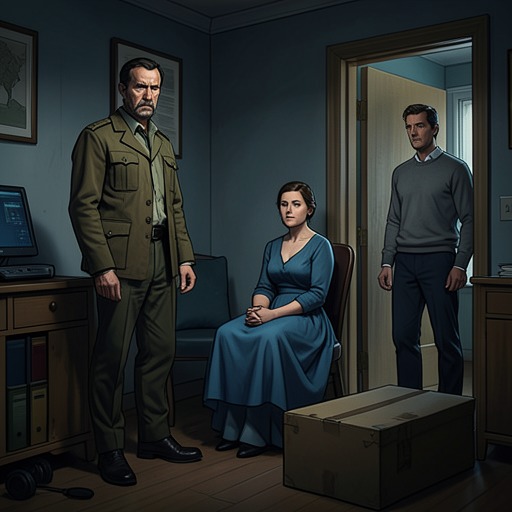
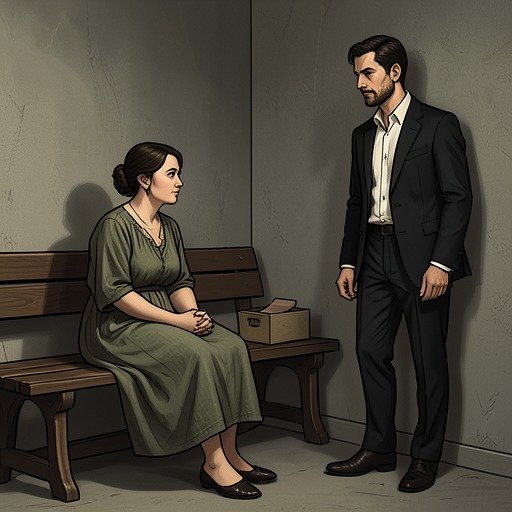
Nieuwe burenThe Nighttime attack and threat against Steef's family brings the consequences of Steef’s accidental shooting in Utrecht to his doorstep. A young attacker arrives at night, damages Rebecca’s car, and calls Steef a murderer; although the household recognizes the danger, Steef insists on handling the confrontation himself rather than summoning the police.
Background and Escalation
Weeks before the attack, Steef had told Peter that he shot a man in Utrecht after mistaking the man’s mobile phone for a weapon. He had believed he was facing an armed drug dealer. In the aftermath, Steef broke down and was unable to work for months. The shooting’s consequences therefore precede the night’s violence: what Steef describes as a fatal mistake has become, for the dead man’s relatives, a grievance demanding retaliation.
The attack begins after Peter and Rebecca have fallen asleep together. A tremendous crash outside, furious shouting, and the sound of breaking glass wake them. The voice identifies Steef by name and calls him a filthy murderer. From their window, Peter and Rebecca see a person in a baseball cap poised to strike Rebecca’s Fiat Panda with a baseball bat. The threat is no longer distant talk about the dead man’s family; it has reached the car outside their home.
The Confrontation
Rebecca rejects Peter’s suggestion that they call the Dutch police. Steef wants to handle the matter himself, she explains, because he does not want trouble at work. That choice leaves the household watching as the attacker smashes the car’s side mirror and threatens to do the same to Steef’s head. When the front door opens, the young man pauses; Steef steps outside wearing only ragged jeans.
At first, Steef appears to have the advantage. Against the thin young man and his raised bat, he moves with confidence, grinning as he advances in a wide-legged stance. But the narrator notices what Peter misses: something black tucked into the waistband of Steef’s jeans, his fingers curled around it. She recognizes it as a pistol. The threat is therefore not simply a bat-wielding attacker confronting an unarmed man; Steef has brought a firearm into an already volatile encounter.
The young man retreats and then runs, clutching the bat against himself. Steef pursues him rather than letting him go or calling for help. Once he is gone from view, the household can speak aloud again, but relief is mixed with fear. Rebecca asks why Steef insists on taking matters into his own hands and says the young man is a brother or cousin of the man Steef accidentally shot in Utrecht. His family, she says, has been pursuing Steef for weeks and will not rest until it has taken revenge. With Sem asleep in her arms, the narrator meets Peter’s worried look; the danger now plainly concerns all of them, not only Steef.
Aftermath and Wider Consequences
Steef eventually comes back and presents the encounter as settled: he says he impressed on the young man that starting a war with him would end badly, and that he fears nobody. His manner turns a retaliatory threat into something he claims to have controlled by force of will. Peter, however, points out that the whole neighborhood heard the commotion and someone may already have called the Dutch police. The confrontation cannot be kept within Steef’s chosen terms; its noise has carried the danger into public view, where police involvement may follow whether he wants it or not.
The attack also makes visible how violence has accumulated around Steef rather than ended with the shooting in Utrecht. Before this night, he had described killing a man he mistook for an armed drug dealer, then breaking down so completely that he could not work for months. He had also told Peter and Rebecca about his service in Srebrenica, where the immediate unreality of bombardment gave way, much later, to an awareness of survival and of the many men who did not survive. His appeal to break out of self-made prisons and enjoy life sits uneasily beside the pistol hidden at his waist and his decision to chase an attacker. The language of defiance offers no clear boundary between courage and renewed exposure to danger.
Later, Steef’s perception of threat again becomes difficult for those around him to share. He insists that hostile men are still after him, even inside a place where Peter can see that nobody has come out. That episode does not establish that the family’s retaliation caused his fear, but it echoes the night’s uncertainty: danger can be real, yet Steef’s sense of who is pursuing him is not always reliable. The gun also recurs in Peter’s life. Under Steef’s instruction, Peter practices shooting; Steef’s close guidance recalls how he had taught Eva, while Peter struggles to identify a target as an enemy. The household’s encounter with the pistol-wielding threat thus sits within a wider pattern in which violence passes from Steef’s past into the present, and from his actions into the other characters’ lives.
The Threat Beyond the Night
The confrontation does not settle the wider danger around Steef, and the later account of his suspension complicates its aftermath without proving that the night’s attacker caused it. Steef tells Peter that the authorities have no evidence against him and clarifies that he was not suspended over the young man’s death. Instead, photographs discovered at the young man’s home made Steef, in the police’s view, vulnerable to blackmail. The distinction leaves the original shooting unresolved in public terms while exposing a separate source of professional peril: the inquiry concerns not only what Steef did, but what compromising material might be used against him. The family’s threatened revenge, Steef’s choice to confront the attacker alone, and his precarious position at work remain distinct pressures, none of them offering a secure end to the violence.