Peter's illegally purchased pistol
Nieuwe burenPeter’s illegally purchased pistol is the object through which his private panic becomes an immediate danger to others. Bought for protection and carried out of sight, it returns at successive turning points: first as a concealed presence at Rebecca’s home, then as the means Peter considers using against himself, and ultimately as a weapon aimed at Steef.
Acquisition and First Appearance
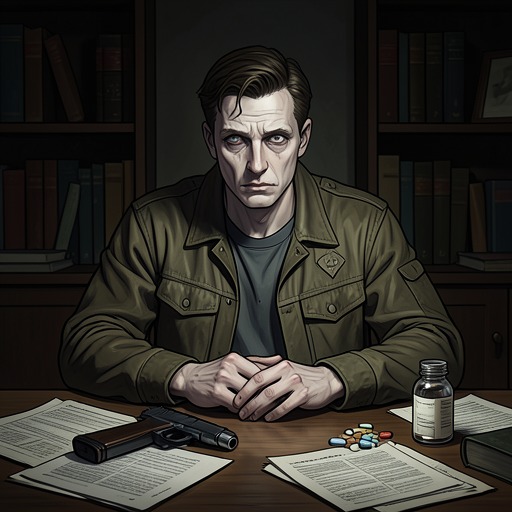
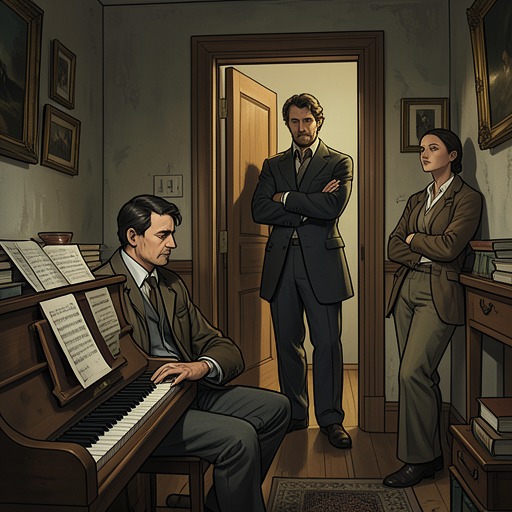
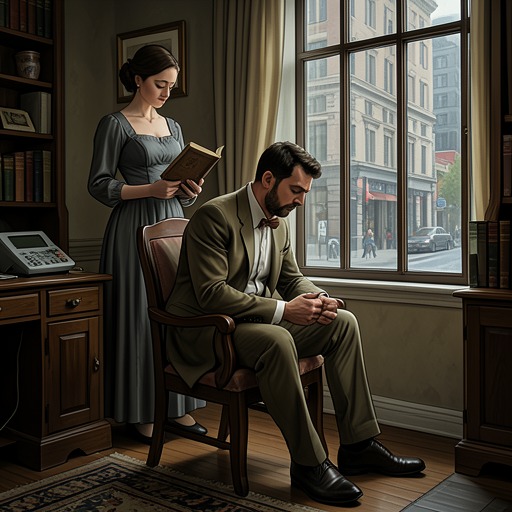
Peter buys the pistol from a junkie for three hundred euros. The seller loads it for him, so Peter knows it contains bullets; Peter nevertheless frames the purchase as protection. The weapon sits inside his jacket, heavy against his thigh, as he approaches Rebecca’s home, where he believes he will find Eva. At the door, Rebecca asks why he has not come around the back and whether something is wrong. Peter replies that she may know, then follows her inside. Steef is on the sofa, while Sem eats spaghetti in his high chair. With the pistol still concealed, Peter asks where Eva is. The ordinary domestic scene and the hidden, loaded weapon occupy the same space: Peter has brought his fear of an enemy into a home where a child is present.
The Pistol Turned Inward
Alone, Peter recovers the loaded pistol from his jacket and sits with its weight in his hand. He presses the cold barrel to his right temple, imagining death as sleep and as a way to spare Eva a divorce while making her answer for his death. Yet the imagined revenge collapses into the physical risk before him: his hand trembles, and he fears that he lacks the strength to kill himself cleanly, that he might only destroy an eye or an ear. The pistol, bought to make him feel protected, has become an instrument of self-destruction that he cannot confidently use.
The telephone rings and startles him into dropping the weapon. Peter is certain Eva is calling, hears a crying woman who seems to sound like her, and takes the interruption as a possible invitation to go and bring her back. His urgency returns; he leaves to fetch her, imagining reconciliation and a fresh start. Only as he is going out does he remember that the pistol is still on the sofa. He pictures Eva seeing it when they return together, and recognizes that it has no place in the home or in the hopeful future he is imagining. Peter goes back inside, puts the weapon in his pocket, and plans to throw it away on the way. The plan to discard it marks a brief reversal: he no longer treats the pistol as protection, but as something that must be removed before the couple can begin again.
The Pistol as an Immediate Threat
At the cottage, the pistol ceases to be a concealed object Peter might discard and becomes a direct threat to Steef. As Eva asks whether Steef may be the father of her child, the room’s conversation is cut off: the door flies open, a shout and the light from the hall break into the room, and Steef pushes Eva protectively against his stomach. She hears a click, looks up, and sees the barrel pressed to Steef’s temple. The weapon’s progression—from a hidden purchase Peter calls protection, to an instrument he turns against himself, to a gun aimed at another person—makes its changing function unmistakable. It carries his private crisis into the room as physical danger, and the scene ends with Steef under its threat.
Narrative Function and Significance
The pistol’s significance lies in how little its physical form changes while the danger around it grows. Its weight against Peter’s thigh, its loaded condition, and the click that announces its presence give an unseen crisis a material, audible shape. Peter’s intentions shift—from seeking protection, to contemplating his own death, to planning to discard it—but the weapon does not become harmless when his intentions briefly soften. By the time it is aimed at Steef, the pistol has made Peter’s private fear impossible to contain: it has crossed the boundary between what he imagines doing and what another person must face.