Rebecca
Nieuwe burenRebecca is Steef’s wife, Sem’s mother, and the neighbor whose compassion brings her close to Eva and Peter during their infertility crisis. She offers Eva unusually direct tenderness and a place where grief need not be disguised; later, she joins Eva in a concealed plan to conceive a child using Steef’s sperm. That movement from care to reproductive deception gives Rebecca’s role its sharpest contradiction: she helps Eva imagine a future while making a consequential choice without the men’s agreement, and her eventual attempt to repair the resulting breach ends in violence.
Identity and Introduction
Rebecca lives with Steef and their young son, Sem, across the street from Eva and Peter. When Peter first encounters her at the kitchen table, she is tending to the crying baby in a buggy. She introduces herself as their neighbor and indicates the row of houses opposite. Her silver bracelets, hoarse voice, and turquoise dress mark the vividness of Peter’s first impression, which is filtered through his attention to her body and his awareness of the couple’s estranged sex life. In Eva’s later account, Rebecca becomes more than the attractive neighbor glimpsed by Peter: she is a woman whose openness about sex and whose practical, physical kindness make intimacy possible in a household dominated by fertility grief.
Rebecca and Steef are described as enthusiastic swingers. Their sexual openness is not simply private background: it shapes how Rebecca approaches Eva, and eventually becomes the setting for a plan with lasting consequences. Their household also includes Sem, whom Rebecca cares for in ordinary domestic scenes. Steef later tells Eva that Sem came against his will and describes himself as trying to be a good father despite feeling unstable and attached to his freedom. The tension between his account of unwanted fatherhood and Rebecca’s later plan to involve him in another conception sharpens the conflict surrounding her actions.
Care During the Fertility Crisis
Rebecca’s relationship with Eva begins to deepen when Eva breaks down in Rebecca’s garden while describing the difficult period she and Peter are going through. Rebecca embraces her, massages her back, and offers to do her hair for free. She recognizes the strain Eva carries in her body, rather than treating infertility as a problem that can be solved with easy reassurance. Eva remembers Rebecca as someone with whom she does not have to minimize her grief, a contrast with friends who have withdrawn because they could not bear to face it.
The contrast is especially pointed at a dinner with Rebecca, Steef, and Sem. Peter holds the baby, and Eva can stroke his soft head without feeling that the sight of a child is unbearable. Rebecca tells her that she wishes the same happiness for her. Eva cries, while Peter says they will apply to adopt. Eva does not disclose that she still longs for a child carried and born by her. Rebecca’s welcome makes the household feel safe enough for that longing to coexist, temporarily, with the possibility of adoption and with Eva’s grief over the child she has not been able to have.
Rebecca also makes room for intimacy without demanding that Eva explain or justify it. Before an evening with the two couples, she describes objects her mother has sent from Bali or Morocco and explains that she usually keeps them in the bedroom, arranging them around the room when Sem is away and she wants a special setting. In that prepared space, the couples’ sexual encounter extends a relationship already built on trust and candor. Yet the closeness does not erase the differences between them: Eva remains painfully aware that sex with Peter has become difficult, and later fears that speaking openly about what works with Steef would deepen Peter’s insecurity.
From Intimacy to a Secret Conception Plan
Rebecca’s most consequential action follows from Eva’s longing for a child. She proposes that the women should not consult Peter and Steef, because discussion would make the plan too complicated. Instead, Eva is to calculate her next ovulation and the couples are to swing; if conception does not occur, they can try again. Rebecca calls the proposal soft coercion and suggests that a condom might leak. The language makes the plan’s ethical breach visible even as it frames the act as a route toward the happiness Eva wants.
The plan places Rebecca in a position of unusual power and divided loyalty. She is not merely supporting Eva’s desire or facilitating an agreed exchange: she proposes withholding the plan from both men, including her own husband, and relies on the possibility that Steef’s sperm may result in a pregnancy. After the encounter, Steef visits Eva with a box of morning-after pills, apologizes for the condom accident, and says he wants to avoid any risk of another child. His words expose how far his understanding differs from the women’s concealed intention. The episode turns the condom from a practical safeguard into the point where consent, risk, and the question of fatherhood collide.
At Rebecca’s home, she and Eva use a pregnancy test together. They watch the minute pass as Sem plays nearby; the test shows two blue lines. Rebecca congratulates Eva, embraces her, and tells her they should wait seven weeks before telling the men. Eva is at once joyful and frightened, while Rebecca remains close enough to steady her and comfort Sem. The scene repeats the pattern of care established earlier, but now that care is bound to a secret. Rebecca’s reassurance cannot remove the question of what the concealed conception means for Steef, Peter, or the future child.
Disclosure, Conflict, and Ending
The secret eventually reaches the men. A week after the night of the encounter, Rebecca tells Eva that Peter had cried at her house and had been completely distraught. Eva is reluctant to discuss the sexual experience with Peter, partly because she fears damaging his confidence further. Rebecca’s disclosure shows that she has become a confidante to both sides of the marriage, but it also exposes how little the couples can speak openly about what has happened.
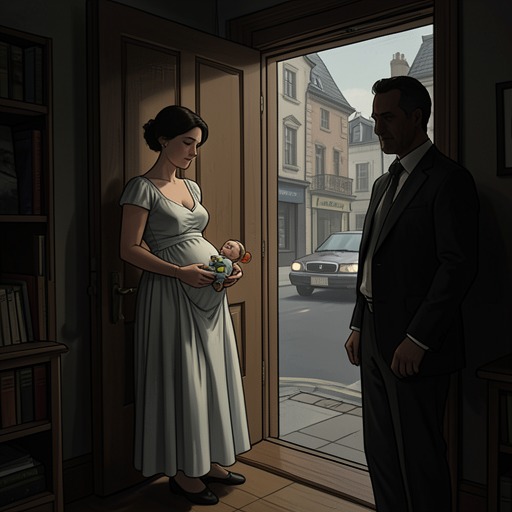
Later, Rebecca arrives at Eva’s home with Sem, visibly distressed. She apologizes and says she could not avoid what followed: Steef forced her to tell him everything. Steef appears behind her before Eva can close the door. He accuses the women of stealing his sperm with his wife’s consent and insists that they had no right to decide on his behalf. His anger gives direct expression to the consequence Rebecca’s plan had deferred: Steef understands the conception as a violation of his reproductive choice, not as a generous contribution to Eva’s happiness. Rebecca’s earlier support for Eva does not shield either woman from that accusation, and her arrival with Sem becomes the means by which the confrontation enters the house.
The confrontation later becomes lethal. During the armed standoff, Rebecca stands in the doorway with her hands around the gun and shoots Peter in the flank. He sees her as an immediate threat and fires back; Rebecca doubles over, and Eva catches her and drags her to the couch. Peter then shoots Eva as well, and the later image of Eva collapsing over Rebecca’s body makes the fatal outcome of the encounter clear. Rebecca’s final actions are thus inseparable from the violence that engulfs the household, although the evidence does not make her initial tenderness less real.
Narrative Role and Significance
Rebecca’s arc is built on an unresolved tension between care and control. She is the person who offers Eva a hand, a massage, companionship around a child, and recognition of grief that other friends avoid. She also proposes a plan that bypasses the partners whose bodies and futures it affects. The same confidence and intimacy that make her a source of refuge enable her to treat a profound reproductive decision as something the women can arrange privately.
Her story therefore refuses an easy division between benevolent helper and betrayer. Rebecca acts from within Eva’s desperation and their shared closeness, but Steef’s response makes the costs of excluding him explicit. The pregnancy test, with its two blue lines, briefly transforms hope into visible fact; the later confrontation transforms that fact into a dispute over consent, parenthood, and who is entitled to decide. Rebecca’s death in the final violence closes the distance between those intimate decisions and their catastrophic consequences.