Steef Has a Panic Attack at the Nightclub
Nieuwe burenSteef Has a Panic Attack at the Nightclub turns a night of dancing into a flight driven by fear. When Steef becomes convinced that men are following him, Peter must get them out of the club and help him through the episode. Once they are outside, Steef can recognize that the danger is not real, but he also describes a more enduring fear that never disappears completely. The scene’s decisive shift is from an imagined pursuit to the disclosure of a persistent inner distress.
From the Dance Floor to Flight
Before Steef arrives, Peter is caught up in the nightclub’s hedonistic atmosphere. A woman dances toward him, and he takes hold of her hips; the moment captures his sense that, for that night, he can act as though he is in command. Steef appears sweating heavily. Peter raises his arms, but Steef abruptly tells him to stop behaving that way. The interruption is immediate enough that people nearby draw back and stare.
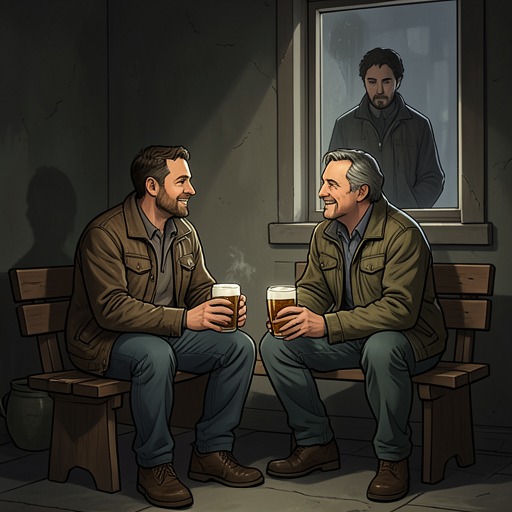
Peter asks what is wrong. Steef points out two tall, broad men looking sternly in their direction and says that they are after him. He insists that they must leave at once. Peter looks back and can no longer see the men, but Steef’s urgency changes the way he experiences the room: his hands begin to tremble, his heart pounds, and the men’s faces seem to appear everywhere. Even the possibility that they might be waiting outside becomes part of the danger he feels.
Steef pushes Peter ahead of him through dark, crowded corridors. The movement through the club is not a calm exit but an attempt to escape a threat Steef believes is closing in. At the doorway, Peter suggests informing the doorman. Steef refuses: he trusts nobody there and wants to get away, even if that means running into the bushes. His insistence makes escape, rather than checking whether the threat is real, the only course he can accept.
Peter Gets Them Outside
The doorman blocks their way, asking them to calm down and let people enter first. Peter considers involving the police, but Steef remains desperate to get out. Peter then clings to the doorman’s arm and asks to be allowed through, explaining that Steef is ill and that his medication is in the car. He holds the doorman’s gaze and presents himself as completely sober. The plea works: the doorman lets Steef go, warns them not to return, and opens the door. Steef rushes outside.
The crisis does not end at the threshold. Peter finds Steef in a foul-smelling place he describes as a kind of public toilet. Steef still believes the men are everywhere, says he heard them speaking, and fears that they remain on his trail. Peter looks toward the door and sees nobody following them. Steef counters that the men have weapons. Peter’s answer is practical and restrained: he tells Steef that no one has come out after them and tries to stay beside him rather than intensify the confrontation.
Peter begins to understand that Steef’s terror cannot be settled simply by disproving this particular pursuit. He urges him to become sober and wonders whether the pill has contributed to the episode. He suggests water and food, noting that they have eaten too little, and offers to call Rebecca or Eva to collect them. These possibilities place care and ordinary help against Steef’s conviction that nowhere is safe.
The Fear Beneath the Pursuit
Peter crawls toward the water, splashes it over his face, and then puts his cold, wet hands on Steef’s neck. Steef jolts at the touch. When he lifts his head, Peter sees that he is crying, with sand covering one cheek. The physical shock of the water and Peter’s hands interrupts the flight long enough for Steef to speak not only about the men but about his own condition. His voice sounds unfamiliar to Peter, small and thin, as he says that he is frightened and wants the feeling to stop.
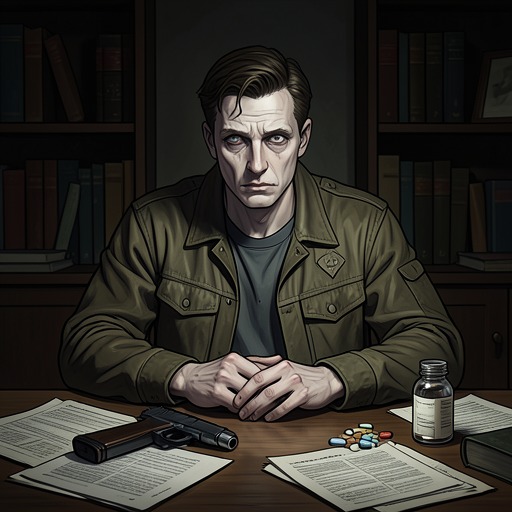
Steef describes his mind as ruined and the fear as something in his heart and blood. He knows that the immediate alarm is not true: he is in Amsterdam with Peter and has no reason to be afraid. He also believes himself strong and trains intensely. Yet neither that knowledge nor his physical strength makes the fear vanish. At times it sleeps, he says in effect, but remains ready to pounce. The episode therefore reveals a distinction between recognizing that a present threat is unreal and being able to escape the fear itself.
Peter initially responds with reassurance and practical explanations. He identifies the setting as a place that smells of urine, and Steef laughs at the observation; Peter cautiously joins him. The brief laughter eases the moment without resolving the deeper distress. When Peter suggests walking, Steef gets up, brushes sand from his clothes, and continues scanning his surroundings. Peter realizes that this is not new behavior: Steef habitually surveys the area and looks over his shoulder while talking, as if expecting someone to appear.
Aftermath and Significance
Steef asks Peter to roll him a cigarette because his hands are shaking too much. Peter rolls and lights it, and they walk silently toward the street without a fixed destination. Steef then says that a joint might help him calm down. The episode thus ends not with proof that the imagined pursuers existed, nor with the fear fully dispelled, but with the two men moving away from the club and Steef still seeking relief.
The scene gives Peter a direct view of how fear governs Steef’s body and choices: shaking hands, a pounding heart, hurried flight, tears, and constant vigilance. Peter’s own response changes as the scene unfolds. He begins inside the club, caught up in its permissive energy; he leaves with Steef, advocates for him at the door, and then takes on the work of grounding him outside. The nightclub episode is both an immediate crisis and a disclosure of a continuing burden: Steef can name the mismatch between what he knows and what he feels, but that insight alone cannot make the fear go away.