The Baseball-Bat Attack and Steef’s Pursuit of the Attacker
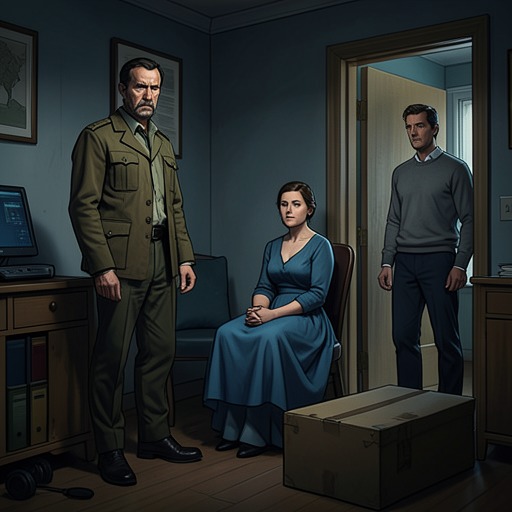
Nieuwe burenThe Baseball-Bat Attack and Steef’s Pursuit of the Attacker is a nighttime confrontation that brings violence from Steef’s past into the domestic space shared by Eva, Peter, Steef, and Rebecca. An attacker smashes Rebecca’s Fiat Panda and calls Steef a murderer; Steef answers not by summoning colleagues but by confronting him himself. Eva’s concealed sight of a pistol changes the scene’s meaning: what appears to be a contest of nerve is also an armed encounter, and she chooses not to tell Peter what she has seen.
The attack at the house
Eva and Peter have gone to sleep together when a tremendous crash outside wakes them, followed by furious shouting. They hear glass breaking and a voice accusing Steef of being a murderer. Looking through the window, they see a person in a baseball cap about to strike Rebecca’s Fiat Panda with a baseball bat. The disturbance is not a direct assault on the people inside, but the attacker’s threat to Steef makes the damaged car feel like the opening move in a confrontation that could reach the house.
Peter suggests calling the police. Eva replies that Steef is the police and assumes he will call himself. Rebecca, contacted by phone, rejects that course: she says Steef intends to handle it without involving colleagues because he does not want trouble at work. The decision establishes the scene’s central tension before Steef even appears. The household recognizes a public danger, yet the people closest to him defer to his private judgment and his concern about professional consequences.
Steef confronts the attacker
The attacker smashes the car’s side mirror and raises the bat again, but stops when the front door opens. Steef comes out wearing only a frayed pair of jeans. He appears to speak to the young man, who continues to swing the bat threateningly. Peter and Eva watch from behind the glass, unable to intervene. Peter fears that the attacker will knock Steef down; Eva sees Steef advance slowly, hands at his hips and chin lifted, while the thinner young man takes small steps backward.
Steef’s posture makes the encounter look like a test of courage. He grins and moves toward the attacker as if inviting him to strike, while the narrator notices why the young man is retreating: a black object hangs beneath Steef’s hand, tucked into his waistband. Eva recognizes it as a pistol. Peter has not noticed it. That unequal knowledge isolates Eva inside the scene: she understands that Steef’s confidence is backed by a weapon, but remains silent as Peter watches the confrontation without that information.
When the attacker runs, clutching the bat against himself, Steef chases after him. The pursuit is described as reckless rather than controlled; Eva and Peter are left behind, first frozen by fear and then able to speak again. Eva still says nothing about the pistol. She wants to forget what she saw, while Peter turns on the light and pours them both red wine. Sleep is no longer an immediate prospect. The episode thus leaves the couple with the sound and image of violence even after the attacker has fled their view.
Return and explanation
Steef comes back into the room sweating, his eyes darting, and no longer carrying the weapon. Rebecca begins to cry, as does Sem. When Peter asks what happened, Steef says he warned the young man not to start a war with him, that the young man would lose, and that he was not afraid of anyone. He then insists that they leave rather than continue disturbing the neighbors. His account presents the encounter as a warning that ended the threat, but does not establish what happened during the pursuit or whether he caught the attacker.
Peter points out that the whole neighborhood heard the commotion and that someone may have called the police. This consequence remains possible rather than confirmed. Earlier, Rebecca had framed police involvement as a risk to Steef’s job and as likely to deepen the young man’s hatred; Steef’s return with the weapon gone does not resolve either concern. The household has no independent account of the chase, only Steef’s brief explanation and Eva’s unspoken knowledge of the pistol.
Earlier violence and later echoes
The accusation of murder carries a pointed resonance because Steef has already told Peter that he killed a man in Utrecht the previous year. He mistook a drug user for an armed dealer and believed the man was drawing a weapon; it was a mobile phone. Steef says the aftermath brought everything crashing down, leaving him unable to work for months. This history makes the attacker’s accusation more than a generic insult within the novel’s wider pattern of violence, although the scene does not explain how the young man knows about the killing.
Steef also relates his experience in Srebrenica, where danger could seem unreal while it was happening and only later become fully comprehensible. He urges Peter and Eva to break out of self-made prisons and turns to music, especially U2, as a form of rescue. Against that testimony, his conduct during the bat attack is striking: he urges others to live fully, yet meets a threat by advancing toward it with a pistol hidden at his waist. Later, when Steef suffers a panic episode, he believes Yugoslavs are still pursuing him, and Eva tries to bring him back to what she can observe. The attack therefore belongs to a continuing narrative of trauma and threat, not simply an isolated act of vandalism.
The scene also sharpens the distinction between what the characters know and what they choose to disclose. Eva sees the weapon and withholds that fact from Peter; Steef offers a compressed account of his actions but not a full description of the chase. His later instruction at a shooting range, where he coaches Eva through aiming at a target, gives the pistol-bearing encounter an additional echo without explaining the weapon’s identity or its role that night. The episode’s unease lies in that gap: the immediate attacker runs away, but the household is left with concealed knowledge, unanswered questions, and violence that has not been made safe simply by ending the confrontation.