The Dark Side of the Moon
Nieuwe burenThe Dark Side of the Moon becomes more than an album in Peter’s crisis: its music and lyrics serve first as something he wants to escape and later as material he searches for signs in. The contrast between his plea to return to the light and his later effort to decipher the record captures a shift from distress to suspicion, as he begins to treat listening as a way of confirming danger.
The Album in a Crisis of Faith
Peter calls The Dark Side of the Moon his album, but listening leaves him nauseated. He says he does not want it and wants to return to the light, placing the record within a stark opposition between darkness and illumination. In the same passage, he needs to get out of the car. Rain strikes his face; he receives it as cleansing rain that can wash away sin, and opens his mouth to taste the drops. His thoughts turn toward God’s protection for himself and Eva, after what he believes they have suffered. Music, weather, guilt, and prayer gather into one moment, but they do not give him calm certainty: the wish for protection rises alongside an urgent insistence that enough suffering has already occurred.
The scene ends by unsettling the distinction Peter has just tried to establish. A hand rests on his shoulder, which he welcomes as comforting, but he immediately concludes that it is not God; it is Satan. The touch offers reassurance, yet Peter reads it through a threatening religious framework. Against this background, the album’s title is more than a label: its dark side belongs to a world in which even comfort can be recast as danger. The passage does not establish that the music itself caused this belief. It shows Peter’s distressed interpretation closing around the things he hears and feels.
Listening for a Message
Later, after the others have left and Eva has gone to bed angry with him, Peter is alone with his thoughts. He suspects that he has been deceived and believes that Steef has demonstrated a capacity for murder, that Rebecca and Eva fear Steef, and that Steef has power over them. Peter distinguishes himself from them: he thinks Steef has not mastered him, because he believes he has seen through him. His immediate problem, as he frames it, is to discover Steef’s plan and protect himself. He decides that this requires fighting with the same means and that he needs a weapon.
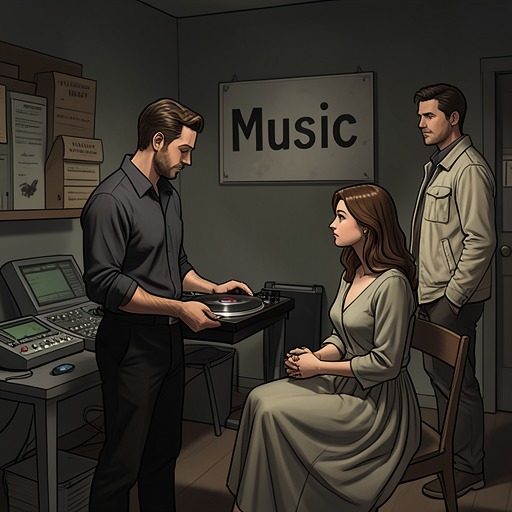
Peter makes a triple espresso, settles at the computer, and puts on Pink Floyd’s The Dark Side of the Moon. The opening sound is described as a distant heartbeat, followed by a helicopter. He asks what it says, then plays it again, louder, because he cannot make it out. This repeated listening is a significant change from the earlier wish to reject the album: now Peter approaches it as though it might contain a message relevant to his suspicions. Yet he does not report deciphering the heartbeat or helicopter. The inability to understand remains part of the scene, leaving a gap between sound and meaning that Peter tries to close by listening again.
Lyrics and the Decision to Arm Himself
The words he can identify are more explicit. Peter recalls the lyric, “I've been mad for fucking years,” and then, “I've always been mad I know I've been mad Like the most of us.” The first-person voice of the lyrics names madness; Peter’s response is not to hold the words at a distance as someone else’s song, but to continue listening and then press his fingers against his temples. He tells himself to think of one thing at a time. The gesture and self-instruction place the lyrics beside a mind he is trying, without success, to discipline.
What follows is a stark sequence of assertions: Steef is armed; Steef is crazy; Peter must protect them; Peter needs a weapon. The song does not, in the evidence, name Steef or instruct Peter to buy a gun. Rather, Peter’s own fearful reasoning supplies the connection between the lyrics about madness and his decision to arm himself. He searches online for a pistol, narrowing his attention to one without paperwork or complications, and finds a response from someone using the name Don D. The album thus sits at a consequential hinge in the scene: its language of madness is followed by Peter’s increasingly concrete preparations for violence, even though the threat he hears in its sounds has not been deciphered.
From Escape to Private Code
Across the two scenes, the album’s significance lies in the change in Peter’s way of listening. In the car, he rejects it, longs for light, and turns to rain and divine protection; even a reassuring touch becomes evidence of Satan. Later, alone at the computer, he repeats the opening because he expects its sounds to say something, then takes the lyrics about madness into an already established conviction that Steef is dangerous. The record does not resolve Peter’s fears or provide verifiable knowledge of Steef’s intentions. It becomes part of Peter’s private interpretive system: an atmosphere and a set of words that he folds into a narrative of threat, self-protection, and the need for a weapon.