Decoys and false clues
Night TrainDecoys and false clues are the misleading patterns Jennifer Rockwell leaves behind, and the interpretive traps through which Mike Hoolihan tries to understand her death. They make the investigation feel ordered while withholding a reliable explanation: clues appear to point somewhere, but their apparent meaning is itself part of the misdirection.
The Decoy Room and the Motif
The phrase takes on a literal setting in the Decoy Room, where a palisade of liquor faces the bar. Paulie No asks Mike Hoolihan what she will drink; although she had said by phone that she would buy, she orders seltzer. The scene sets the idea of a decoy against the expectation of intoxication: the room is crowded with drink, but Mike refuses it.
The day after April Fool’s, the bar’s name seems to make the surrounding details part of the joke. A pianist plays Night train over the white baby grand, while Monday-night drinkers sit among the decoys and the wall of liquor. The room supplies a visual vocabulary for the novel’s larger problem: apparent signs are everywhere, but their presence does not guarantee that they reveal the truth.
Jennifer’s Misleading Clues
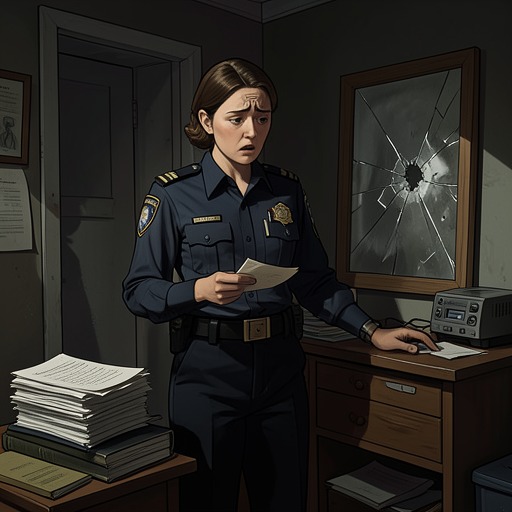
Mike eventually understands Jennifer’s clues as blinds rather than dependable leads. She had reason to expect that her father, a police commander with three thousand sworn officers under him, would follow her trail; Mike believes she expected to take part in that search too. He interprets the clues as a pattern Jennifer arranged to console those left behind, even though the pattern points investigators away from a trustworthy account.
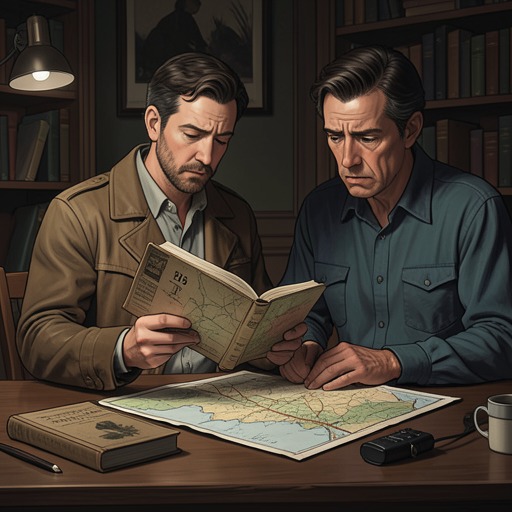
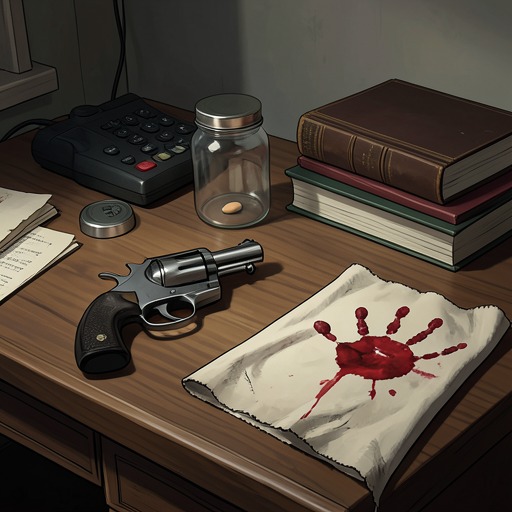
The examples are distinct, and Mike rejects each in turn. Bax Denziger’s mangled algorithm is a blind, as are the paintings Jennifer bought, which Mike dismisses as an indolent afterthought. The lithium is also a blind. Arn Debs, in Mike’s view, is the most painful false lead: for days she hates Jennifer for making her think Arn might be relevant, even as a decoy. What first looks like a chain of clues becomes evidence of how thoroughly the search can be misdirected.
Arn Debs and Mike’s Self-Doubt
The false lead involving Arn Debs cuts deeper because Mike can imagine why Jennifer might have expected her to accept it. From childhood, Mike had been seen alongside men who hated or hit women; she recalls black eyes, fistfights, and limping with Deniss toward the emergency-room line. Against that history, Jennifer might have assumed Mike would suspect her of choosing a man like Arn. The possibility turns a misleading clue into a wound about recognition: Mike fears that Jennifer saw the violence around her but did not see her intelligence.
That reaction complicates the decoy’s function. Arn is not merely a mistaken suspect or a discarded investigative possibility; he is the point at which Mike’s anger at Jennifer meets her fear that Jennifer underestimated her. Mike’s resentment concerns both the false trail and the person she believes Jennifer took her to be. The clue’s emotional force therefore exceeds its value as evidence.
Pattern, Search, and Uncertainty
Jennifer’s blinds exploit the investigators’ readiness to make a pattern from what they find. Her father’s position and Mike’s expected role make the search itself foreseeable, while the misleading clues appear to anticipate and manipulate it. Yet Mike’s account does not establish a complete, independently confirmed explanation of Jennifer’s intention: it presents her reading of the clues and her belief that Jennifer left them as a consoling pattern.
The motif consequently holds two meanings together. Decoys are objects in a bar and false leads in an investigation, but they also describe the limits of interpretation: a clue can be carefully noticed and still point away from what it seems to promise. Mike’s eventual recognition does not make the search transparent. Instead, it reveals how personal history and the need to find meaning can make a false pattern persuasive.