Discovery of Jennifer's farewell letter
Night TrainThe discovery of Jennifer Rockwell’s farewell letter changes Mike Hoolihan’s inquiry from a search for a document he only suspects exists into an encounter with Jennifer’s own account of a concealed crisis. Mailed to Trader Faulkner and left in his office tray, the letter reveals that Jennifer had sought treatment for troubling changes in her thoughts without telling her father. It offers important evidence about her state of mind, but does not make her death fully knowable.
Background: a missing piece of the inquiry
Mike is trying to conduct what he calls a psychological autopsy: a reconstruction of a dead person’s circumstances using notes, records, and the recollections of people who knew her. He compares this work with the physical autopsy performed in the Chief Medical Examiner’s office, while recognizing that the evidence available to him is different. A body can be examined directly; a person’s private thoughts must be approached through surviving traces and other people’s accounts.
The letter matters partly because Mike has already considered how incomplete those traces can be. In his notes, he records that Jennifer had not, so far as he knew, made an earlier attempt or given a warning. He also notes that she apparently left no letter, even as he becomes convinced that she wrote one. His broader observations caution against treating suicide statistics as a reliable map of an individual case: studies disagree about how often people leave notes, and he observes that notes can disappear when loved ones take them away. In his account, the absence of a document is therefore not proof that it never existed. Trader’s disclosure supplies the missing evidence, while also showing how easily it could have remained outside the investigation.
The disclosure and the letter’s arrival
The discovery occurs during Mike’s recorded conversation with Trader. Mike brings up Jennifer’s toxicology and asks whether Trader knows about the lithium identified through the autopsy. Trader says that Miriam told him, and that he already knew Jennifer had been taking lithium, though not while she was alive. The exchange establishes that Jennifer’s treatment had become known to people around her only after her death; it does not establish that Trader knew about the medication beforehand.
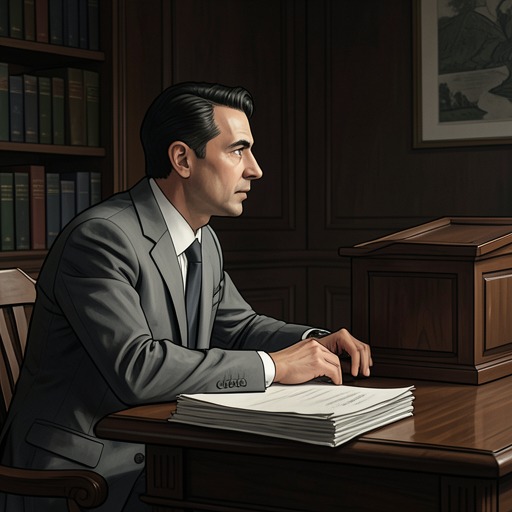
Trader then connects the question of treatment to the question of a farewell letter. He tells Mike that Jennifer sent him a note through the U.S. mail. When he returned to his office a week later, he found it in his tray. The account gives the letter a mundane, delayed route into the present investigation: it was written and posted, but not immediately read or brought to Mike’s attention. As Trader leaves to take a walk around the block, Mike remains with the recorder and reads the letter aloud. His difficulty raising his voice marks the reading as more than the addition of a new item to a case file; he is listening to Jennifer’s private words at the same time as he documents them.
What Jennifer tells Trader
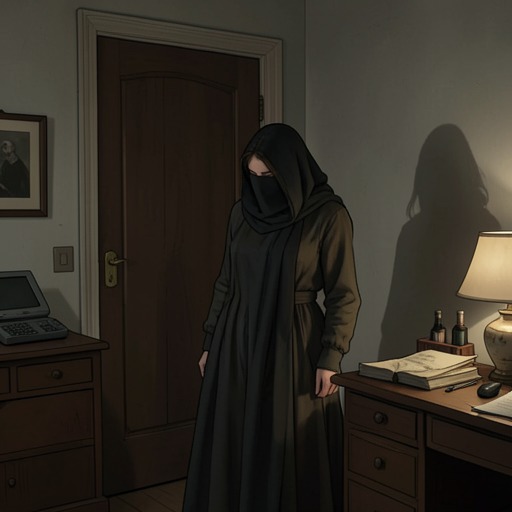
Jennifer addresses Trader as her beloved and says that his return to work consoles her. She describes him as exceptionally kind and anticipates that he will eventually forgive her for what she has done. The letter’s tenderness does not erase the distress it reports; instead, it sets their intimacy beside the experiences she had kept from him.
She says that about a year earlier she began to feel she was losing control of her thoughts. She presents the experience as difficult to explain: her thoughts seemed to proceed independently while she felt like an observer. She did not trust that consulting Hi Tulkinghorn would keep the matter from reaching her father, so she tried to manage it herself. She also admits to concealing where she went on Mondays. While Trader thought she was at the Brogan, she was spending her lunch breaks at Rainbow Plaza with people connected to GCG.
Jennifer says she had been taking varying doses of medication since the previous May, naming Serzone, Depakote, and Tegretol. She reports that the medications had stopped helping. She was frightened that she might do something unprecedented and inhuman, and asks Trader to remember that he could not have acted differently. She also asks him to help her mother and father. The letter thus provides several concrete facts—a history of treatment, concealment, worsening distress, and fear—without identifying a single event as the cause of her death or claiming certainty about what she intended.
Consequences for Mike’s reconstruction
For Mike, the letter makes Jennifer’s apparent silence more complicated. His notes had set out general patterns: Jennifer was twenty-eight; she had no known previous attempt; and, as far as he knew, she had not warned anyone. He also recognizes that suicide risk and the likelihood of leaving a note vary across populations and circumstances. Such observations frame the investigation, but they cannot substitute for Jennifer’s account. The letter shows that she disclosed important information to Trader even while withholding it from her father and trying to handle it without Tulkinghorn’s involvement.
The note also sharpens the difference between evidence and explanation. Jennifer’s description gives Mike a clearer view of what she experienced and what she feared, but it does not settle why she died. After reading it, he continues to test possible stressors and possible explanations for her mental state. Eventually he crosses out the remaining possibilities, including psychological, organic, and metaphysical accounts, leaving no explanation in his list. The letter is therefore decisive as evidence of a hidden crisis, not as a final answer. Its arrival narrows what can responsibly be said about Jennifer while preserving the central uncertainty of Mike’s psychological autopsy.