Hi Tulkinghorn
Night TrainHi Tulkinghorn is Jennifer Rockwell’s physician, a familiar presence in the Rockwells’ social life and a doctor who had once examined Mike Hoolihan during his recovery from alcohol withdrawal. When Mike brings him evidence that Jennifer had taken lithium, Tulkinghorn insists she had no medical history and no psychiatric care. The encounter becomes a study in the distance between professional authority and what a patient conceals: Tulkinghorn can explain the dangers of self-medication, but he had not known that Jennifer was doing it.
Identity and Background
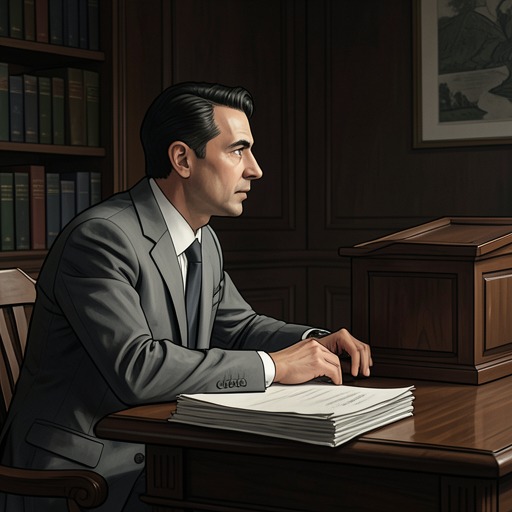
Tulkinghorn is an elderly physician whom Mike has encountered over the years at gatherings at the Rockwells’ home, including barbecues and Christmas Eve cocktails. Tom Rockwell had also called him in to examine Mike while Mike was drying out for a week in a first-floor bedroom. Mike remembers little of that period, but remembers Jennifer visiting him in the evenings, reading to him, feeling his brow, and bringing him water. Tulkinghorn is therefore connected to the family not only as Jennifer’s doctor but also through Mike’s own vulnerable history and Jennifer’s care for him.
Mike characterizes Tulkinghorn as small, bald, and clear-eyed, an elderly medic whose attention seems increasingly turned toward keeping his own life in order. The portrait is edged with Mike’s blunt comparison between doctors who age into self-management and those who drink or are drying out. It places Tulkinghorn near the experiences he observes in others without suggesting that he understands them all.
His professional surroundings reinforce the contrast between routine medicine and the crisis Mike brings him. Tulkinghorn works from a gothic apartment block near Alton Park, in the Thirty-Seven. Mike waits in a narrow corridor between patients with ear and throat complaints, while young men in smocks move through with clipboards and vials and binders and folders crowd the walls. The scene is orderly and accumulated, a workplace full of records, but Jennifer’s decisive medical facts are not in the ordinary history Tulkinghorn knows.
The Consultation with Mike
Mike has been trying to reach Tulkinghorn since March 8. When the doctor is away on a Caribbean poker cruise, Mike has his secretary page him; Tulkinghorn comes in from The Straight Flush and tells him to make an appointment. Mike later learns that Tulkinghorn’s wife, rather than Tulkinghorn himself, plays poker on the cruise, while he relaxes on a lounger. The episode gives Mike a wry glimpse of the doctor’s private routine before their serious conversation begins.
At the consultation, Mike asks what kind of patient Jennifer had been. Tulkinghorn’s answer is that she was not a patient in any meaningful medical sense: as far as he knew, she had never had a day’s illness after infancy, and her checkups were almost a joke. He had last seen her in his office about a year earlier. He knew that she had a dentist and a gynecologist, Dr. Arlington, whom he described as a friend, but understood both to have the same impression of Jennifer as he did: she was an exceptionally healthy specimen.
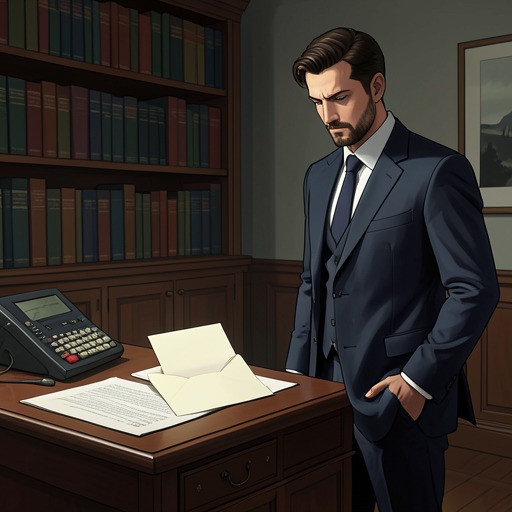
Mike then puts Jennifer’s toxicology findings before him and asks why she was taking lithium. Tulkinghorn denies that she was on lithium and says he knew of no psychiatrist treating her; had she been in psychiatric care, he expected to have been notified. Faced with the photocopied toxicology sheet, he studies it with quiet indignation. Mike reads the pause as the doctor realizing that, if Jennifer had not obtained the medication through a professional, it might have come from somewhere outside legitimate care. The encounter shifts Tulkinghorn from certainty about a healthy patient to recognition that her treatment had occurred beyond his knowledge.
Jennifer’s Concealed Crisis
Tulkinghorn interprets Jennifer’s unsupervised use of psychiatric drugs as a form of mental hypochondria. In his account, psychotropic medication could intensify the condition and produce a spiral. His explanation is a clinical hypothesis about the danger of treating one’s own mind, not knowledge of Jennifer’s actual circumstances; the missing history is precisely what made his confident picture of her health incomplete.
Jennifer’s recorded farewell message supplies the information she had withheld from him. She says that almost a year earlier she began to feel that she was losing control of her thoughts, and that she did not dare consult Tulkinghorn because she feared he would tell her father. She tried to manage the problem herself, read about it, and obtained medication at Rainbow Plaza while letting her lover believe she was at the Brogan on Mondays. She describes taking varying doses of Serzone, depecote, and tegretol since the previous May, and says they had stopped helping. Her account makes clear that Tulkinghorn’s ignorance was not simply a failure to notice an illness during an appointment: Jennifer had deliberately kept the crisis outside his care.
The message also reveals the intensity of her fear. Jennifer worries that she may do something unprecedented and inhuman, and asks her lover to help her parents. That private account stands beside Tulkinghorn’s medical language of hypochondria and a worsening spiral, but does not reduce her experience to his explanation. The reader sees both the risk he identifies and the secrecy that prevented him from knowing what she was enduring.
Limits of Medical Knowledge
Tulkinghorn is neither shown as having treated Jennifer’s concealed condition nor as knowing that she had obtained medication without his involvement. His remarks establish what he believed: that she was exceptionally healthy, had no psychiatric history, and was not taking lithium. Jennifer’s message establishes the contrary facts about her private treatment and her reason for avoiding him. The difference between these accounts is central to his role: the physician’s records and impressions cannot contain a crisis that the patient has chosen to hide.
A later discussion confirms that a toxicology report existed and that Tom Rockwell had it suppressed. That disclosure adds an institutional obstacle to the already incomplete flow of medical information, but it does not establish that Tulkinghorn knew about the suppression or participated in it. His importance lies instead in the limited but consequential explanation he offers Mike: self-medication can worsen the very distress it is meant to control, while the person best placed to assess Jennifer had been kept outside the truth.