Homicide
Night TrainHomicide is a unit of the city’s Criminal Investigations Department and, in the department’s own hierarchy, its defining stage: Homicide is the Show. Its work extends beyond solving murders. Detectives examine suspicious deaths that may ultimately be classified as suicide, accident, or unattended death, and the novel follows how their procedural habits meet the limits of motive, evidence, and certainty.
Place Within the Department
CID is a large organization of three thousand sworn personnel, divided among departments and units whose names change over time. Homicide sits alongside Organized Crime, Major Crimes, Crimes Against Persons, Sex Offenses, Auto Theft, Special Investigations, Narcotics, and other specialized operations. The distinction between Vice and Sin captures the department’s institutional logic: it names offenses and assigns them to units, while presenting the city as the offense and the police as its defense.
Within that structure, Homicide carries a particular prestige. Other units may be associated with adrenaline, money, or specialized forms of danger, but personnel quietly regard Homicide as the department’s central attraction. That standing is reinforced by the seriousness and range of its caseload rather than by any claim that every death is a murder. In a city where a homicide detective might work roughly a dozen murders a year, the work also entails repeated exposure to deaths that do not result in criminal charges.
Mike Hoolihan’s Homicide Career
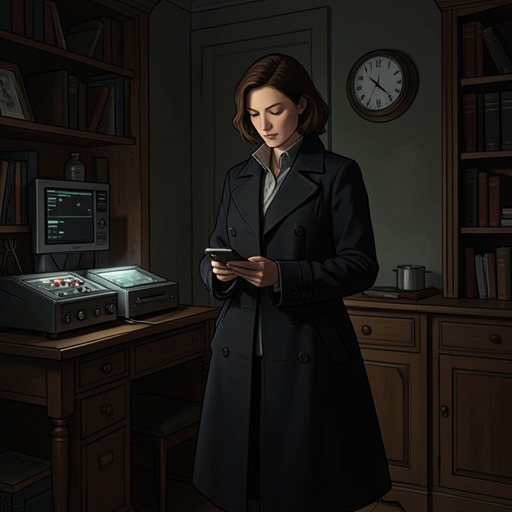
Mike Hoolihan reached Homicide through several kinds of police work. After joining the force, she served as a beat cop in the Southern and worked foot patrol and radio calls in the Neighborhood Stabilization Unit. She then spent five years in the Senior Citizens Robbery Unit. Proactive work involving decoys and entrapment helped her move into plainclothes assignments; after another examination, she transferred downtown and received her shield.
By the time of the novel’s central investigation, Mike has moved to Asset Forfeiture, but she spent eight years in Homicide and identifies that period as the work through which she became a murder detective. Across her career she has worked on one hundred murders, with a clearance rate just above average. Her reports were praised for their quality, and a supervisor compared one of them—an account that collated competing versions of a homicide—to the work of a great orator. The unit’s professional ideal therefore includes not only reading a scene and questioning suspects, but also producing exacting written records.
Mike’s experience also gives her a measure of the work beyond the cases she personally investigates. She has arrived at the aftermath of around a thousand suspicious deaths. Many turned out to be suicides, accidents, or deaths unattended for some time. Homicide’s daily reality consequently involves a broad field of death investigation, in which the first suspicion of murder is only one possible account of what happened.
Procedure, Interrogation, and Judgment
The unit’s methods are shaped by legal constraints as well as investigative custom. When Mike considers bringing Professor Trader Faulkner downtown, she rejects a dramatic arrest because the evidence does not yet amount to probable cause. Instead, she calls him and asks him to come in. The decision shows the distinction between suspicion and the legal threshold for coercive action: even when her superior believes the case is stronger than it is, Mike recognizes that the available grounds do not support an arrest.
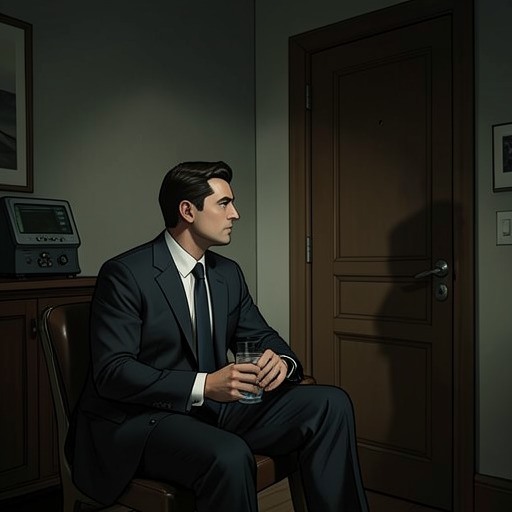
Mike conducts the subsequent interrogation on her own terms. She rejects a good-cop, bad-cop performance, both because the tactic is familiar to suspects and because the Escobedo ruling has limited the old methods of bad-cop interrogation. She leaves Trader alone in the interview room for two and a half hours, then prepares herself to question him by deliberately converting suspicion into conviction in her own mind. For Mike, investigative work has an internal process as well as an external one: she believes she must inhabit the case against a suspect in order to test his account against the evidence. The intensity of that method gives Homicide its force, but also exposes the pressure involved in making uncertainty temporarily feel like certainty.
Suspicious Deaths and the Limits of Classification
Homicide’s reach meets a different kind of limit when a death is ultimately ruled a suicide. In the city, suicide is treated as a crime; the novel connects that present classification to an older legal history in which suicides could lose their property like other felons. The modern coroner works from the Chief Medical Examiner’s office, but the language of the finding still carries consequences for how a death is understood and publicly recorded.
After Jennifer Rockwell’s death, the medical examiner returns an undetermined finding. Colonel Tom Rockwell, Mike’s former Homicide supervisor and now head of CID, had pressed for an accidental ruling, but settles for undetermined. The case thus resists a definitive institutional account even as investigators and family members seek one. Homicide can establish facts, compare testimony, and pursue a classification; it cannot make the surviving evidence disclose a single certain explanation for the death.
The investigative work continues in the form of a psychological autopsy. Mike describes her ballpoint, tape recorder, and computer as counterparts to the medical examiner’s tools, making the method an inquiry into a life rather than an examination of the body. She retrieves a list headed “Stressors and Precipitants,” then considers evidence that includes Trader’s possible role and things he may not have seen. Jennifer’s recorded message adds a concealed mental-health crisis: she says that for nearly a year she had felt she was losing control of her thoughts, had sought information and treatment without telling her father, and had taken varying doses of mood-stabilizing medication since the previous May. This work does not turn private testimony into unquestionable access to another person’s mind; it gathers clues while preserving the uncertainty that the official ruling names.
Leadership and Narrative Significance
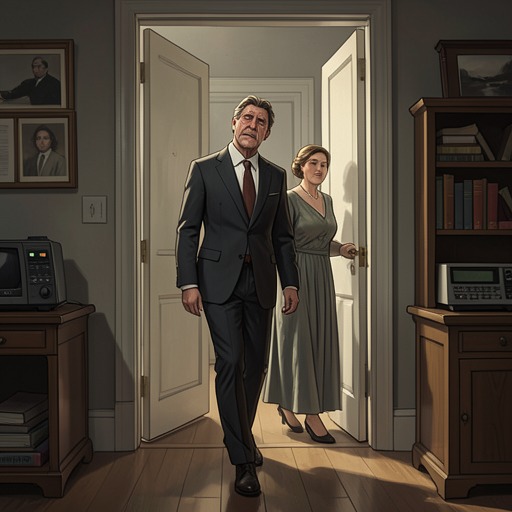
Tom Rockwell links Homicide’s investigative floor to CID’s command structure. He supervised the squad during much of Mike’s time in the unit, then rose in ten years from lieutenant and shift commander to captain in charge of Crimes Against Persons and finally colonel at the head of CID. His own description of himself as a communicator rather than a cop marks the change: senior command means managing statistics, budgets, and public relations as well as directing investigations. When Mike encounters him after Jennifer’s death, the former supervisor’s quietness contrasts with his institutional authority.
Homicide is therefore both a highly visible department and a discipline of attention. Its detectives are trained to convert scenes, testimony, and records into cases that can withstand scrutiny; Mike’s choices over probable cause, interrogation, and the psychological autopsy show that this work depends on procedure as much as instinct. Yet the investigation of Jennifer’s death also reveals what the unit cannot supply: a final, morally uncomplicated answer to why a person died. The gap between an investigative file and an unknowable inner life is not an escape from Homicide’s work, but one of its most consequential limits.