Jennifer Rockwell's autopsy tape
Night TrainJennifer Rockwell's autopsy tape is a forensic recording that Colonel Tom gives Mike Hoolihan after asking her to bring him something he can live with. Its decisive significance lies in the gap between what the recording can establish about Jennifer's body and what it cannot explain about her mind: it records an examination whose findings sharpen the physical account of her death, while prompting Mike to pursue a broader inquiry into the life behind it.
Identity and Introduction
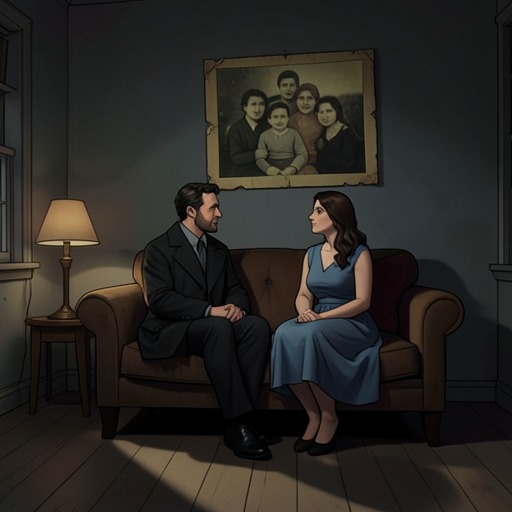
The tape enters the investigation through Colonel Tom. After handing Mike a folder marked with Jennifer's name and case number, he later presents a package for her VCR and identifies its contents as the autopsy. The sequence gives the recording a charged purpose. It is not introduced as a routine file sent for a detective's reference, but as something Colonel Tom hopes might make his daughter's death bearable. His request places a burden on the tape before Mike has watched it: the evidence is being asked to answer a grieving father's need, though a forensic recording can only show and document what the examination reveals.
The object also shifts the investigation from spoken summaries to direct viewing. Mike assumes Colonel Tom has not watched the procedure and has relied on Tony Silvera's account. The recording allows her to see the examination for herself, with Silvera briefing the medical examiner. It therefore carries both the facts of the procedure and the circumstances of their transmission: a father gives it to a friend and fellow officer, who must decide what the images mean.
Viewing and Forensic Findings
Autopsy work is familiar to Mike from her years in Homicide and from regular business in the Chief Medical Examiner's office. Her work in Asset Forfeiture also brings her into contact with bodies, often in cases involving people killed by gunfire. The tape's importance does not come from introducing her to forensic procedure. It comes from recording the procedure performed on Jennifer. Mike sits on a couch, smokes, takes notes, and uses the pause control. The familiar equipment and habits of a work review cannot make this viewing impersonal: she is watching the examination of a longtime friend.
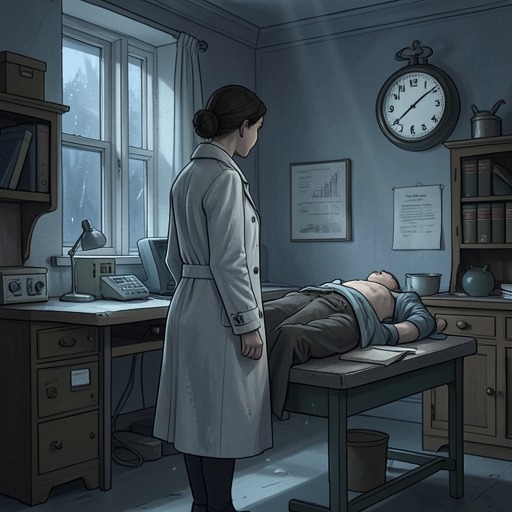
On the recording, Silvera directs the external examination, while Paulie No carries out the medical examiner's work. The examination documents Jennifer's physical characteristics and checks the evidence relevant to the gunshot, including tests intended to establish whether she fired the .22. Mike remembers that Colonel Tom had bought Jennifer the revolver years earlier and taught her to use it. That recollection connects a technical question raised by the recording to her father's history with his daughter, without resolving the larger question of why she died.
The tape's central finding is that Jennifer appears to have shot herself in the head three times. The conclusion changes the weight of the investigation: the examination does not simply confirm a death by suicide, but records a finding that complicates the physical account. Mike registers Colonel Tom's hope that this means something, yet remains unsure what it can prove. The recording offers a significant forensic result, not a complete explanation of Jennifer's state of mind or the circumstances that led to her death.
From Autopsy to Psychological Inquiry
Watching the tape becomes an act of witness for Mike. She distinguishes the ordinary professional familiarity of the autopsy room from the personal force of seeing Jennifer examined. The recording's fixed images make the procedure available to review, and the pause control lets Mike stop and take notes; neither device supplies the missing interior account. Its evidentiary clarity and emotional inadequacy coexist. The tape can preserve what the examination establishes while leaving its viewer with the question of what that evidence means.
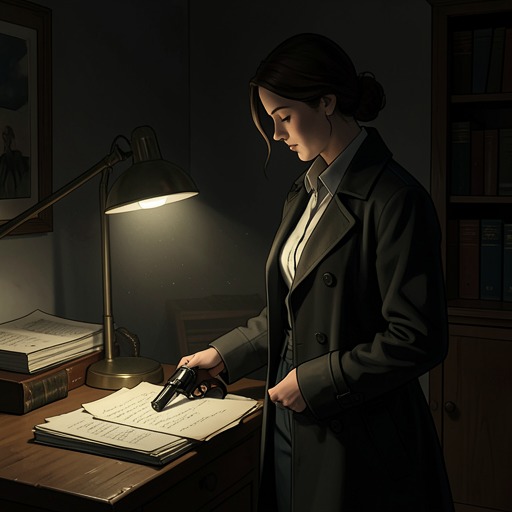
That limit helps define the next stage of Mike's work. In the second part of the book, she calls her investigation a psychological autopsy and compares its tools—ballpoint, tape recorder, and computer—to the medical examiner's instruments. The comparison frames both forms of inquiry as examination, but their materials differ: the autopsy tape documents a body and a forensic procedure, while Mike's later work assembles records, recollections, and traces of Jennifer's life. Her list headed Stressors and Precipitants marks the beginning of that effort to organize possible pressures without pretending that a list itself can settle the question.
Jennifer's recorded farewell message later supplies information the autopsy tape cannot. In it, she describes a period of losing control of her thoughts, concealing her concerns from her father, seeking information on her own, and taking changing doses of medication. Those disclosures belong to the later psychological inquiry, not to the footage of the physical examination. Read alongside the tape's findings, they make the distinction between establishing how a death occurred and investigating the conditions of a life especially clear.
Material Evidence and Narrative Significance
The tape is both an object of evidence and a medium of return. For Colonel Tom, handing it over is an attempt to place an unbearable event into a form that can be watched and interpreted. For Mike, the VCR makes the examination repeatable in a practical sense: she can pause, inspect, and take notes. Yet repeatability does not amount to mastery. The footage can be replayed, but its most important finding still does not tell Mike how much it means, or provide the answer Colonel Tom wants.
Its role also connects two kinds of investigation without collapsing them into one. The medical examination provides a recorded, bodily account and a striking conclusion about the number of shots. The psychological autopsy extends the search into Jennifer's private history and mental-health crisis, using a different body of evidence. The tape thus marks a hinge in the narrative: it makes the physical evidence more immediate, while exposing the boundary of what physical evidence can explain. Its importance lies not in solving Jennifer's death by itself, but in giving Mike a concrete record from which the next, less certain inquiry must begin.