Jennifer Rockwell’s suicide
Night TrainJennifer Rockwell’s suicide is the central death around which Mike Hoolihan’s investigation turns, but it is never reduced to a single proven cause. The case establishes that Jennifer died by suicide on March 4; the surrounding inquiry instead reveals the limits of what statistics, clues, and even intimate knowledge can establish about why she died. Mike’s conviction that he can explain her decision repeatedly meets the unresolved official finding and the gaps in his own reconstruction.
Circumstances and Official Finding
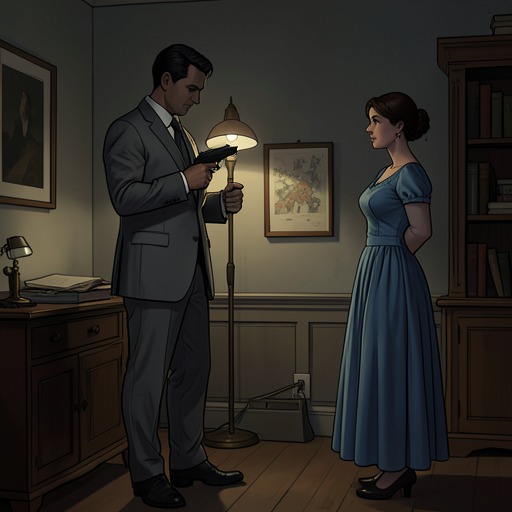
At the Criminal Investigation Division, the department’s silence about the case feels to Mike like the aftermath of a defeat. The investigators know that Jennifer committed a crime in the city on the night of March 4: suicide is treated there as an offense. Mike imagines that crossing the state line before dying would have meant dying innocent under another jurisdiction, while in the city she escaped detection only in the sense that she escaped punishment and public disgrace. His account makes the legal boundary part of the event’s meaning: the death is both a private tragedy and an act the city classifies as criminal.
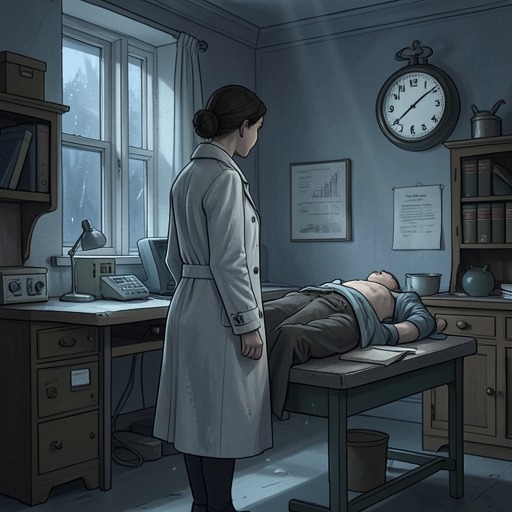
The narrative sets that modern classification against an older legal history. Mike recalls that suicides once lost their property like other felons, and describes the coroner’s earlier role as that of a tax collector dealing with the dead. In the present, the coroner works from the Chief Medical Examiner’s office. Jeff Bright, a friend of Tom Rockwell, returns an undetermined finding. Tom had pressed for an accidental ruling but accepts the undetermined one, as do the investigators. The result leaves the manner of death officially open even as Mike and the department understand that Jennifer killed herself.
Statistics and the Limits of Explanation
Mike’s notes place Jennifer’s death beside general findings about suicide, while repeatedly warning against treating population patterns as a personal explanation. Jennifer was twenty-eight, an age Mike describes as lying on a relatively level stretch between statistical increases in risk. He notes that about half of people who die by suicide have attempted it before, about three quarters give warning, and about nine tenths have histories of escape. So far as Mike knows, Jennifer had not attempted suicide before and gave no warning; he also remembers her as someone who saw things through. These contrasts make her death harder for him to recognize in retrospect, not easier to explain.
His notes also emphasize the importance of access to means. Jennifer did not need domestic gas; like many Americans, she owned a gun. Mike suspects that she wrote a suicide note, although apparently none was left and he has no confirmed evidence of one. He treats that suspicion alongside the possibility that notes may be removed by loved ones and the broader problem of deaths being disguised or misclassified. His conclusion is methodological as much as personal: evidence about suicide can be missing, altered, or misleading, so an absent note cannot settle what Jennifer intended to communicate.
Mike further considers the gendered patterns in suicide statistics. Against Tony Silvera’s dismissive claim that suicide was a woman’s matter, Mike notes that women are more likely to attempt suicide while men are more likely to die by it. He singles out Mother’s Day as an exception to the usual gender pattern and associates the day’s deaths with women who have left the expected family gathering or the children behind. These observations widen the inquiry beyond Jennifer, but they do not supply her motive. The general pattern remains a frame for asking questions, not a verdict on one woman.
Suspected Pressures and Conflicting Accounts
When Mike tells Tom that the pieces fit, he offers a set of possible pressures rather than a settled causal account. He says Jennifer had spent a year second-guessing her own mind and was obtaining medication on the street rather than receiving it from a doctor. Bax Denziger had told him that Jennifer was beginning to lose control at work and had been talking about death. Mike also points to strain in her relationship with Trader Faulkner and to her interest in another man she had met in a bar, which he characterizes as possibly no more than a flirtation. He warns Tom not to tell Trader or Miriam, exposing how the investigation’s proposed explanation could itself injure those closest to Jennifer.
Mike’s investigation also brings him to Phyllida Trounce, whom he learns Jennifer visited on the Thursday before her death. At first Mike turns the visit into a confident explanation, imagining that simply entering Phyllida’s home accounts for the suicide. But that certainty belongs to his own interpretation: the reported visit establishes a date and an encounter, not a cause. The episode shows how readily an investigator’s desire for a coherent answer can transform proximity into explanation.
Aftermath and Narrative Significance
The death leaves Mike caught between the professional search for motive and the knowledge that motive may not be recoverable. He studies lists, risk factors, possible warnings, relationships, medication, and access to a gun, yet his notes cannot convert these fragments into certainty. His reflections on violent means likewise resist a simple rule that the method expresses a clear message to survivors. He questions the assumption that a more violent death necessarily signals a louder reproach, while recognizing that Jennifer’s death has deeply hurt those who remain and altered how they remember her.
Jennifer’s suicide also becomes a problem of clues and trust. Mike comes to believe that she left misleading clues, including apparent leads involving Bax Denziger, paintings, lithium, and Arn Debs. He interprets them as decoys designed to draw the search elsewhere, but this remains his reconstruction of her intention rather than an independently verified explanation. His anger at being misdirected gives way to a more painful possibility: Jennifer may have expected him to follow the wrong trail because she remembered his childhood connections to violent men and thought he would accept Arn as a plausible suspect. The clues therefore expose both the uncertainty of the case and Mike’s fear that Jennifer had misunderstood his intelligence.
The ending preserves the divide between certainty about the suicide and uncertainty about its why. Mike can name pressures that may have accumulated and can read apparent clues as a pattern, but he cannot prove that any one factor caused Jennifer’s death. The undetermined ruling remains in place; the investigation’s final significance lies in the effort to understand a person without pretending that statistics, legal labels, or a detective’s reconstructed story can fully recover her reasons.