Jennifer's letter to Trader
Night TrainJennifer's letter to Trader is a private confession whose tenderness is inseparable from the fear and concealment it records. Mailed to Trader Faulkner, it reveals that Jennifer Rockwell had been struggling with thoughts she felt she could not control, seeking treatment without telling her father, and trying to shield her lover from blame. The letter offers intimate explanation, but not a complete answer: it names her fear and describes her efforts to cope while leaving the future she anticipates unstated.
Mailing and Discovery
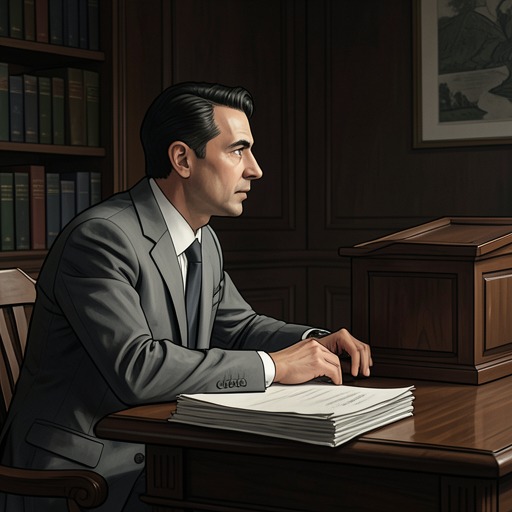
Jennifer sent the letter through the U.S. Mail on a Saturday morning. Trader says he returned to the office a week later and found it waiting in his tray. That ordinary delivery gives the revelation a delayed, almost procedural entrance: what Jennifer had written privately reaches him after the day she posted it, at a workplace rather than in a face-to-face exchange. The account does not describe the letter being delivered directly into his hands; its arrival is remembered through the moment he finds it and makes it available for inspection.
The scene of its disclosure is mediated by a tape recorder. After the door is heard, Mike Hoolihan huddles over the machine, unable to make her own voice rise above a whisper, and turns up its volume instead. The recording thus carries the letter across several layers: Jennifer's written words, Trader's account of receiving them, and Mike's act of listening. The practical adjustment of the volume makes the reading feel fragile without requiring the letter itself to be incomplete. Its words are present; Mike's ability to voice a response is not.
The Crisis Jennifer Describes
Jennifer places the beginning of her crisis almost exactly a year before writing. She describes a growing sense that she was losing control of her thoughts, which seemed to continue independently while she felt like an innocent bystander. Her account makes the problem both deeply personal and difficult for her to name: she frames it as an experience of estrangement from her own thinking, rather than offering a diagnosis in the letter.
She explains why she did not seek help through Hi Tulkinghorn: she feared he would tell her father. Instead, she thought she could manage the situation herself, a decision she recognizes may have been part of the deception she was living with. She had read about the problem, but her efforts to understand it did not bring the crisis into the open. The letter presents concealment not as a single lie but as a pattern shaped by fear of disclosure and an attempt to retain control.
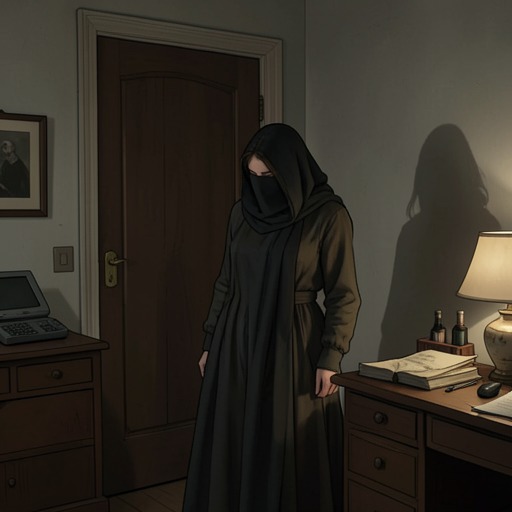
One concrete example is her account of Mondays. While Trader believed she was at the Brogan, she was at Rainbow Plaza, where GCG people took their lunch breaks on the lawn. She says she could obtain a dime-bag there easily. The detail exposes a second life beneath the routine Trader thought he knew: the concealed destination, the false explanation, and the access to drugs are linked in her own account. The letter does not turn that disclosure into a full explanation of her condition; instead, it shows how secrecy had entered the ordinary schedule of their relationship.
Jennifer also reports taking varying doses of stabilizing medication since the previous May, naming Serzone, depecote, and tegretol. She says the drugs dried her head out, but had stopped helping. This account records treatment as part of her lived experience rather than as a simple solution: medication had been tried and had once helped, yet its effects were no longer enough. The letter leaves the precise medical circumstances unexplained, but clearly establishes that the crisis had lasted across months and that Jennifer was frightened by its return or persistence.
Intimacy, Fear, and Responsibility
The letter begins by addressing Trader as her darling and describing his return to work as a consolation. Jennifer also praises him as a kind lover and anticipates that he will eventually forgive her for what she has done. The affectionate address is not separate from the confession. It establishes what she values in him, then places the account of her hidden illness and choices inside a relationship she fears she has damaged.
Jennifer tells Trader that he knew her better than anyone, while insisting that she was not quite the person he believed her to be. That distinction gives the letter its central relational tension: their intimacy was genuine, but it did not mean he knew the concealed parts of her life. She recognizes the gap between being loved and being fully understood, and uses the letter to disclose facts that ordinary closeness had not uncovered.
Her fear turns toward what she might do next. She worries that she will do something unprecedented and inhuman, and asks whether that is what she is doing now. The words disclose the scale of her alarm without specifying the act she fears or settling what she means by it. At the same time, she tells Trader that he could not have acted differently. Her reassurance directly resists the possibility that he should take responsibility for her condition, even as the letter's tenderness makes clear how much his response matters to her.
The Closing Apologies
Jennifer says she will stay with Trader until the following night and describes him as perfect for her. The statement gives the letter a limited horizon: it sets out an imminent period of closeness, but does not explain what will happen after it. Its combination of reassurance and foreboding makes the message feel like more than a report of past events, while stopping short of stating an explicit plan.
The closing turns from Trader to Jennifer's parents, asking that they be helped, then repeats an apology until the writing fills the rest of the page. That change of address widens the letter's emotional reach beyond the couple. The repeated apologies give the ending a different force from the earlier explanatory paragraphs: instead of adding new facts, they insist on remorse, without identifying every act for which Jennifer feels sorry. The repetition is both the letter's final disclosure and a limit on what it explains.
As an object, the letter brings private knowledge into the investigation and into Mike's listening space, but it does not make Jennifer's inner life entirely transparent. It documents her fear, treatment, concealment, affection, and apologies in her own account; it does not resolve the precise meaning of her feared action or reduce her crisis to a single cause. Its power lies in that uneven disclosure: a lover is told much that had been hidden, while the last page repeats regret where a definitive explanation might have been expected.