Manic depression
Night TrainManic depression enters the investigation not as a confirmed diagnosis of Jennifer Rockwell, but through a revealing contrast: Phyllida Trounce acknowledges living with the condition and managing it, while Jennifer’s farewell letter discloses a hidden crisis and secret use of mood stabilizers. The distinction matters. The evidence exposes Jennifer’s distress and treatment without resolving its medical classification or making it a complete explanation of her death.
Clinical evidence and its limits
Jennifer’s medical history initially appears to offer little reason to suspect a psychiatric condition. Asked whether she was under anyone else’s care, her doctor says she had a dentist and a gynecologist, but no psychiatrist; he also says he would have been notified if she had one. When Mike Hoolihan confronts him with a toxicology sheet and asks why Jennifer was taking lithium, he denies that she was on it. His quiet indignation shifts the question from whether she received treatment to how she might have obtained medication without a professional’s involvement. The scene establishes uncertainty, not a verified source.
The doctor’s response frames self-medication as potentially self-reinforcing: psychotropic drugs, he suggests, could intensify a form of mental hypochondria and produce a spiral. That is an interpretation offered during the investigation, not a settled diagnosis of Jennifer. The gap between the doctor’s records and the evidence Mike brings him underscores how little the available medical history can establish about her private condition.
Jennifer’s concealed crisis
Jennifer’s own account arrives in a farewell letter addressed to her lover. She writes that almost a year earlier she began to feel she was losing control of her thoughts: they seemed to proceed independently while she remained a bystander. She did not seek help from Hi Tulkinghorn because she feared he would tell her father, and she believed she could fix the problem herself. Her letter makes that attempted secrecy part of the crisis rather than evidence that no crisis existed.
She says she researched her condition and, since the previous May, had taken varying doses of a stabilizer. She names Serzone, depecote, and tegretol, adding that the drugs had stopped helping. She also describes fear that she might do something unprecedented and inhuman, reassures her lover that he could not have acted differently, and asks him to help her parents. The letter supplies direct evidence of concealed treatment and frightening changes in her experience; it does not name manic depression or establish that diagnosis.
That disclosure changes the meaning of the earlier toxicology inquiry. Mike had suspected that Jennifer was medicating herself, but the letter gives the suspicion a specific history: secrecy, research, changing doses, and diminishing effect. Even so, the investigation’s working list of stressors and precipitants remains inconclusive. Mike eventually crosses out the proposed psychological, organic, and metaphysical categories, leaving no explanatory classification in place of the uncertainty.
Phyllida as a point of comparison
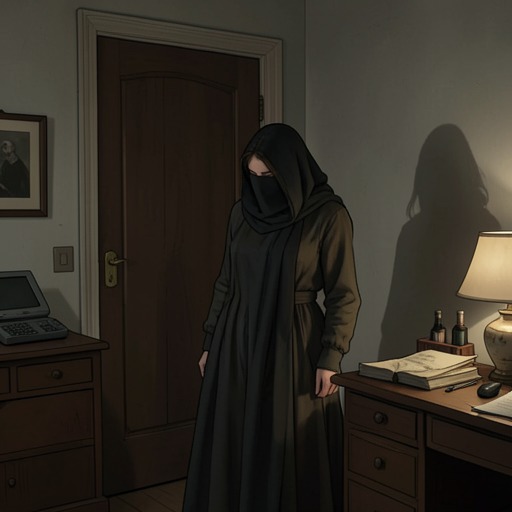
When Mike visits Phyllida, he asks directly whether she is manic depressive. She nods and smiles, and she similarly acknowledges his question about whether the condition is under control. Her routine includes a pill chart and a roster; when Mike asks her to count her stabilizers and report how many are missing, she goes to check. He mentions Tegretol as an example, but the available account does not give the count or establish that any pills are missing.
Phyllida’s apparent routine offers a sharp contrast with Jennifer’s private account of managing medication without telling her doctor. The comparison makes medication management visible as a practical, ongoing part of living with the condition, while also exposing the limits of inference: Phyllida’s diagnosis and pill-taking do not prove that Jennifer had the same illness. In the investigation, Phyllida functions as a connection to a possible lead, not as confirmation of Jennifer’s diagnosis.
The psychological autopsy and unresolved meaning
Mike describes his work with notes, a tape recorder, and a computer as the equivalent of a medical examiner’s physical autopsy: a psychological autopsy. Its purpose is to assemble evidence about a person whose inner experience can no longer be directly questioned. Jennifer’s letter becomes unusually important within that process because it records her account of her thoughts and medication, while the doctor’s denial and the toxicology sheet leave unresolved questions about what treatment she received and from whom.
The inquiry also places her story against general observations about suicide: warning signs and previous attempts are common in the statistics Mike consults, but he knows of no prior attempt or warning from Jennifer. He notes that she owned a gun and suspects she wrote a suicide note, though it had not been found at that point. These observations do not establish that manic depression caused her death. Instead, the investigation’s accumulating evidence reveals both a concealed mental-health crisis and the limits of reconstructing its meaning after the fact.