Mike Hoolihan and Jennifer Rockwell’s friendship
Night TrainMike Hoolihan and Jennifer Rockwell’s friendship is a long-standing bond shaped by practical help, unforced conversation, and mutual kindness. It gives Mike intimate memories through which to understand Jennifer, but it cannot explain her death or make her hidden distress fully knowable. The distance between knowing someone well and knowing everything about them becomes central to Mike’s investigation.
A Friendship Across Generations
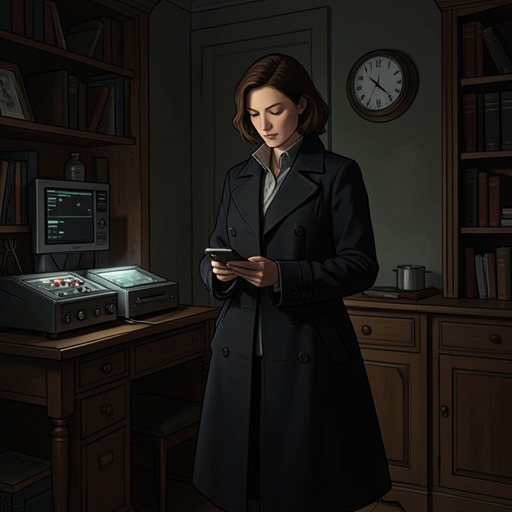
Mike had known Jennifer since she was eight years old. By the time of her death, she had become a favorite of his, as she was of many people: brilliant and beautiful, but also approachable rather than remote. Mike remembers her as someone who seemed to possess exceptional gifts without using them to shut others out. His recollections establish a connection that began in childhood and continued as she grew into an astrophysicist at Mount Lee.
The friendship also formed through Jennifer’s family. Mike knew her father, Colonel Tom, through police work and personal loyalty, and he visited the family home during a vulnerable period in his own life. Near the end of his career in Homicide, Mike arrived at work drunk and in poor health. Colonel Tom intervened, took him to Lex General, and, after treatment, the Rockwells gave him a place to recover. Jennifer was nineteen. In the evenings she read to Mike while he lay in a small ground-floor bedroom, her clear voice accompanying a period in which other visitors sometimes seemed indistinct to him. Her presence was part of the family’s care, but it also became a memory of Jennifer’s own: attentive, self-possessed, and undemanding.
Care Without Judgment
Mike recalls that he never felt judged by Jennifer. She had troubles of her own, and her connection to a police family did not make her treat him as a case or a moral failure. That quality mattered in the context of his recovery: Mike was an alcoholic being cared for after a crisis, yet his memory of Jennifer emphasizes the absence of reproach. Their bond is thus marked less by declarations than by the ordinary generosity of staying near someone who is unwell.
Years later, Mike’s recollection of Jennifer at a party sharpens this impression. At a gathering after Overmars had built a deck, she held a glass of white wine and appeared to Mike to possess a genuine talent for happiness. He remembers gratitude in her and notes the contrast between her ease after little alcohol and his own dependence on scotch to feel a similar intensity. The scene is not proof that Jennifer was free of private difficulty; it is the impression she made on him at that moment. Its importance lies in the vividness of the memory and in the gap between that visible warmth and the crisis Mike later tries to reconstruct.
Practical Familiarity and Lasting Regard
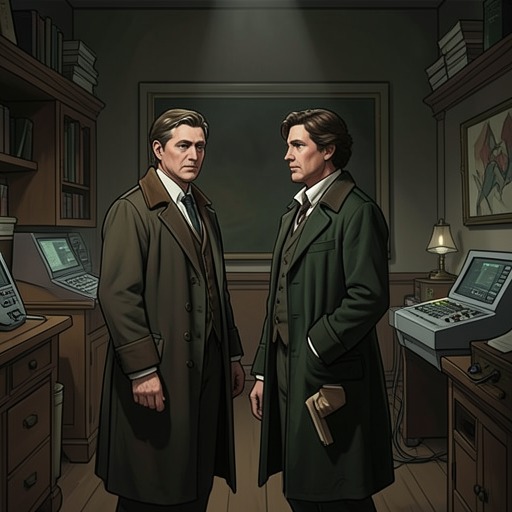
As adults, their friendship remained functional and personal at once. Mike had been to Jennifer’s residence perhaps a dozen times over roughly six years: to drop something off for Colonel Tom, to give Jennifer a ride to a ballgame, a beach party, or a function at the deputy commissioner’s, and occasionally to help with other errands. He also gave Trader Faulkner rides. Mike describes the relationship as a practical friendship, enlivened by good conversations in the car. The details resist a simple division between professional duty and private attachment: he was useful to Jennifer’s family, but their time together also included the small intimacy of talking while travelling.
After Jennifer’s death, walking into the bedroom brings back the party and the earlier version of her. Later, sitting in the apartment with his .38 on his lap, Mike struggles to imagine what happened and instead recalls the way Jennifer met people. At a party or downtown, he remembers, she did not merely acknowledge someone and move on; she gave each person particular attention and left them with something. The repetition of that remembered habit turns his affection into a measure of her character. He does not remember her as a distant prodigy, but as someone whose intelligence and beauty did not prevent her from making other people feel individually seen.
Friendship Under the Pressure of Investigation
Mike’s personal knowledge makes the death immediately difficult to classify. In police work he is familiar with suicides that appear plainly consistent with the scene; Jennifer’s death does not fit that easy pattern for him. His judgment is affected by his attachment: she had been a favorite, and he remembers a person whose life seemed unusually full of ability, warmth, and possibility. Those impressions do not establish what happened inside her mind, but they explain why he cannot treat the case as an impersonal file.
The investigation becomes a psychological autopsy: Mike gathers notes and recollections in an effort to reconstruct a life and its pressures, much as medical examiner Paulie No examines the body by other means. Mike’s long friendship supplies material for that work, but not a definitive answer. His notes set Jennifer’s age, twenty-eight, against general patterns of suicide, and record that, so far as he knows, she had made no previous attempt and gave no warning. He also considers the prevalence of suicide notes and concludes that Jennifer had written one, although it had not initially been found. Such facts sharpen the inquiry without converting general statistics or Mike’s personal memories into certainty about her individual motives.
Intimacy and Its Limits
The later discovery of Jennifer’s letter reveals that, almost a year before her death, she had begun to feel that she was losing control of her thoughts. She had read about the problem, sought treatment through other channels, and used varying doses of stabilizing medication; she feared that the medication had stopped helping. The letter shows that this crisis had remained concealed from people she might have approached, including her psychiatrist, whom she feared would tell her father. It also makes clear that a close, affectionate relationship with Trader Faulkner did not mean that he could have prevented her death.
That disclosure does not diminish Mike’s friendship, but it changes the meaning of his familiarity. He had known Jennifer since childhood, seen her through ordinary errands and family occasions, and received her kindness during his own recovery. Yet none of those experiences gave him access to every part of her life. After revisiting his list of possible stressors and precipitants, he crosses out each proposed category, including psychological and organic explanations. The investigation does not end with a complete causal account. Instead, the friendship leaves Mike with both a durable knowledge of Jennifer’s generosity and a painful recognition that affection, memory, and professional skill cannot remove every uncertainty surrounding her death.