Mike Hoolihan–Jennifer Rockwell
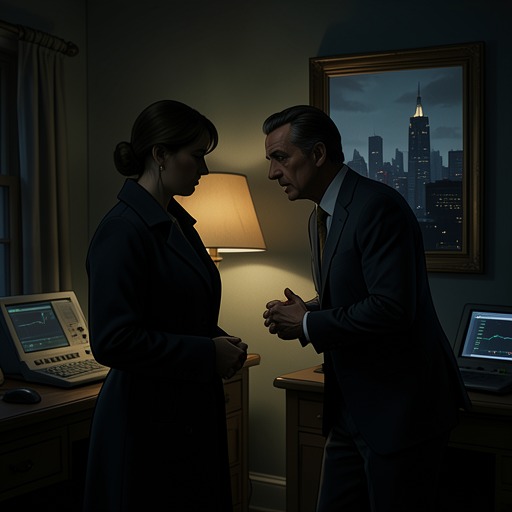
Night TrainMike Hoolihan–Jennifer Rockwell is a childhood bond that becomes consequential again when Mike investigates Jennifer’s death. Their long familiarity gives Mike reason to believe that Jennifer expected him to join the search, but it also makes her misleading clues feel personal: he reads them as evidence of what she thought he would believe, and of whether she recognized his intelligence.
Childhood Knowledge
Mike and Jennifer had known each other since Mike was eight. Jennifer saw him in the company of men who mistreated women, and she witnessed the injuries and fights that marked his early life. Mike recalls limping with Deniss to wait outside Emergency after they had been hurt. These memories establish a childhood intimacy founded not simply on shared time but on Jennifer’s sustained observation of the world Mike inhabited.
That history gives Mike a painful explanation for why Jennifer might have expected him to suspect Arn Debs. He reasons that, having watched him around violent men, she might assume he would consider a man like Arn a plausible partner for her. But this interpretation also wounds him: Mike wonders whether Jennifer failed to see intelligence in him, or whether others had failed to see it too. The question turns their familiarity into a measure of how completely she understood him.
The Search and the False Leads
After Jennifer’s death, Mike believes she knew her father would follow the trail she left and that Mike himself would take part in the search. He therefore reads several apparent clues as deliberate blinds: Bax Denziger’s algorithm, the paintings Jennifer had bought, her lithium use, and Arn Debs. The clues form a pattern, but, in Mike’s account, a pattern designed to misdirect rather than disclose.
Arn is the false lead that most angers him. Mike says he had hated Jennifer for days because he thought she expected him to accept Arn as a real explanation. His resentment is inseparable from their closeness: he believes she knew his past well enough to anticipate his suspicions, yet he cannot tell whether she also trusted him to recognize the deception. The possibility that she meant him to follow a blind makes the investigation feel like a final exchange between people who knew one another from childhood.
Bereavement and Lasting Significance
Mike measures Jennifer’s death against the many dead people he encountered in police work, across morgues, holding facilities, vehicles, streets, and abandoned buildings. Her death remains distinct in his memory. The contrast conveys the force of their relationship without resolving what Jennifer intended by each clue or what she believed Mike would understand.
Their bond thus links Mike’s private history to his professional search. Jennifer had seen the violence that shaped his childhood; after her death, Mike tries to read the trail she left through that shared past. His anger, uncertainty, and grief persist together: he feels misjudged by her, yet his insistence that she anticipated his role in the search also testifies to how closely he believed she knew him.